Escalating clashes between Pakistan and Afghanistan are quickly turning the Durand Line dispute into a wider regional security crisis. What began as cross-border strikes and retaliatory operations has devolved into sustained fighting along the frontier, drawing the attention of major powers and raising concerns about stability across South and Central Asia.
For China, the escalating conflict carries particular geopolitical and geoeconomic significance. China has spent more than a decade building a strategic framework centered on connectivity, economic integration and infrastructure development that links western China to the Arabian Sea and beyond.
The China-Pakistan Economic Corridor (CPEC) is a key component of Beijing’s Belt and Road Initiative and broader efforts to diversify its fuel-shipping routes to enhance its energy security, which is now jeopardized by the Iran war.
The near coincident outbreak of armed hostilities between Pakistan and Afghanistan thus represents not merely a bilateral dispute but a direct challenge to the assumptions underpinning China’s hedging strategy.
As the fighting intensifies, diplomatic efforts by China and other external actors to reduce tensions highlight the broader stakes involved. The crisis now intersects with growing energy security concerns stemming from the war in Iran and the closure of the Strait of Hormuz.
China’s mediation efforts
China has moved to contain the crisis through diplomacy, so far to no avail. On March 8, Beijing’s special envoy for Afghanistan, Yue Xiaoyong, visited Kabul, where he met with Afghanistan’s acting foreign minister, Amir Khan Muttaqi, and urged both sides to resolve their differences through dialogue and avoid further escalation.
Chinese officials stated that stable relations between Pakistan and Afghanistan are necessary for both security and economic development. Beijing maintains close relations with Pakistan while also cultivating working ties with Afghanistan’s Taliban authorities since their return to power in 2021.
During the meeting, the Chinese envoy stressed that disputes between the two neighbors should be addressed through diplomacy. Prolonged instability along the Pakistan-Afghanistan frontier could threaten connectivity corridors and infrastructure projects linked to the Belt and Road Initiative, as well as China’s broader strategic interests in the region.
The escalation followed a surge in militant attacks inside Pakistan attributed to Tehreek-e-Taliban Pakistan (TTP), a coalition of jihadist militants opposed to the Pakistani state also known as the Afghan Taliban. Islamabad has repeatedly accused the TTP of allowing militant groups to operate from Afghan territory and carry out cross-border attacks.
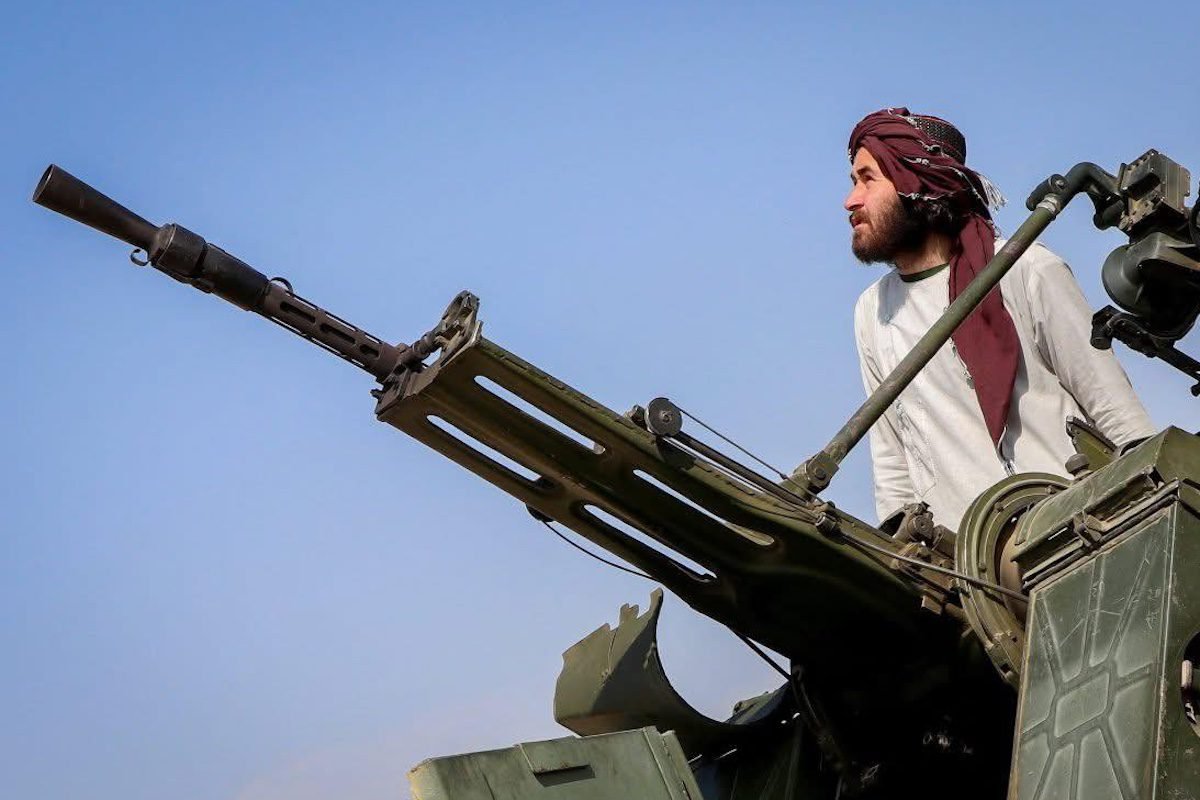
Pakistan has recently responded with air and drone strikes against suspected militant targets across the border, attacks that Kabul has condemned as violations of its sovereignty. Islamabad has since expanded the campaign under Operation Ghazab Lil Haq, targeting militant infrastructure believed to threaten Pakistan’s security, including in the capital Kabul.
The confrontation has produced one of the most serious military standoffs between the two neighbors in decades. Pakistan considers militant bases in eastern Afghanistan an existential threat, while the Afghan Taliban denies any ties to these groups and refuses to dismantle their networks.
India in the shadows
The conflict is already extending beyond its immediate boundaries, intersecting with broader regional power rivalries. Pakistani officials increasingly suspect that Afghanistan is moving closer to India, a move Islamabad sees as an attempt at strategic encirclement.
India has reopened diplomatic contacts with the Taliban government after initially distancing itself following its takeover of Kabul. Although New Delhi maintains only a skeleton diplomatic presence in Afghanistan, perceptions of increased engagement have raised antennae in Pakistan, heightening concerns of potential pressure along both its eastern and western borders.
To date, Beijing’s approach has depended on maintaining productive relations with both Pakistan and Afghanistan while advancing connectivity projects linking Central Asia, South Asia and western China.
The CPEC was increasingly seen as a platform through which Afghanistan could be integrated into wider trade and infrastructure networks. Instability along the frontier also complicates China’s broader plans to connect Central Asia, Afghanistan and Pakistan through emerging transport corridors linking Eurasia to the Arabian Sea.
International monitoring organizations have warned that Afghanistan continues to serve as a base for several extremist groups, including TTP, Islamic State Khorasan Province and remnants of al-Qaeda. These groups sustain their operations by exploiting weak governance and porous border security, allowing them to operate in remote areas unimpeded.
Russian officials have also expressed concern about militant groups operating from Afghan territory, warning that these networks could destabilize not only Pakistan but also parts of Central Asia where Moscow has historically held sway.
Connectivity versus conflict
China’s approach to regional connectivity is built on the assumption that economic integration can foster political stability and eventually regional peace. Infrastructure development, trade corridors and investment are meant to create shared economic interests that encourage cooperation and reduce incentives for conflict.
The confrontation between Pakistan and Afghanistan, however, exposes the limits of that logic. Connectivity alone cannot resolve disputes rooted in sovereignty, militant violence and ideological rivalry. Trade routes cannot dismantle insurgent networks, and infrastructure projects cannot settle contested borders or override deeply entrenched security calculations.
The war along the Durand Line, therefore, represents much more than a border dispute. It is a test of whether connectivity-driven development strategies can function in environments where political conflicts remain unresolved and are prone to erupt.
For Beijing, the crisis is underscoring the limits of economic leverage in environments shaped by entrenched rivalry and hostility. The future of China’s westward strategy — and the stability of the wider region — depends on whether Islamabad and Kabul can move beyond confrontation toward a sustainable framework for security and economic cooperation.
And at least so far, Beijing’s attempts at mediation have failed to bring the warring neighbors to the table.
Saima Afzal is an independent and freelance researcher specializing in South Asian security, counter-terrorism, the Middle East, Afghanistan, and the Indo-Pacific region. She holds an M. Phil in Peace and Conflict Studies from the National Defence University, Islamabad, Pakistan.