More than two weeks have passed since the killing of Ali Khamenei, and no information has yet emerged about funeral or burial arrangements. Meanwhile, despite a full week having elapsed since his son Mojtaba was elevated to the position of leader, not a single figure within the regime’s inner circle has claimed to have seen him in person.
A member of a medical team in Tehran told The Media Line that rumors placing Mojtaba Khamenei in a hospital appear implausible because, in that scenario, at least one member of the medical staff would inevitably have leaked the information, or the security presence around the facility would have been conspicuous enough to draw attention.
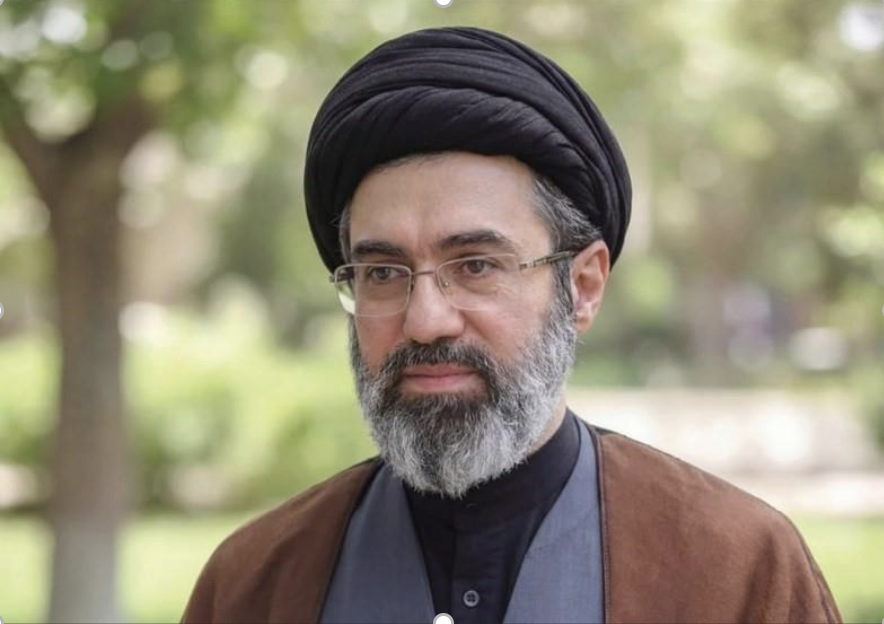
While state media continue to circulate AI-generated images of Mojtaba Khamenei, including fabricated portraits and more flattering depictions of him, absolutely no official has claimed to have seen him in person. (Tasnim)
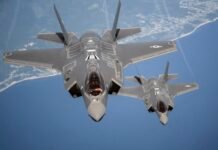
At the same time, a senior member of Khamenei’s office has claimed that Mojtaba was in the courtyard of his residential compound when Israeli fighter jets struck in the early hours of February 28, and that he sustained an injury to his leg as the surrounding buildings were destroyed in the blasts.
In the immediate aftermath of the strikes, despite Israel’s announcement that Ali Khamenei had been killed, Islamic Republic officials insisted the leader was alive and well. Foreign Minister Abbas Araghchi, in a live interview with NBC News, stated that Khamenei was alive “as far as I know.” State news agencies published reports claiming he was not only alive but “personally commanding the war.”
However, as TML had previously reported in an exclusive story, senior management at state broadcaster IRIB was informed of Khamenei’s death from Saturday afternoon, February 28, and as the news gradually filtered through to various departments, presenters visibly appeared grief-stricken and subdued during the evening broadcasts.
Related Story Broadcast Disruptions Spread After Strikes and Satellite Hijacking of Iranian Channels
Regarding Mojtaba Khamenei specifically, no credible information about his survival emerged for two full days after the strikes. It was only when the Islamic Revolutionary Guard Corps (IRGC)-affiliated Fars News Agency reported that he was the most likely candidate to succeed Ali Khamenei that affiliated Telegram channels claimed he had survived the attack.
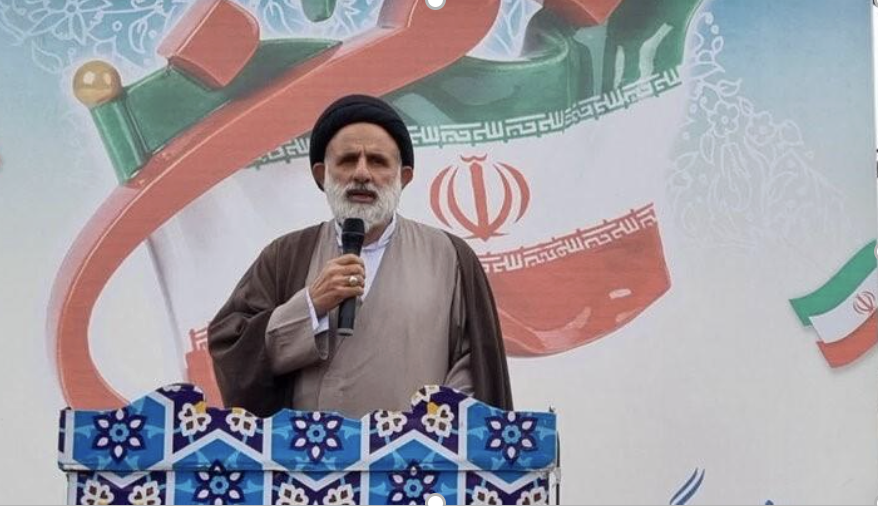
A senior official from Khamenei’s office states that Mojtaba Khamenei was in the courtyard of the Leader’s residential compound at the moment Israeli fighter jets’ missiles struck, and that he sustained injuries as a result. (Meher)
An audio file has now circulated, which is purportedly attributed to Mazaher Hosseini, the head of protocol at the Supreme Leader’s residence. In it, the speaker states that at the time of the attack, Mojtaba Khamenei was in the courtyard of his residential complex, and that while the surrounding buildings were reduced to rubble by the force of the explosions, he survived, sustaining an injury to his leg.
Fars News Agency has in recent days described Mojtaba Khamenei as janbaaz, which in Islamic Republic terminology is reserved specifically for those who have suffered severe and permanent physical injury, such as the loss of a limb, leading to widespread speculation that his leg or another limb may have been amputated.
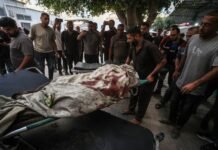
In the same audio, Hosseini states that the explosions were of such devastating force that the bodies of those inside the compound were torn apart, with some individuals identified only through body fragments collected from the scene. Among those was Ali Shamkhani, secretary of the Defence Council and Khamenei’s military adviser, who, according to state broadcaster IRIB, was buried without his head.
Within the residential compound of the leader’s residence, Ali Khamenei and his wife lived in a fully enclosed private home, while his sons and daughters resided in separate, adjacent houses. Khamenei’s residence contained public meeting areas (Hoseineh), separate meeting halls, and a multi-story underground bunker.
According to accounts, the meeting that took place in the early morning hours of Saturday, February 28, was held on the first basement floor of that bunker, not in the deeper levels, because those present believed an American strike would come in the final hours of that night or on subsequent nights, not in the morning.
According to statements from Islamic Republic officials, those killed alongside Ali Khamenei included his daughter Boshra, Zahra Haddad Adel—wife of Mojtaba and daughter-in-law of Ali Khamenei, Zahra Mohammadi Golpayegani—Boshra’s daughter and Ali Khamenei’s granddaughter, and Mesbah Bageri Kani, husband of Hoda, Ali Khamenei’s other daughter. State media also initially reported the death of Khamenei’s wife, Mansoureh Khojasteh Bagherzadeh, but Mojtaba Khamenei made no mention of his mother’s death in his first written message, and Fars News Agency subsequently issued a denial of her death.
The ambiguity surrounding Mojtaba himself, however, continues to deepen. No Islamic Republic official has to date claimed to have seen him or visited him in hospital. It is standard practice for senior Iranian officials to be transferred to military hospitals in emergencies, and the more plausible scenario—one that analysts consider logistically consistent—is that he is being held and treated in a secure underground facility equipped with medical infrastructure.
Separately, rumors of a transfer to Russia have also circulated, though these are widely considered unlikely given that both the United States and Israel maintain comprehensive surveillance of Iranian airspace, and civilian flight-tracking communities monitor air traffic continuously in and out of the country.
On a textual level, some analysts who have examined the written statement attributed to Mojtaba Khamenei argue that the text—which appears deliberately styled to approximate his known seminary prose—was not written by a single author, but by three: Mohammad Mirbaqiri, a cleric close to the Leader’s office; Ahmad Vahidi, the newly appointed IRGC commander; and Ali Abdollahi, the commander of the Islamic Republic’s war operations room. Others suggest that Ali Larijani, Secretary of the Supreme National Security Council, determined the general content and delegated the drafting to the writer or writers of Mojtaba’s message.
Related Story: Errors in Mojtaba Khamenei’s First Message Dictated by IRGC Raise Questions About His Condition
Beyond its disputed authorship, the message itself contained numerous spelling, grammatical, typographical, and structural errors—including disordered sentence sequencing — which observers consider incongruous, given that Mojtaba Khamenei is a cleric of seminary-level education issuing what is arguably the most consequential statement of his life upon assuming the leadership of the Islamic Republic.
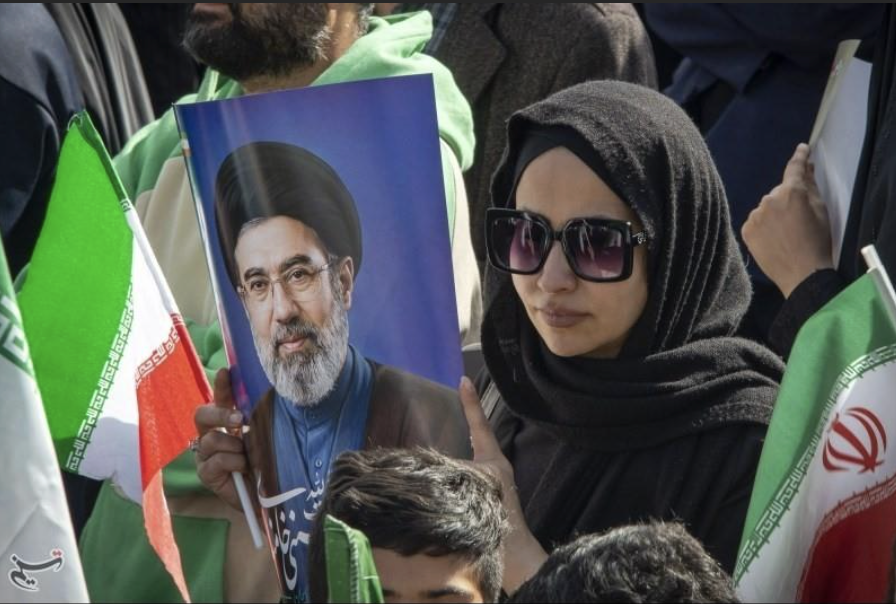
In a message issued in Mojtaba Khamenei’s name, supporters of the regime were urged to remain in the streets to reduce the chances of an uprising by protesters. (Amir Sadghian/Tasnim)
Some sources indicate that Mojtaba Khamenei—if alive—is not at a level of consciousness that would allow him to make decisions or compose a written message, and that the sole substantive function of the statement was to endorse the regime’s current security posture, particularly the instruction to keep loyalist crowds deployed in the streets to suppress any popular uprising.
Some regime propagandists have already begun telling supporters that Mojtaba Khamenei, like Shia Islam’s Twelfth Imam, is in a state of occultation. In parallel, social media users have drawn comparisons between his situation and that of Massoud Rajavi, the leader of the Mojahedin-e Khalq organization (opposition), who has not been seen in public for about 24 years and communicates only through written statements or, on rare occasions, audio messages, bearing little resemblance to his previously known voice, a figure who has, in effect, undergone his own form of political disappearance.
More than two weeks on, the Islamic Republic continues to maintain complete silence on the burial of its slain leader. Although arrangements had been made in the first days following his death, they were subsequently cancelled, fuelling speculation that there is no intact body to bury.