The time for strategic patience in the Strait of Hormuz has expired. As the narrow waterway remains effectively paralyzed by Tehran’s blockade, the international community faces a choice that will define the so-called new world order and the next decade of global security: either assemble a decisive coalition to reopen the passage, or concede that the era of secure global trade is over.
The rising and spreading toll of the blockade is stark. The strait remains the conduit for roughly 20 million barrels of oil per day, approximately 25% of all seaborne oil trade. According to reports, the strait averaged more than 150 vessel transits per day before the conflict, nearly 90% of which were container ships and oil tankers.
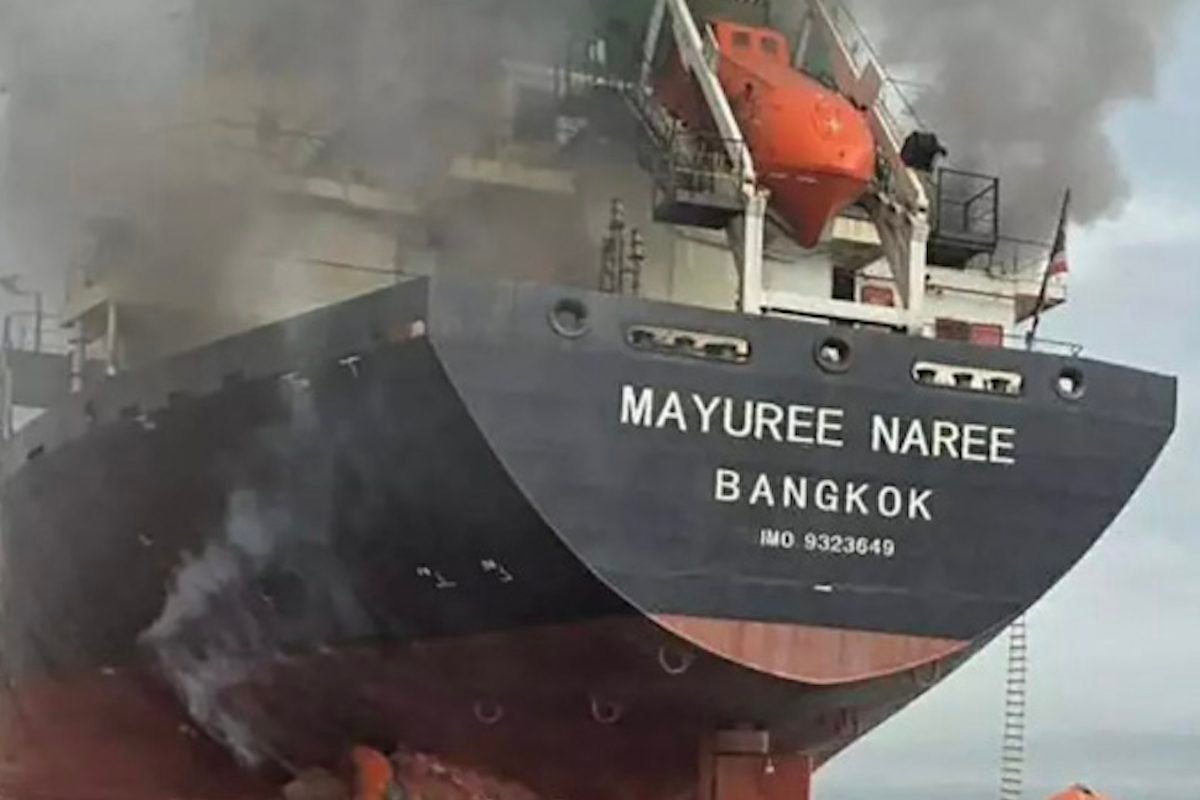
Only five oil tankers left the area on March 11, all sailing under flags of convenience. As a result, around 500 oil tankers remained stuck in the Gulf two weeks after the war started, with at least 16 vessels being attacked or involved in incidents and at least eight seafarers killed.
Major energy producers, including QatarEnergy, Kuwait Petroleum Corporation and Abu Dhabi National Oil Corporation, have been forced to halt production or declare force majeure as tankers are unable to export the supply. Saudi Arabia and the UAE have used pipelines to bypass the strait (via the Red Sea or Fujairah), but these routes handle only a fraction of normal volumes.
Together, these factors have forced oil prices to breach the psychological US$100-a-barrel mark, even briefly touching $125. Gas shortages are being reported in many countries, and the cost of urea, a key agricultural fertilizer, has jumped 25%. The cascading effect has increased food prices and fueled inflation.
Iran has historically asserted that, as a non-ratifier of the 1982 UN Convention on the Law of the Sea, it is not bound by the transit passage regime, which grants extensive, unimpeded rights to foreign vessels and aircraft in international straits.
Instead, Iran contends that only “innocent passage” applies in the Hormuz Strait, giving it greater regulatory authority to stop and inspect vessels it deems a possible threat to national security.
Iran generally permits passage of ships to avoid economic disruption to its own trade. While the waterway is technically open under international law, it is now effectively inaccessible for commercial shipping due to Iranian missile strikes, drone attacks and sea mining.
Reports indicate that Iran has declared all ships must obtain permission from Tehran to transit the strait, a move widely viewed as a violation of international maritime law.
One mitigating factor was the potential of US Navy escorts. But Washington has said it is “not ready” yet to accompany oil ships through the strait because its relevant assets are committed to active combat operations.
This statement came as Iran’s new supreme leader, Mojtaba Khamenei, affirmed in his first public remarks since being selected to succeed his assassinated father that the strait should remain closed during the war.
The point is that this is neither just a Washington problem nor a crisis the West can or should be expected to solve alone. The imperative for a unified, kinetic mandate to restore freedom of navigation is as much an Asian necessity as a Western one.
Over 80% of oil passing through the strait is destined for Asia. India imports more than 50% of its crude from the Gulf, and China is the largest buyer of Iranian oil. Japan and South Korea are already facing energy emergencies, and several Asian countries are considering unprecedented releases from strategic reserves.
With inflation rising, for the populous nations of South and Southeast Asia, where food price stability is the bedrock of social order, this is an existential threat. Analysts are already predicting that the strait’s closure could push Japan into economic contraction.
For these nations, a closed Hormuz Strait is not just a diplomatic headache. It is a fast track to economic stagnation.
Beyond these realities and forecasts, there is an underlying concern. Much has been said about the emerging new world order and its potential to mitigate the ills of the old. Many of the countries most likely to shape that emerging new order are in Asia and the Global South. It is time for them to translate rhetoric into reality.
If they remain silent in the name of neutrality, they will forfeit any moral standing to object when another country holds the global economy hostage in the future. Their inaction will also signal to all revisionist powers that the rules of sea and war are written by aggressors.
There is a comforting fiction circulating in many capitals that what is happening in the Gulf is a localized regional dispute. But to view this through the narrow lens of oil or gas pumps alone would be a catastrophic strategic error.
This is a global economic crisis, and a global coalition must be forged to address it. That coalition must transcend political differences and should include not just Washington, Abu Dhabi and Paris, but also Beijing, New Delhi and Tokyo, among others.
Dr Mohammed Al Dhaheri is the Deputy Director General of the Anwar Gargash Diplomatic Academy (AGDA), Abu Dhabi, and Dr Narayanappa Janardhan is Director of Research, AGDA.