Indonesia’s planned purchase of India’s BrahMos missile could transform its vast archipelago into a maritime barrier, reshaping regional deterrence from the South China Sea to the Indian Ocean.
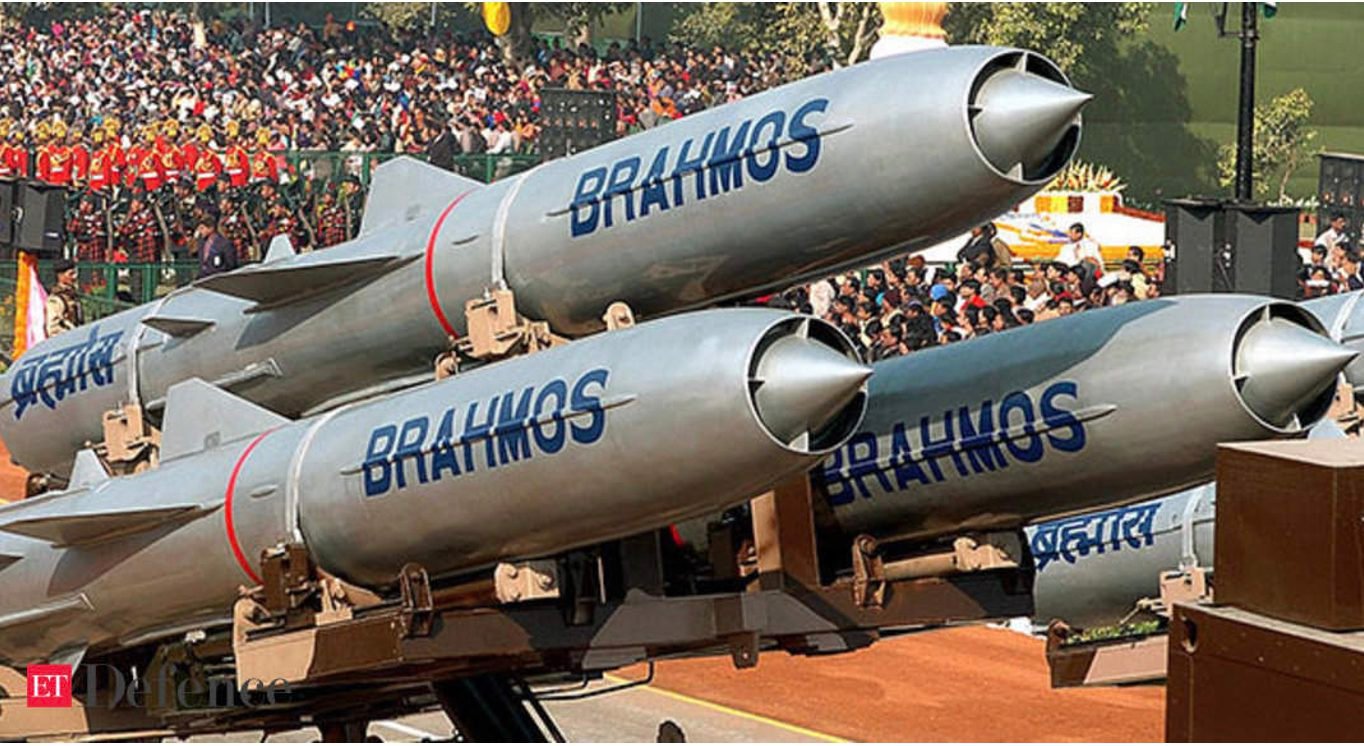
This month, Reuters reported that Indonesian Defense Ministry spokesperson Rico Ricardo Sirait said Indonesia has agreed with India to procure the BrahMos supersonic missile system to modernize its armed forces and strengthen maritime defense capabilities.
The export version of BrahMos has a range of 290 kilometers, travels at Mach 3 and carries a 300-kilogram high-explosive warhead. It can be launched from air, sea or land platforms and uses GPS, GLONASS or India’s GAGAN navigation systems.
Sirait confirmed the deal to Reuters but declined to disclose its value, though BrahMos Aerospace—jointly owned by the Indian and Russian governments—previously indicated in 2023 that negotiations with Indonesia involved a potential contract worth between US$200 million and $350 million. An average BrahMos missile currently costs about $4.75 million, according to Indian think tank reports.
The BrahMos missile, widely regarded as one of the world’s fastest cruise missiles, is a flagship Indo-Russian defense export system and has been marketed to several Asian countries.
If finalized as expected, Indonesia would become the second foreign customer for the system after the Philippines, which signed a landmark export deal with India in 2022. Indian defense authorities and BrahMos Aerospace did not immediately respond to requests for comment on the agreement.
The acquisition reflects Indonesia’s broader military modernization drive and underscores India’s expanding role as a supplier of arms to Southeast Asia. At the tactical level, Indonesia’s BrahMos acquisition reflects its indirect involvement in the broader strategic competition pitting Southeast Asian states against China in the South China Sea.
Although Indonesian official documents do not explicitly identify China as a threat, its long-standing 2015 White Paper warns that violations of maritime sovereignty and tensions in the South China Sea could threaten the security of its outer islands, emphasizing the need for improved maritime defense capabilities.
China is the biggest threat to Indonesia’s maritime security. In late December 2019, dozens of Chinese fishing vessels with a coast guard escort entered waters off the Natuna Islands, prompting Jakarta to summon China’s ambassador, deploy warships and F-16s, and dispatch Indonesian fishing boats to the area.
Then-President Joko Widodo declared there would be “no compromise” on territorial sovereignty and made a high-profile visit on a missile-armed ship to the islands in early January 2020 to underscore the point.
In October 2024, Indonesia’s Maritime Security Agency escorted a Chinese coast guard vessel out of the North Natuna Sea after it disrupted seismic survey work being conducted by Indonesian state energy firm Pertamina. Observers said the incursions were Beijing’s way of testing President Prabowo Subianto’s then-new government’s resolve on the issue.
More broadly, Achmad Sochfan and others note in a September 2025 article in the peer-reviewed Saintara journal that China claims parts of the South China Sea overlapping Indonesia’s exclusive economic zone (EEZ) in the North Natuna Sea, creating persistent tensions around the energy-rich Natuna Islands.
Tharishini Krishnan notes in a January 2026 article for the Asia Maritime Transparency Initiative (AMTI) that acquiring land-based anti-ship missiles such as BrahMos could significantly strengthen Indonesia’s ability to defend its archipelagic waters amid intensifying great-power competition.
Beyond the Natuna Islands, Indonesia’s geography allows land-based anti-ship missiles to control key maritime chokepoints – thereby giving multiple strategic levers over China.
As Alfin Basundoro and Trystanto Sanjaya argue in a January 2026 article for The Strategist, Indonesia possesses significant strategic leverage over China because Chinese trade and energy imports depend heavily on sea lanes that pass through Indonesian waters, particularly the Malacca Strait chokepoint and archipelagic routes such as the Sunda, Lombok, and Makassar straits.
Basundoro and Sanjaya point out that those routes carry a large share of China’s maritime trade and energy supplies from the Middle East to East Asia. They add that because blocking or disrupting these routes would severely affect China’s economy and supply chains, China must maintain good relations with Indonesia. They argue that this dependence gives Indonesia greater latitude to resist Chinese pressure in Natuna-related disputes without seriously jeopardizing economic ties.
However, Indonesia will face significant operational challenges with its BrahMos acquisition. As Andi Ashar points out in an April 2023 9Dashline article, Indonesia could face difficulties integrating the BrahMos with its Western-made coastal radar systems or Combat Management Systems (CMS) aboard its warships.
Having multiple weapon providers complicates logistics and interoperability, potentially affecting combat effectiveness. Ashar also notes that Russia holds a 49.5% stake in BrahMos Aerospace, which could expose Indonesia to sanctions under the US Countering America’s Adversaries Through Sanctions Act (CAATSA). She mentions that several Indonesian arms purchases from Russia have been abandoned because of that possibility.
Such examples include Indonesia’s decision to cancel its purchase of 11 Russian Su-35 fighter jets in December 2021, with former Indonesian Air Chief Marshal Fadjar Prasetyo emphasizing that it was with a “heavy heart” that Indonesia made that decision.
Nevertheless, Indonesia’s mixed military ecosystem reflects its desire to avoid dependence on a single provider to maintain strategic autonomy.
India’s sale of BrahMos missiles to Indonesia follows the successful sale to the Philippines, with the first missiles delivered in April 2024. While India has an extensive defense industry, it has struggled to break into the global arms market – until the sale of BrahMos missiles to the Philippines changed that.
Though relatively small—three batteries and several spare missiles—the Philippine purchase cemented strategic defense ties with India. Sophisticated weapons systems such as BrahMos require continuing maintenance, operator training, and spare parts from their manufacturers, thereby becoming a focal point for practical defense cooperation between India and the Philippines.
With the Philippines and possibly Indonesia operating BrahMos, India might be pursuing an extended anti-access/area denial (A2/AD) strategy to prevent China from further penetrating the Indian Ocean by enabling countries like Indonesia and the Philippines to implement their own A2/AD measures at critical maritime chokepoints connecting the South China Sea, the Pacific, and the Indian Ocean.
Since Russia has a major stake in BrahMos Aerospace, every BrahMos missile sale must get Russia’s approval. Furthermore, according to a December 2025 article by the Russian media outlet Izvestia, key components—such as the ramjet engine and active radar seeker heads—are produced in Russia, while the final assembly is completed in India, along with the launchers, control systems, and software.
The ongoing Ukraine war has deeply and negatively impacted Russia’s arms sales, with the Stockholm International Peace Research Institute (SIPRI) reporting this month that Russia’s arms exports fell 64% in the last five years. Despite that, SIPRI says that Russia was still the world’s third-largest arms exporter in 2025, trailing the US and France, and that 48% of Russia’s foreign weapons sales are directed to India.
Still, the US has not imposed CAATSA sanctions on BrahMos users India and the Philippines – and might make an exception for Indonesia since the procurement aligns with US interests in containing China.
Ultimately, Indonesia’s BrahMos acquisition illustrates how a single weapons system can simultaneously reshape regional deterrence, deepen India’s defense footprint in Southeast Asia and keep Russia partially embedded in the global arms market—even as it raises complex geopolitical trade-offs for the US.