After days of silence, Indonesia has finally issued a statement on the war between the United States, Israel and Iran. The response, however, is strikingly cautious.
President Prabowo Subianto said Indonesia is “on the right track” by refusing to take sides. Speaking on March 9, he emphasized that Indonesia should remain committed to its long-standing policy of nonalignment and respect for all countries. Indonesia’s Foreign Ministry echoed this position, calling on the United States and Israel to stop attacks on Iran while also urging Iran to halt strikes on neighboring states and return to negotiations.
The tone is diplomatic. But the wording is also careful.
Indonesia’s official statements repeatedly refer to “tensions” and “escalation.” They avoid stronger language about the military campaign that triggered the conflict. Rather than directly describing the attack itself, Jakarta has framed the war primarily as a cycle of violence among several parties that now needs to be de-escalated.
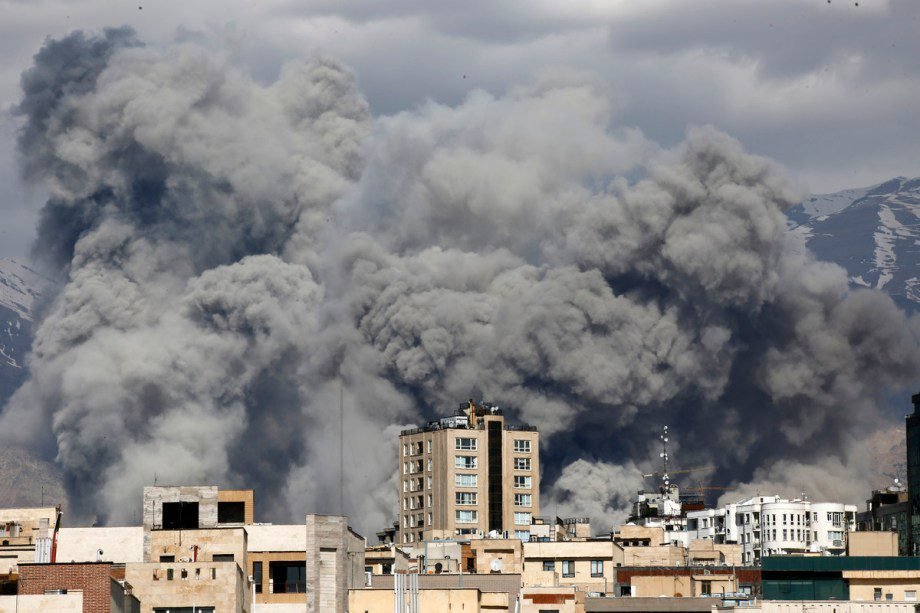
The conflict began on Feb. 28, when the United States and Israel launched coordinated strikes across Iran targeting senior political and military leadership. The operation killed Iran’s supreme leader, Ayatollah Ali Khamenei, and quickly escalated into a wider regional confrontation after Iran retaliated with missile and drone attacks.
READ: Indonesia suspends participation in Board of Peace following attack on Iran
Several countries have responded more directly to those events.
Oman, for example, issued one of the clearest statements. Its foreign minister, Badr al-Busaidi, described the actions taken by the United States and Israel against Iran as “immoral and illegal.”
Other governments have also expressed concern that the strikes violated principles of sovereignty and undermined diplomatic negotiations that had been underway only days earlier.
Indonesia, however, has chosen a more restrained vocabulary.
Jakarta’s statements focus on urging all parties to exercise restraint and return to dialogue. In principle, that position reflects Indonesia’s bebas aktif foreign policy — a tradition of nonalignment that seeks to keep the country independent from major power blocs while encouraging peaceful solutions to conflict.
But neutrality does not necessarily require avoiding the sequence of events that led to the war.
READ: Oman condemns US-Israeli war on Iran as ‘immoral and illegal’
Indonesia has historically been vocal about the importance of sovereignty and territorial integrity. Those principles have long shaped Jakarta’s diplomatic identity, particularly since the 1955 Bandung Conference, which promoted anti-colonial solidarity and equality among nations.
In the current conflict, however, the government has chosen language that is more cautious than that used by several other countries.
Part of the explanation may lie in Indonesia’s present diplomatic priorities. Jakarta has recently strengthened strategic ties with Washington, including signing the Agreement on Reciprocal Trade.
Maintaining stable relations with the United States — particularly with the administration of President Donald Trump — appears to be an important consideration for President Prabowo’s government.
Against that backdrop, openly criticizing a US military operation could complicate Indonesia’s broader diplomatic agenda.
Previously, President Prabowo also offered Indonesia as a potential mediator in the conflict. Yet the idea has raised questions among observers, given Indonesia’s limited influence over the main parties involved.
For now, Indonesia appears to be pursuing a careful balancing act: encouraging de-escalation while avoiding language that could alienate powerful partners.
That approach may reflect diplomatic pragmatism. But it also highlights a tension between Indonesia’s long-standing commitment to principles such as sovereignty and the realities of navigating relationships with major powers.
After days of silence, Indonesia has finally spoken. Yet compared with the more direct statements issued by countries like Oman, Jakarta’s response remains notably cautious — and carefully worded.
OPINION: Can Indonesia mediate a US–Iran war?
The views expressed in this article belong to the author and do not necessarily reflect the editorial policy of Middle East Monitor.