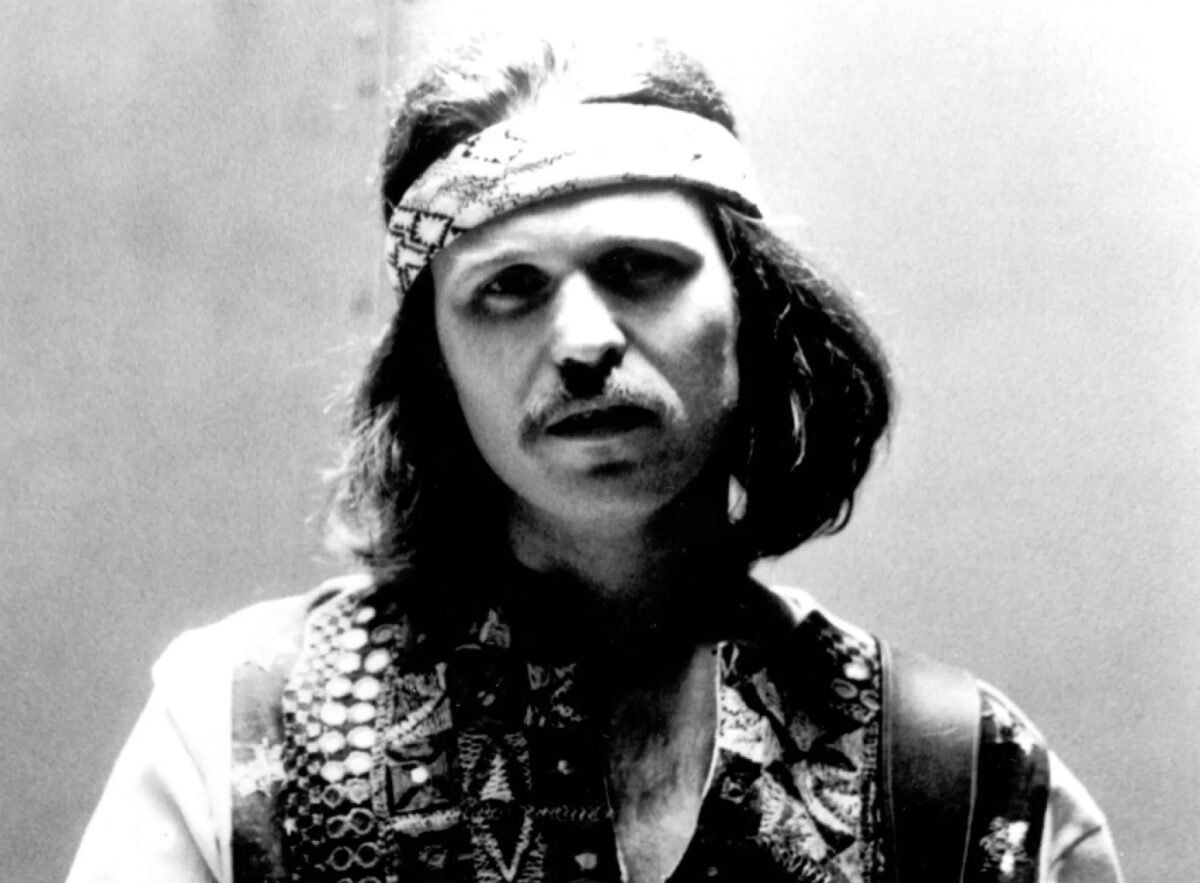
Country Joe McDonald — the folk-rock firebrand who turned Vietnam-era outrage into singalong protest and became a Woodstock icon — has died. He was 84.
McDonald, born Joseph Allen McDonald, died Saturday in Berkeley, California, from complications related to Parkinson’s disease, according to statements shared on the band’s social media and reports from those close to his family.
If you know one moment, it’s this: the 1969 Woodstock Festival, where McDonald stepped up and delivered “I-Feel-Like-I’m-Fixin’-to-Die Rag,” a sharp, darkly funny antiwar song that helped define the era’s counterculture anger. Before the track hit full stride, he led the crowd in the notorious call-and-response “Fish Cheer” — a bit that had the audience spelling out the F-word on command, equal parts catharsis, comedy, and defiance.
From D.C. to the Navy to Berkeley’s protest boom
McDonald was born January 1, 1942, in Washington, D.C., and grew up in El Monte, California. Music came early — he played trombone in weekend dance bands — but his path wasn’t the typical rock-star pipeline. As a teenager, he joined the U.S. Navy and served from 1959 to 1962.
After his discharge, he returned to Los Angeles for college, then moved north in 1965 — landing in the Bay Area as the post–Free Speech Movement scene was bubbling over. In Berkeley, he co-founded Country Joe and the Fish with guitarist Barry Melton, planting a flag in the psychedelic-folk world with politics baked into the sound.
Even the band name came with a twist. McDonald later joked that early suggestions included “Country Mao and the Fish” and even a nod to Joseph Stalin — and yes, he admitted the “Joe” wasn’t exactly accidental. He said his communist parents had named him after Stalin, a detail that underlined just how political his origin story really was.
The protest song that didn’t blame the soldiers
The band’s debut album, Electric Music for the Mind and Body, arrived in 1967, mixing acid-soaked rock with protest energy — including “Superbird,” a satirical jab at President Lyndon Johnson. But notably, it didn’t include “Fixin’-to-Die Rag” or “The Fish Cheer,” reportedly due to censorship fears. The more controversial material would come soon after, as the band leaned harder into the political lane.
McDonald later explained why “Fixin’ to Die Rag” landed differently than many protest songs of the time: it didn’t attack the troops. In his telling, the song aimed its venom at politicians and war profiteers — and that shift mattered. He said it was written so someone in the military could sing it too, with a bleak, sarcastic “whoopee, we’re all going to die” attitude that cut through the era’s slogans.
That edge, and the crowd participation, also got him in trouble. “The Fish Cheer” became so infamous that after one Massachusetts performance, McDonald was charged with inciting lewd behavior — which only added to its rebel mythology. By the time Woodstock arrived, the audience was ready. He didn’t have to force the moment. He just had to start it.
A lifelong activist with a musician’s instincts
Country Joe and the Fish broke up in 1971, but McDonald didn’t stop. He went solo, releasing dozens of records and continuing to write about civil rights, environmental issues, and the causes he felt needed a microphone.
And he kept returning to the song that made him immortal — even decades later. Around the 70th anniversary of the Hiroshima bombing, he performed “Fixin’-to-Die Rag” at an anti-nuclear protest at Livermore Laboratory, showing the message still had a place in modern activism.
In a later interview, McDonald reflected on aging with a mix of disbelief and grit, noting he kept working because it kept him steady — because it gave him “a need” to fill. He also spoke candidly about being politically left his whole life, while acknowledging that as an entertainer, you can lose your audience if you turn everything into a lecture. His solution: use music as a morale boost, show up for movements that don’t get mainstream attention, and lend his name — and presence — as a kind of amplifier.
He is survived by his wife, Kathy, and, according to past interviews, five children.