As Iranian Kurdish opposition forces step up their activity and a coalition of the main Kurdish parties—most of them armed—takes shape, the Islamic Revolutionary Guard Corps (IRGC) has in recent days repeatedly attacked the bases of Kurdish groups opposed to the Islamic Republic. At the same time, Komala, one of the popular parties, has also joined the Kurdish alliance against Iran’s regime.
On Wednesday night, the IRGC attacked the camp of Komala (Zahmatkeshan), one of the now six members of the Kurdish coalition, and the ongoing attacks on Erbil and other cities and areas of the Kurdistan Region continue.
According to statements by the Kurdistan Democratic Party of Iran and other Kurdish parties, the IRGC also attacked the camp of the Kurdistan Democratic Party of Iran in Koya (Koysinjaq), on Monday in Erbil, Iraq, with three drones.
Rudaw, a Kurdish news website, also reported that the camp—where the families of the party’s forces live—was also targeted with missiles. The Kurdistan Freedom Party (PAK) has also reported that one of its peshmerga fighters was killed in an IRGC missile attack on the party’s base.
On Tuesday afternoon, Tasnim News Agency, affiliated with the IRGC, reported another attack on the positions of dissident Kurdish parties in the Kurdistan Region, writing that these parties “were planning infiltration and action against the country” and that they were “powerfully destroyed in a targeted intelligence operation with the launch of 30 drones.”
A few hours later, the agency reported that the IRGC Ground Force had entered the war by launching dozens of drones at the “US base in Erbil” and by “destroying the deployment locations” of dissident Kurdish groups in “northern Iraq in several rounds.” However, the reported attack on the US military base in Erbil has not been confirmed by any other media outlet. This comes as many IRGC command centers, including the Ground Force, have been targeted by the United States and Israel over the past four days.

Shiwa Hassanpour, an international relations student, says the IRGC attacks have injured civilians in Erbil. (The Media Line)
Shiwa Hassanpour, a student and human rights activist in Erbil, tells The Media Line that the IRGC’s relentless attacks on the Kurdistan Region’s capital and on the camps of Iranian Kurdish parties are continuing, causing damage and injuries to ordinary civilians as well.
In one instance, she says, a piece of shrapnel from a missile strike on Erbil hit her residence. The IRGC attacks on the Kurdistan Region intensified significantly on Wednesday night, she adds; many areas of Erbil suffered damage, and some people were injured. Most of this damage, she says, occurs due to missiles and drones being intercepted over the city and the resulting shrapnel and debris striking the ground.
Meanwhile, Iranian Kurdish parties denied an Axios report claiming that they were planning to send forces into Iran and would engage the IRGC in the coming days, or that they were deploying near the Iran border to launch an incursion into the country. Two sources in the Kurdistan Region told The Media Line that this report is not accurate and that Kurdish forces are stationed at their bases. Axios wrote that Kurdish forces are preparing to attack IRGC positions inside the country, and the CIA and Mossad are in talks with the Kurds.
Other news agencies, including the AP and Reuters, have also reported that the Kurds have been consulting with the United States to examine the possibility of an operation against the Islamic Republic, which has been at war with the United States and Israel for the past six days.
It has been said that US President Donald Trump spoke by phone on Sunday with the leaders of the two main parties in Iraqi Kurdistan. In calls with Masoud Barzani, leader of the Kurdistan Democratic Party, and Bafel Talabani, leader of the Patriotic Union of Kurdistan, he discussed the US and Israeli war with Iran. This comes as Axios reported that these calls resulted from Netanyahu’s consultations aimed at securing greater contact and alignment between the United States and Kurdistan Region leaders.
The Wall Street Journal has also written that the US president is considering support for Kurdish opposition forces against the Islamic Republic. CNN also reported that Trump spoke with Mustafa Hijri, the leader of the Kurdistan Democratic Party of Iran, one of the most popular Kurdish parties in Iran, and one of the party’s leaders has confirmed this call.
However, under a security pact with Iraq, Iran’s regime compelled dissident Kurdish groups to reside in camps far from the border in the Kurdistan Region of Iraq under strict limitations, and they have been barred from conducting military operations against the regime from inside Iraq. Under this pact, the dissident Kurdish groups are to be disarmed; although semi-heavy weapons and, in some cases, individual firearms have been handed over, it appears that complete disarmament has faced resistance from Kurdish parties.
While White House press secretary Karoline Leavitt on Wednesday denied that the United States is arming the Iranian Kurds, media outlets have pointed to increased Israeli outreach to Kurdish parties in recent weeks, and finally, on Thursday evening, President Trump told Reuters that he welcomed and supported Kurdish forces launching operations against Iran’s regime.
Most Iranian Kurdish parties have had good relations with Israel for years, and the Kurdistan Free Life Party (PJAK)—one of the six Kurdish forces that recently united against the Islamic Republic—has openly stated that if Iran’s freedom depends on cooperation with Israel, it would welcome that.
Peyman Viyan, one of PJAK’s two leaders and the only female leader among Iranian Kurdish parties, said in an interview that “at present we have no contact with the United States and Israel,” but in another interview with Israel’s Channel 12, she indicated that a free Iran could be achieved through cooperation between Iranians and Israelis.
The Kurds of Iran stand united. For the first time, all major Kurdish parties have come together as one in a new coalition – a historic step toward shaping a new future for Kurds and a democratic Iran. #Komala @WhiteHouse @StateDept @DeptofWar
— Abdullah Mohtadi (@AbdullahMohtadi) March 5, 2026
On the other hand, Abdullah Mohtadi, secretary-general of the Komala Party of Iranian Kurdistan, recently met with some members of the US Congress during a trip to Washington. It appears that Kurdish parties—who have a large number of armed peshmerga—have gained a significant role in US and Israeli policy at a time when they are now at war with Iran’s regime.
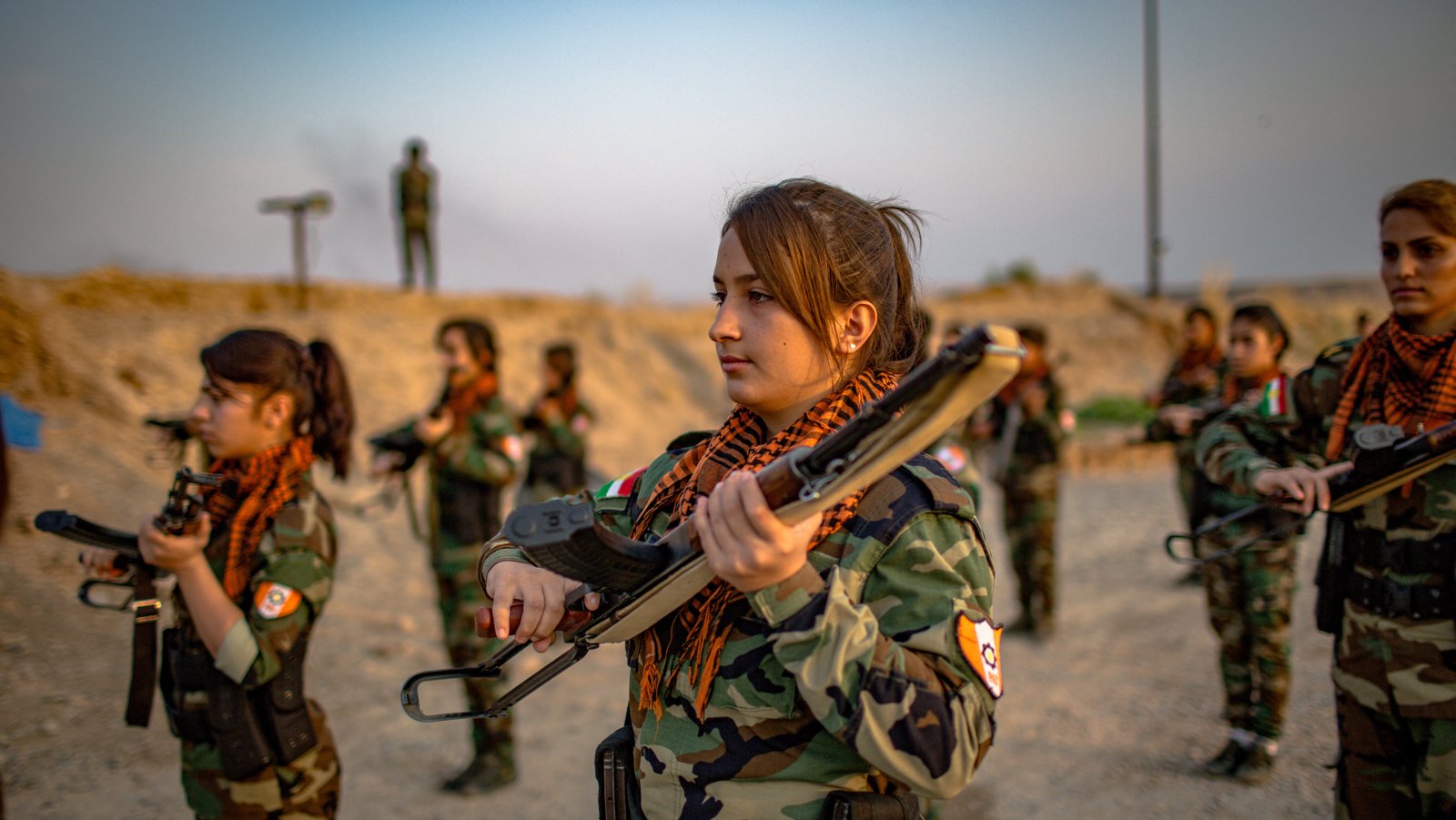
Komala, a leftist party with a moderate orientation, announced on Wednesday that it had joined the coalition of five other Kurdish parties against the Islamic Republic. As a result, these six Kurdish forces: Kurdistan Democratic Party, Komala, Komala of the Toilers (Zahmatkeshan), PJAK, PAK and Khabat, form a front made up of thousands of peshmerga in the Kurdistan Region, and they also have active supporters in Iranian Kurdistan.
Nearly all Iranian Kurdish parties seek autonomy for Iranian Kurdistan and freedom for Iran. Recently, however, Reza Pahlavi, exiled crown prince and one of the opposition leaders abroad, used harsh language in response to the joint action of the five Kurdish parties and threatened “suppression by the army,” prompting many negative reactions.
On Tuesday, in a video message, he corrected his previous message and said he supports ending discrimination against Iran’s various ethnic groups, including Kurds.

Iranian Kurdish forces have thousands of peshmerga fighters in Iraq’s Kurdistan Region who could join the fight against Iran’s regime and open a new front. (KDPI)
In recent weeks, Kurdish opponents of the Islamic Republic have repeatedly clashed with the IRGC, and the regime has responded by firing missiles at their bases. But since Sunday, it has escalated missile and drone launches toward the bases and camps of Iranian Kurdish parties in Iraq significantly, and reports have also been published of drone launches by the regime against Kurdish positions on Thursday.
Nechirvan Barzani, president of the Kurdistan Region, said on Thursday that he wants the Region to be kept out of the conflict.
Earlier this week, Kurdistan Region Prime Minister Masrour Barzani, without naming the IRGC, warned about ongoing missile and drone attacks, calling them “terrorist attacks,” and urged Iraq’s federal government to intervene.
On Thursday, Kurdistan Region media outlets condemned the Islamic Republic’s attacks on Erbil and other areas, as well as strikes on camps housing the families of Iranian Kurdish parties, warning that the raids are putting civilians’ lives at risk.