New Delhi seeks to balance ties with Washington, Jerusalem, and Tehran while protecting trade routes, energy supplies, and 9 million citizens working across the Gulf
[NEW DELHI] Iran’s deputy foreign minister arrived at the Raisina Dialogue on Friday morning not to reassure, but to warn. Saeed Khatibzadeh used India’s premier security forum to accuse Washington of deception before the war and to signal that Tehran sees the conflict in existential terms. “Trump has started a cheesy reality show,” Khatibzadeh told the conference, referring to the Geneva talks that preceded the US–Israeli strikes on Iran. “They held talks in Geneva, and had aggression on us. They are carpet bombing Iran.”
America has decided to put an end to the existence of Iran
“America has decided to put an end to the existence of Iran,” he said. “We have no option but to end the existence of the US in the Persian Gulf area.” On the Strait of Hormuz, he rejected Western accusations outright. “The Strait of Hormuz has not been closed by us,” he said, adding: “Are US radars in the Gulf for fishing in the Persian Gulf?” Iran’s approach, he said, was deliberate rather than impulsive. “We are not in American football mentality. We are in chess mentality.” When he turned to India, his tone changed. “We attach great importance to Iran–India relations,” he said.
We are not in American football mentality. We are in chess mentality.
That line carried unusual weight in New Delhi. By the time Khatibzadeh took the stage, an Iranian frigate recently hosted by the Indian Navy had been sunk in waters near Sri Lanka, Indian fertilizer plants were already cutting output, and Indian airlines were scrambling to repatriate citizens from Gulf airports hit by Iranian missiles. New Delhi, for its part, still had not issued a formal statement on the opening US–Israeli strikes on Iran.
A week before those strikes, Iranian Foreign Minister Abbas Araghchi had been in Geneva negotiating with President Trump’s envoy Steve Witkoff and Jared Kushner. Speaking later to NBC News, Araghchi said he had heard nothing from either man since. “We negotiated twice last year and this year, and then in the middle of negotiations, they attacked us,” he said.
For India, the stakes are immediate. The country imports 88% of its crude oil, and roughly half of that moves through the Strait of Hormuz. About 9 million Indian nationals work across the Gulf, sending home more than $50 billion a year, more than India’s entire trade surplus with the United States. The war may not be India’s, but its consequences are already hitting India’s economy, transport links, and strategic neighborhood.
Israeli Foreign Minister Gidon Saar, speaking by video from Jerusalem at Raisina, argued that the conflict had already moved beyond its original frame. “Iran is acting very stupidly,” he said, “attacking not less than 10 countries—all the Gulf states, Cyprus, Azerbaijan, even Turkey. This regime is not sane.” Israel’s objective, he said, is to remove the threat for the long term. “We do not want to go to a new war every year.” The political endgame, he added, “will be written by the Iranian people.”
Saar also said India had not been briefed in advance. “We could not brief Prime Minister Modi on Thursday,” Saar said, “because the decision was taken only on Saturday early morning—and that happened only after the failure of negotiations between the US and Iran that took place on that same Thursday.”
New Delhi’s public posture has been calibrated almost to the point of silence. Prime Minister Narendra Modi had addressed the Israeli Knesset the week before the strikes began, making India’s subsequent silence on the US-Israeli assault harder to read as simple neutrality.
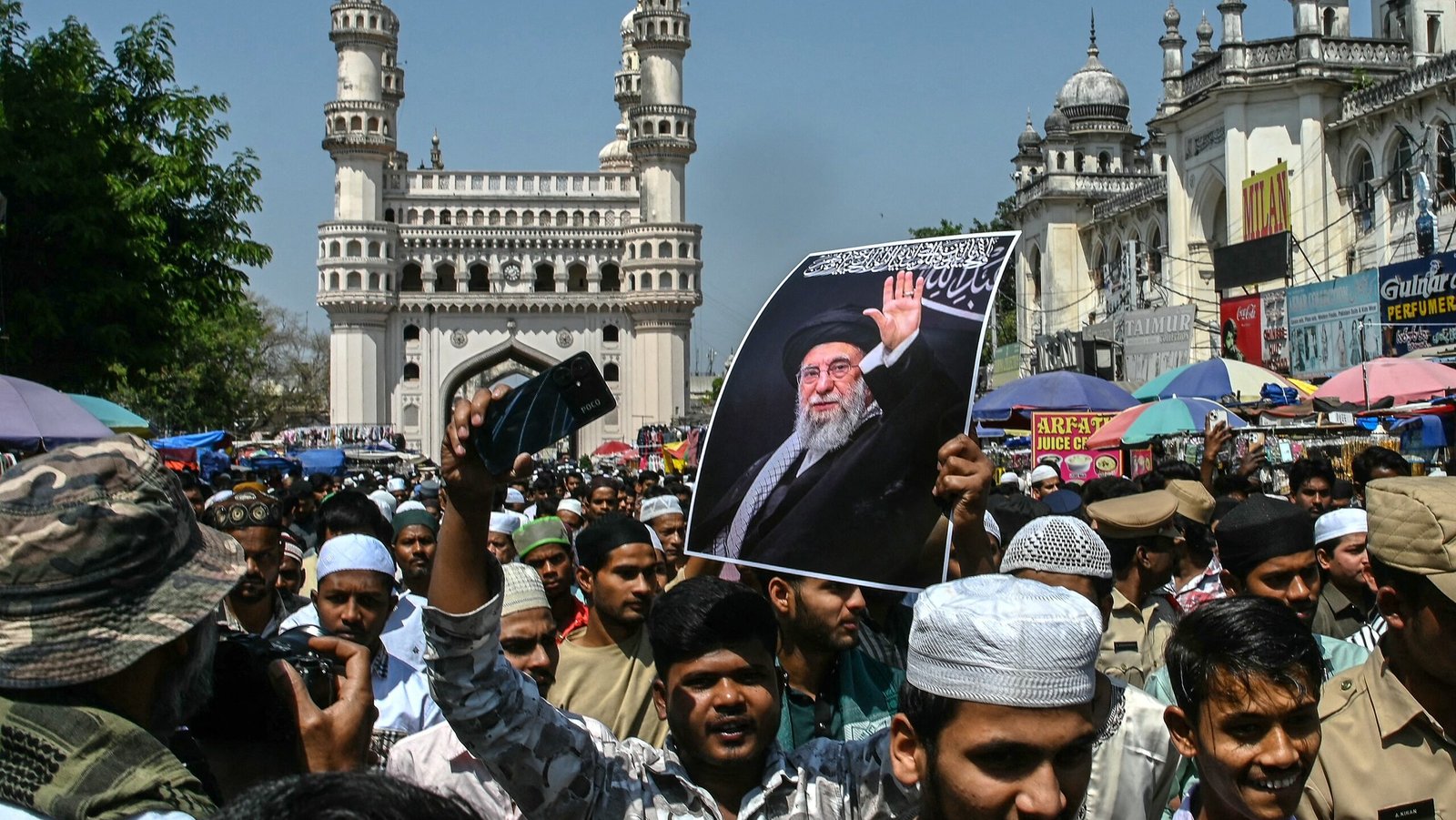
Since then, India has condemned Iranian missile attacks on Gulf states but has issued no statement on the initial US–Israeli assault on Iran. On March 3, Indian diplomatic missions were instructed to hold off on signing Iranian condolence books and await clearance from headquarters. That pause lasted until Thursday, when Foreign Secretary Vikram Misri visited the Iranian Embassy in New Delhi and signed the register beside a large photograph of Ayatollah Ali Khamenei. India does not plan to issue a separate formal condolence statement.
The Ministry of External Affairs also rejected reports that US forces had used Indian ports to launch strikes on Iran, calling those claims false. The denial showed how carefully New Delhi is trying to avoid even the appearance of operational involvement.
That balancing act was a recurring theme among analysts at Raisina. Kabir Taneja, executive director for the Middle East at the Observer Research Foundation, had just returned from Dubai. “The security part was largely taken care of in back rooms,” he said. “The economy was the story. And now the economy is in trouble.”
Karim Haggag, director of the Stockholm International Peace Research Institute, said the widening conflict followed a pattern the region has seen before. He pointed to the 2002 Iraq invasion, which a younger Benjamin Netanyahu endorsed as something that would “resonate positively throughout the region,” and to the 2018 US withdrawal from the Iran nuclear deal. Neither, he argued, produced the stability that had been promised. “Every single time,” Haggag said, “leaves us with a region more radical, more fragmented, more militarized.”
Leslie Vinjamuri of the Chicago Council on Global Affairs said the duration of the war will depend heavily on Washington. President Trump, she said, is “probably still assessing, but much more inclined toward a maximalist outcome.” A settlement that leaves the regime in place is not under discussion. “There can be a pause,” she said. “But so long as this regime remains, it is only a pause.”
Iranian officials, for their part, have signaled no interest in de-escalation. Iran’s Supreme National Security Council secretary, Ali Larijani, said Monday on X that Tehran had prepared for a long war and had not started it. Araghchi, speaking to reporters Friday, went further. Asked about a possible US ground invasion, he said Tehran was ready. “No, we are waiting for them,” he said. “That would be a big disaster for them.” He also dismissed the prospect of ceasefire talks.
The war has already reached India’s maritime neighborhood in a way few in New Delhi expected. The Iranian frigate IRIS Dena had docked at Visakhapatnam just days before it was sunk, after taking part in a joint naval exercise with the Indian Navy. The Sri Lanka Navy launched search-and-rescue operations after the ship sent a distress signal 40 nautical miles south of Galle, and the Indian Navy diverted assets to assist. Iran’s ambassador to India, Mohammad Fathali, said the ship had been unarmed and had been returning from peace duties when it was hit.
In New Delhi, Araghchi called the sinking “an atrocity at sea,” and on X he mentioned India by name. The vessel, he wrote, was “a guest of India’s Navy carrying almost 130 sailors, struck in international waters without warning.” Before Misri’s visit to the Iranian Embassy, sources described visible frustration in Iranian official circles over India’s posture.
Araghchi also tried to reassure Gulf states publicly. “We have not attacked our neighbors. We have not attacked Muslim countries,” he said in the NBC interview on Thursday. “We have attacked American targets and American bases, American installations, which are unfortunately located in the soils of our neighbors. I have been in touch with their foreign ministers, and I have explained that we are not targeting you.” That distinction matters in India, where millions of workers live in the very countries hosting those bases.
Pakistan, by contrast, has emerged as a more active diplomatic channel for Tehran. Pro-Iranian protests there left at least 24 people dead in clashes near the US Consulate in Karachi and in Gilgit-Baltistan, where the army imposed a three-day curfew. At the same time, Pakistan’s military was engaged across the Afghan border after striking 46 targets there in late February. Foreign Minister Ishaq Dar said he told Araghchi directly that Pakistan has a defense agreement with Saudi Arabia. According to Dar, Tehran then sought assurances that Saudi territory would not be used as a launchpad for strikes on Iran. Dar told reporters that this exchange appeared to shape Iranian targeting, pointing to relatively restrained Iranian strikes on Saudi Arabia and Oman as evidence that diplomacy was having some effect. More than 5 million Pakistani workers also live in the Gulf.
Ninety-nine percent of people in Dubai never imagined that war or any sort of conflict would come to their doors
Jiten Jain, a cybersecurity expert based between the Emirates and India who spoke to The Media Line on the sidelines of Raisina, said Dubai had absorbed the shock better than he expected. “Ninety-nine percent of people in Dubai never imagined that war or any sort of conflict would come to their doors,” he said. “But there is no panic. The UAE government has done really well to take care of everyone.” What troubled him more was how close the fighting had come to India’s own maritime zone. “Near our home, near Sri Lanka, a ship was shot down. In our part of the world, a guest is a guest.”
Adelle Nazarian, a senior fellow at the Gold Institute for International Strategy in Washington, said India’s silence was intentional. “India has been brilliant in positioning itself as a geopolitical entrepreneur, able to balance all the opposing factors and maintain diplomatic relations with each of them.” She did not expect Modi to break that pattern. “You have certain pockets of the Indian population protesting the death of Khamenei, and others silently celebrating. Prime Minister Modi is not going to tip his hat in either direction. And I think that is wise.”
India must once again walk a tightrope
Harsh V. Pant, vice president for studies at the Observer Research Foundation and a professor of international relations at King’s College London, said India is following a familiar script. “India must once again walk a tightrope,” he said. “Its calibrated response—expressing concern while avoiding explicit condemnation—reflects its simultaneous partnerships with the United States, Israel, and Iran.” Pant said New Delhi is trying to protect energy flows, connectivity projects including Chabahar Port, and expanding security ties with both Israel and the United States, even as the same war strains all three relationships at once.
Taneja has argued that India generally tries to avoid taking unnecessary positions in the Middle East. That calculation is back in force, but at a steeper cost than before.
Trade data and energy disruption are already telling the story. Iran and Iraq together buy nearly half of India’s basmati rice exports. Iranian buyers had been stockpiling for months before the strikes began, pushing domestic prices higher before the first shot was fired.
Iranian drone strikes hit QatarEnergy facilities at Ras Laffan Industrial City and Mesaieed Industrial City on March 2, forcing a halt to the world’s largest liquefied natural gas complex and sending European benchmark gas prices sharply higher. Qatar declared force majeure on exports, and sources say production is not expected to return to normal for at least a month. Pratnashree Basu, an associate fellow at the Observer Research Foundation, said roughly 10% of the global container fleet is now stuck in a bottleneck near Hormuz and that war-risk insurance premiums have risen by as much as 50%, making transit through the strait commercially unworkable for many operators. Tanker traffic through Hormuz has fallen from roughly 24 ships a day before the conflict to about four.
That damage is feeding directly into India’s fertilizer chain. Ras Laffan produces urea, ammonia, and methanol alongside liquefied natural gas, and Qatar accounts for about 11% of global urea exports. The Indian Farmers Fertiliser Cooperative has already begun trimming output at some plants after Qatari feedstock deliveries stopped. Fertiliser Association of India Director General Suresh Kumar Chaudhari said current stocks are sufficient for now, but he added: “If the war continues, it will be a matter of concern for us.” If the disruption persists, India may need costly urea imports before the monsoon begins in June.
Civilian fallout is spreading too. India’s national school board canceled exams for students in the UAE, Bahrain, Kuwait, Qatar, Oman, and Saudi Arabia through March 11.
Commercial aviation has also been thrown into disarray. Emirates suspended all scheduled flights from Dubai through March 7. Qatar Airways remained fully grounded pending the reopening of Qatari airspace. Air Arabia extended its UAE suspension through March 9. The Middle East is India’s largest westbound aviation corridor, and with Pakistani airspace already closed to Indian carriers, there is no short route to Europe. Airlines that can still move cargo are rerouting around Africa’s Cape of Good Hope, adding weeks of transit time and sharply higher fuel costs. As of March 3, about 8,000 passengers were stranded in Qatar alone, with tens of thousands more across the Gulf. Indian carriers deployed repatriation flights—Air India Express added services from Ras Al Khaimah to Delhi, Kochi, and Mumbai—but demand outstripped capacity.
US Deputy Secretary of State Christopher Landau, also speaking at Raisina, said Washington sees opportunity in India’s exposure. “I hope India is thinking about all its resource options, and I can’t think of a better alternative source than the United States of America.” To ease the immediate squeeze, the US Treasury issued a 30-day waiver allowing Indian refiners to purchase Russian crude—a temporary exemption that signaled Washington wants oil flowing to India even as it seeks to shut down Iranian supply routes. Brent crude crossed $85 a barrel on Thursday, up roughly $15 since the strikes began. For every dollar added to the price of a barrel, India’s import bill rises by $1.4 billion. Ship-tracking data showed Russian tankers that had been headed to East Asia rerouting toward India. On Iran itself, Landau was blunt. “We told them: no development of a nuclear weapon. Ultimately, we concluded that approach was not going to work.” The goal, he said, is “a Middle East that is not a threat to other parts of the world.”
India’s own security establishment has been less restrained. Former Indian Navy chief Adm. Arun Prakash said on television that an American nuclear submarine had been operating in waters close to India for days without New Delhi being informed, and he called on the government to formally convey its displeasure to Washington. Strategic analyst Brahma Chellaney called the torpedo strike a strategic embarrassment that undercut India’s standing as the Indian Ocean’s preferred security partner. Former Foreign Secretary Kanwal Sibal, usually supportive of the government’s foreign policy line, noted that the MILAN naval exercise framework commits participating navies to a free, open, and rules-based maritime order, and that the Iranian frigate had been hosted by India under that banner.
The ruling Bharatiya Janata Party has rejected opposition accusations of silence as partisan. Mallikarjun Kharge, president of the opposition Indian National Congress party, asked why India lectures others on being the net security provider of the Indian Ocean if it cannot respond to events in its own backyard.
For now, New Delhi is still trying to stay balanced. But the war is tearing through the very lanes, markets, and relationships that made balance possible. Taneja put the dilemma plainly: “India will have to look at alternatives to tap into, to satiate its voracious appetite for oil, an appetite which is growing fast.”