Damascus positions troops, armored vehicles, and reconnaissance units along key frontiers while tensions linked to the Iran confrontation spread across neighboring states
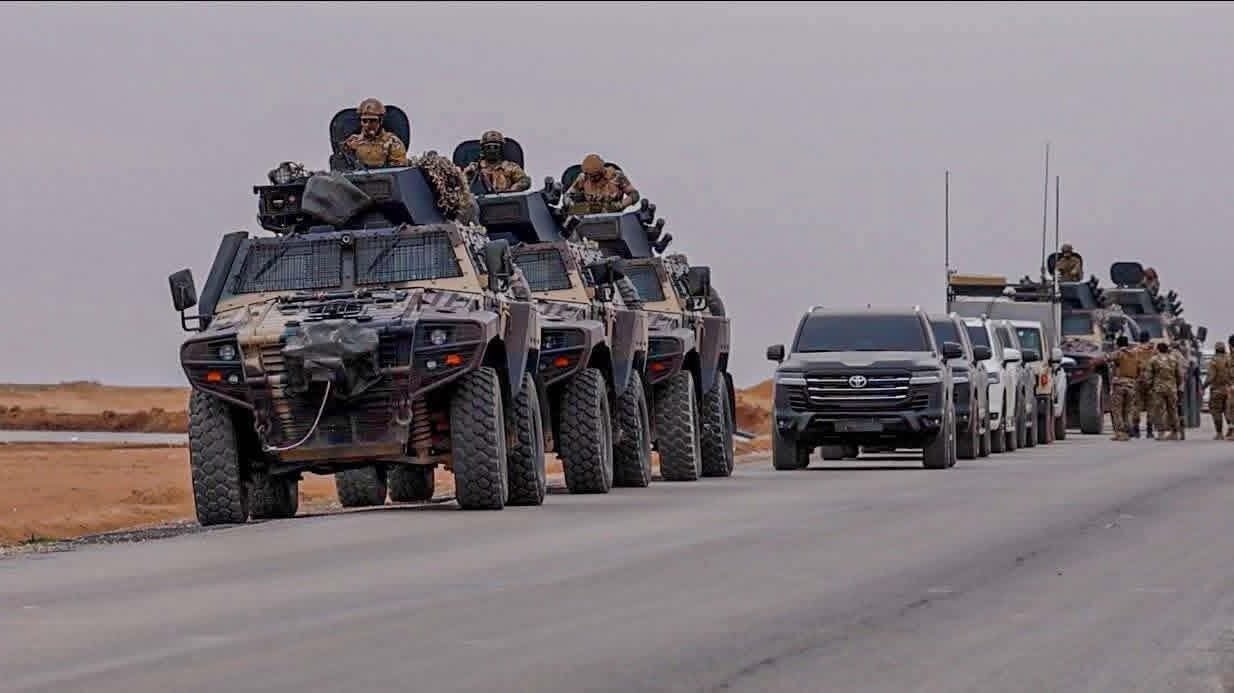
[DAMASCUS] Syrian authorities have deployed significant military reinforcements to border sectors with Lebanon and Iraq in recent days, a move Damascus says is meant to secure the frontiers and maintain internal stability. The deployments include additional infantry and armored vehicles, as well as reconnaissance units, according to Syrian military sources, and come as the war involving the United States and Israel on one side and Iran on the other continues to widen, raising fears of spillover across multiple fronts.
…a sovereign defensive measure that does not target any state or party…
A Syrian Defense Ministry source told The Media Line that the new units were dispatched as precautionary measures to secure frontier areas and curb illegal activity, including smuggling and the movement of armed groups across the frontier. In a separate statement, the ministry’s Media and Communication Administration described the deployments as “a sovereign defensive measure that does not target any state or party,” saying the aim is to protect Syrian territory as regional developments shift rapidly.
On the Lebanese frontier, a field military source said the reinforcements include infantry units, armored vehicles, and short-range rocket launchers, along with reconnaissance battalions tasked with monitoring border activity and confronting smuggling operations. The forces have been stationed particularly in the western countryside of Homs and areas near the Lebanese border—sensitive terrain given its proximity to areas of Hezbollah influence in eastern Lebanon.
The same source estimated that thousands of Syrian soldiers have been deployed to these locations, reflecting a heightened state of alert within Syria’s military establishment as tensions build across the region.
These movements follow US and Israeli strikes against Iran that have intensified pressure across several theaters, including Lebanon, Syria, and Iraq. Israeli operations in Lebanon have also expanded in recent days, with evacuations ordered in parts of the south and military activity widening on the ground and from the air, according to regional reporting and official statements.
The escalation also followed a rocket attack carried out by Hezbollah against Israel after the assassination of Iran’s supreme leader, Ali Khamenei—an event widely viewed as a turning point that drew additional actors into the confrontation.
For Damascus, the deployments reflect a tightening security equation in a country threaded with long borders, rival regional interests, and armed factions operating in and around its territory. Border zones with Lebanon and Iraq have long been shaped by smuggling networks and armed groups, and the pace of regional escalation is now testing those already-fragile fault lines.
In the south, sources within the IDF said that Damascus has moved forces and weapons to areas Israel described as strategic in the Golan Heights, arguing that such deployments could violate existing security understandings in that sensitive region.
The Golan Heights carries major military implications because its elevated terrain allows observation and fire control over wide swaths of northern Israel, meaning even limited activity is closely tracked by the Israeli military and can quickly trigger heightened readiness.
Tensions around the Golan Heights have escalated in recent years, particularly after large-scale Israeli strikes targeted the structure of the Syrian army after the fall of Bashar Assad’s regime, leading to the destruction of a significant portion of Syria’s military capabilities.
Syrian officials frame the current reinforcements partly through the lens of border security and interdiction. For years, the Syrian-Lebanese border has seen sustained activity by networks involved in smuggling weapons, drugs, and goods, as well as the movement of armed groups in certain areas.
Last year, the border also witnessed intermittent clashes between Syrian forces and armed groups linked to smuggling networks in areas of northern Lebanon’s Bekaa Valley, prompting Damascus to reinforce its presence in these sensitive regions.
On the eastern frontier, Syrian officials describe similar concerns about illicit movement and cross-border trafficking routes, and they say coordination with Iraqi authorities is needed to manage long stretches of difficult terrain and multiple crossing points.
Against that backdrop, Damascus appears to be seeking stronger coordination with Lebanese and Iraqi authorities to secure shared borders, particularly as the long and geographically complex frontiers are among the most fragile security zones in the Middle East.
Some observers interpret the deployments as serving several purposes at once: demonstrating internal control, signaling to neighbors that Syria does not want its territory to become an open arena for regional confrontation, and preparing for the possibility that the war expands further—especially if confrontation between Israel and Hezbollah spreads into Syrian territory.
For now, the Syrian-Lebanese border remains among the most sensitive flashpoints in the current landscape. Geography and politics bind Syria and Lebanon tightly, while Hezbollah’s presence and Israeli military activity nearby keep the frontier exposed to sudden escalation.
As the confrontation spreads, the key questions are whether the deployments remain focused on interdiction and deterrence or evolve into a broader posture tied directly to the regional war.
While Damascus insists its deployments are defensive, the scale and speed of the reinforcements point to a broader reality: the region is entering an unusually sensitive phase of geopolitical conflict, with Syria moving to fortify its borders before the next shock arrives.