Israel reopened the border between Gaza and Egypt on Monday for a limited number of people on foot, allowing a small number of Palestinians to leave the enclave and some of those who escaped the war to return for the first time.
The crossing, in Israeli-held territory in what was once a city of a quarter of a million people that Israel has since completely demolished and depopulated, is the sole route in or out for nearly all of Gaza’s more than 2 million residents.
It has been largely shut for most of the war, and reopening it to give even a small number of Gaza residents access to the outside world is one of the last major steps required under the initial phase of a U.S.-brokered ceasefire reached in October.
A Palestinian source said that on the first day 50 Palestinians were expected to enter Gaza, where they will face stringent Israeli security checks, and a similar number would be permitted to leave.
Those allowed to enter would be among the more than 100,000 Palestinians who had been able to escape Gaza in the early months of the war.
Below are details about Rafah as well as the coastal enclave’s crossings with Israel.
WHAT IS RAFAH?
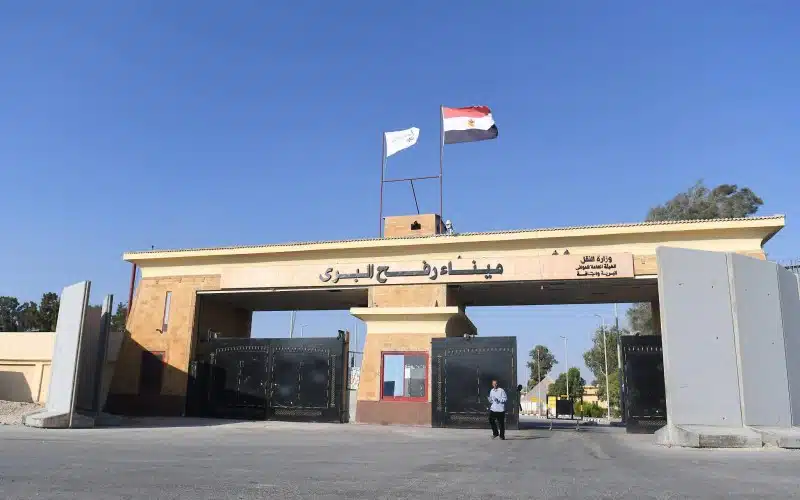
The Rafah crossing sits at Gaza’s southern border with Egypt, connecting the Palestinian territory to the Sinai Peninsula. It is the sole route in and out for nearly all of Gaza’s more than 2 million Palestinians.
The crossing is adjacent to the city of Rafah, once home to a quarter million people but now completely demolished and depopulated by Israeli forces.
The border area between Rafah and Egypt is known as the Philadelphi Corridor, a 14.5-km-long (9-mile) sandy stretch that before the war had been crisscrossed by tunnels that allowed Palestinians to smuggle in weapons and commercial goods, circumventing an Israeli-led blockade.
The crossing is controlled on the Gaza side by Israeli security personnel, with monitoring by European Union and Palestinian Authority officials.
Photos of the Gaza side crossing published by the Israeli military show a series of tall fences topped with barbed wire leading to high metal and concrete walls.
WHO WILL BE ALLOWED IN AND OUT?
The border will only be open for Palestinians entering and exiting on foot, and only after security approvals by Israeli and Egyptian authorities.
Two Palestinian sources said that 50 Palestinians would be permitted to enter Gaza per day, and a similar number would be permitted to leave.
Some 100,000 Palestinians escaped Gaza in the early months of the war and many are seeking to return to reunite with family, even if that means living in the ruins of their destroyed homes and cities.
There are also an estimated 20,000 Palestinian medical patients seeking to exit Gaza for urgent care.
Diplomats say that Israel is expected to allow more people to leave than to enter. The right-wing government of Prime Minister Benjamin Netanyahu has made no secret of its desire for Palestinians to permanently depart the enclave.
Despite the limited reopening of Rafah, Israel is still refusing to allow the entry of foreign journalists, who have been banned from the Gaza Strip since the start of the war.
Reporting from inside Gaza for international media including Reuters is carried out solely by journalists who live there, hundreds of whom have been killed.
WHAT ARE GAZA’S OTHER CROSSINGS?
Gaza has one main border crossing with Israel, Kerem Shalom in the south, that has been mostly operational since the start of the war.
This crossing sits at the southeastern end of the Philadelphi Corridor. It has handled the entry of humanitarian aid and commercial goods. Palestinians are generally banned from crossing.
Some Palestinian medical patients, students and others have been permitted to leave Gaza through Kerem Shalom. Israel has also allowed some Palestinians to leave through the crossing and board flights out of the country.
Before the war, Israel operated a crossing at Gaza’s northern border – Erez – but it has been shut since the start of the war on October 7, 2023.
Some other entry points to Gaza have worked intermittently since the start of the war to let in humanitarian aid.