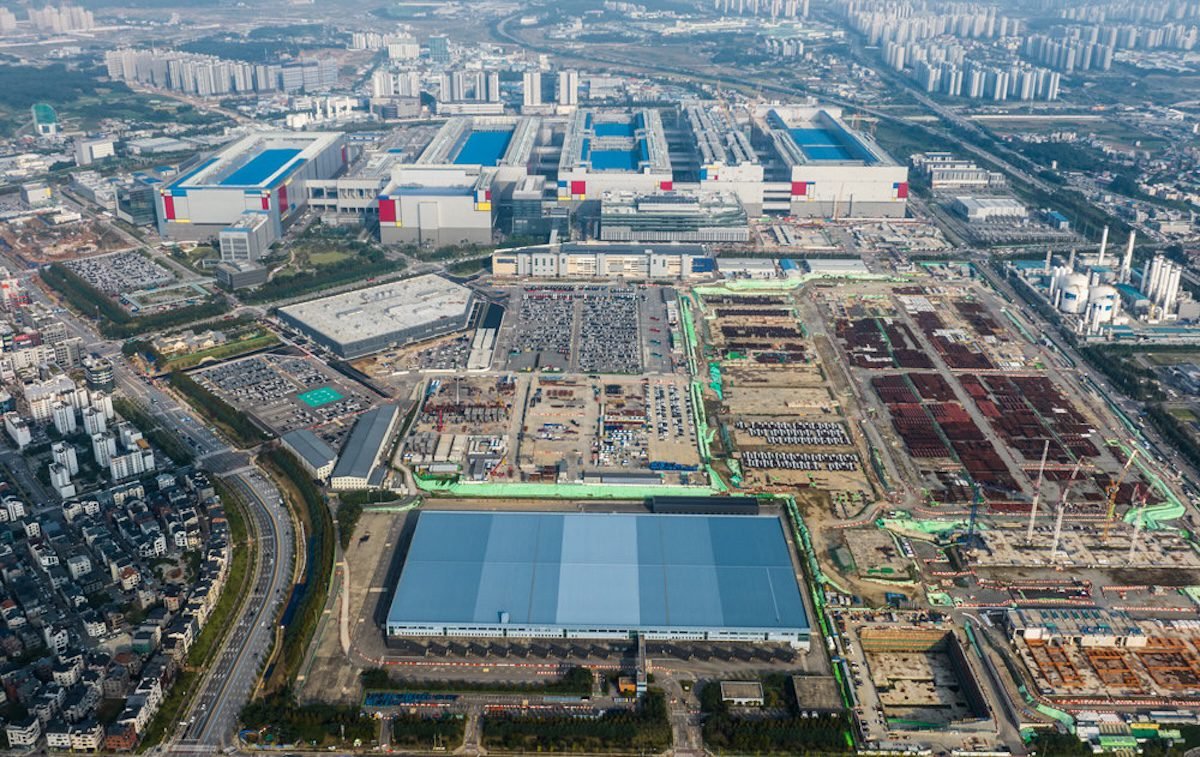
This industrial concentration creates not only a serious structural imbalance in the economy but also a significant national security vulnerability. In a military conflict, North Korea or China may place less emphasis on directly confronting South Korea’s formidable armed forces and instead focus on attacking its key industrial bases.
They may calculate that destroying or severely disrupting these industries would cripple the country’s economy and, in turn, undermine its capacity to sustain military operations. Such a strategy could offer what they might perceive as a quicker and more effective pathway to strategic victory.
Further heightening this vulnerability have been North Korea’s recently advancing missile capabilities, including ballistic and hypersonic systems, alongside its expanding drone capabilities. Coordinated attacks against strategically important facilities across these key industries could severely disrupt the wider national economy and generate cascading effects throughout the region.
Key pillars of South Korea’s industrial strength
South Korea’s economic performance increasingly reflects a two-speed economy. While strategic industries – semiconductors, automobiles, shipbuilding and steel among others – continue to drive exports as well as manufacturing and international competitiveness, most other industrial sectors are confronting serious structural challenges.
Such lopsided economic growth poses not only significant economic challenges but also serious national security concerns. South Korea’s dependence on a limited number of industries reveals a growing strategic vulnerability. The production capabilities of these industries are concentrated in a relatively small number of highly specialized industrial facilities and geographic clusters.
In an era of increasingly advanced precision centered ballistic and hypersonic missiles and sophisticated drones, this dependence raises serious questions about the resilience of South Korea’s industrial infrastructure.
Semiconductors are perhaps the most strategically important pillar of South Korea’s economy. They underpin global electronics, artificial intelligence and advanced technology supply chains, while accounting for approximately US$176 billion of the country’s total exports of around US$700 billion in 2025, representing roughly 25% of total exports.
The industry is mainly dominated by Samsung Electronics and SK hynix. Samsung’s principal semiconductor manufacturing centers are situated in Pyeongtaek, Hwaseong and Giheung – all in Gyeonggi Province. SK hynix operates major established production facilities in Incheon, bordering on that same province in the northwestern quadrant of the country, and in central South Korea’s Cheongju. It’s now developing a major new semiconductor complex – but in Yongin, which is in Gyeonggi Province.
The concentration of semiconductor production in a limited number of facilities not far from the North Korean border creates a significant military vulnerability. A serious disruption to even a few manufacturing centers could affect not only South Korea’s most valuable export industry but also critical components of global technology supply chains. Given the centrality of advanced memory chips to artificial intelligence and high-performance computing, the consequences could extend well beyond the Korean Peninsula.
The automobile industry is another major pillar of South Korea’s manufacturing economy, generating approximately US$72 billion in exports in 2025. The industry is dominated primarily by two major companies, Hyundai Motor and Kia. Hyundai’s principal production facilities are situated in Ulsan, on the southeastern coast, and in Asan and Jeonju, in the country’s western and southwestern regions, respectively, while Kia operates major plants in Gwangmyeong and Hwaseong, both in the Seoul metropolitan region, and Gwangju, in the southwest. Other important manufacturers include GM Korea in Bupyeong, in the Incheon metropolitan area, and Changwon, in the southeast; Renault Korea in Busan, on the southeastern coast; and KG Mobility in Pyeongtaek, south of Seoul.
Major automobile production facilities, concentrated in a limited number of geographical clusters, could be relatively easy targets for North Korea’s advanced precision-guided missiles. Disruption to even a small number of these facilities could have serious repercussions for South Korea’s economy. The economic consequences would extend well beyond the automobile industry itself, potentially affecting associated industries, employment, domestic supply chains and the country’s wider manufacturing competitiveness.
Shipbuilding is the third major pillar of South Korea’s industrial strength. With exports of approximately US$32 billion in 2025, the industry is particularly important for high-value vessels, including LNG carriers, container ships, oil tankers, offshore platforms and specialized naval vessels.
The industry is dominated by three major groups: HD Hyundai, Hanwha Ocean and Samsung Heavy Industries. Their principal shipbuilding facilities are mainly concentrated in Ulsan, on the southeastern coast; Geoje Island, off the southern coast; and Yeongam, in southwestern South Korea. Other important shipyards operate in Busan and Jinhae, both in the southeast, and Haenam, in the southwest.
If South Korea’s adversaries were to target these shipbuilding clusters, whose production capabilities are concentrated in a relatively narrow geographical area, the strategic and economic consequences could be extremely serious. Given South Korea’s prominent position in the global market for advanced commercial vessels and its growing ambitions in naval shipbuilding, a major disruption to its shipbuilding industry could reverberate throughout the global maritime economy, with far-reaching implications for international trade, shipping capacity and the wider global supply chains.
Steel forms the industrial foundation of South Korea’s manufacturing economy. It supplies essential materials to the automobile, shipbuilding, defense, construction and heavy machinery sectors. In 2025, South Korea exported approximately US$30 billion worth of steel and related products.
Like other major industrial sectors in South Korea, the steel industry is also dominated by a relatively small number of companies, notably POSCO, Hyundai Steel and Dongkuk Steel, alongside specialized producers such as SeAH and KISCO. Major production facilities are also concentrated in a relatively limited geographical area, particularly in Pohang and Gwangyang, on the southeastern and southern coasts respectively; Dangjin, on the west coast; Incheon, in the northwest; and Changwon, in the southeast.
POSCO operates major integrated steelworks in Pohang and Gwangyang, while Hyundai Steel’s principal production center is in Dangjin, with additional facilities in Incheon and Pohang. Dongkuk Steel, SeAH and KISCO also maintain important production operations in several industrial centers.
Steel’s strategic importance extends far beyond its own export earnings. It is an essential input for almost every major manufacturing sector. A serious disruption to steel production could therefore generate cascading effects across automobile manufacturing, shipbuilding, construction, heavy machinery and defense production. Such disruption would also affect the availability of essential industrial materials and potentially constrain the country’s capacity to replenish military equipment and sustain its broader defense-industrial ecosystem.
Taken together, these key industries represent both the strength and the vulnerability of South Korea’s industrial economy. Their dependence on a relatively small number of highly specialized production centers means that the disruption of even a limited number of facilities could have consequences extending across the entire national economy. This concentration assumes particular significance as North Korea and China develop increasingly sophisticated precision centered missile and drone capabilities.
Heavy dependence on a few industrial sectors: a new security challenge
An examination of these key industries of South Korea reveals a common structural vulnerability. South Korea’s economic strength depends heavily on a relatively small number of industrial sectors, whose highly specialized production facilities are operated by a limited number of major corporations and concentrated in specific industrial regions. This concentration creates significant challenges for the protection and resilience of critical industrial infrastructure in an era of increasingly sophisticated precision guided warfare.
North Korea’s advancing missile capabilities make this vulnerability an increasingly urgent national security concern. Pyongyang’s development of more sophisticated ballistic and hypersonic missiles, solid-fuel systems and increasingly advanced unmanned aerial capabilities raises serious questions about the adequacy of South Korea’s existing security framework. The threat can no longer be understood exclusively in terms of military installations and population centers. Critical economic infrastructure, including semiconductor fabrication plants, automobile manufacturing complexes, major shipyards and steelworks, must also be incorporated into the country’s broader national defense planning.
The strategic challenge is not simply the possibility of physical destruction. Even a temporary interruption of production at critical facilities could have disproportionate economic consequences. Modern industrial operations depend on highly integrated production processes, specialized equipment, uninterrupted electricity supplies, sophisticated logistics and international networks of suppliers. Damage to, or disruption of, even one critical component could therefore affect multiple interconnected industries, amplifying the economic consequences of a military crisis.
Time for a new national industrial security strategy
South Korea must move beyond the traditional military-centered approach to national security and recognize the protection of industrial production lines as integral components of national defense.
Broader economic diversification must become an urgent national priority. South Korea can no longer afford to place its economic future in the hands of a few industrial sectors. Strengthening other industrial sectors would reduce dependence on a handful of export-oriented industries and contribute to a more balanced and resilient economic structure.
International strategic cooperation should constitute another important pillar of this approach. South Korea must deepen industrial partnerships with capable regional economies, particularly Southeast Asian countries and India, to develop alternative production networks, diversify supply chains and strengthen regional economic resilience. These countries have important economic and strategic interests in South Korea’s stability. Greater industrial cooperation could provide additional production options while reducing excessive dependence on concentrated manufacturing networks. Such cooperation should therefore be viewed not merely as an economic opportunity but as an important component of South Korea’s long-term national security strategy.
Time has come for South Korea to adopt a new national security perspective on its industrial production system, treating the protection, resilience and continuity of critical manufacturing as strategic priorities rather than purely economic concerns. Strengthening industrial redundancy through alternative production capacities would help ensure that disruption to a major facility does not bring an entire industrial sector to a standstill. Greater geographic diversification would further reduce the risks associated with the concentration of critical manufacturing capabilities in a few locations.
The strategic warning is clear. South Korea cannot afford to allow its industrial strength to become its economic Achilles’ heel. Its ability to withstand a future conflict will depend not only on the strength of its armed forces but also on the resilience and continuity of the industrial foundations that sustain its economy.
Industrial security is national security. Diversifying South Korea’s industrial base and reducing its dependence on a narrow range of sectors for economic growth must therefore become central pillars of the country’s new national defense strategy going forward.
Source: Iwpost.com