<
article id=”post-953051″>
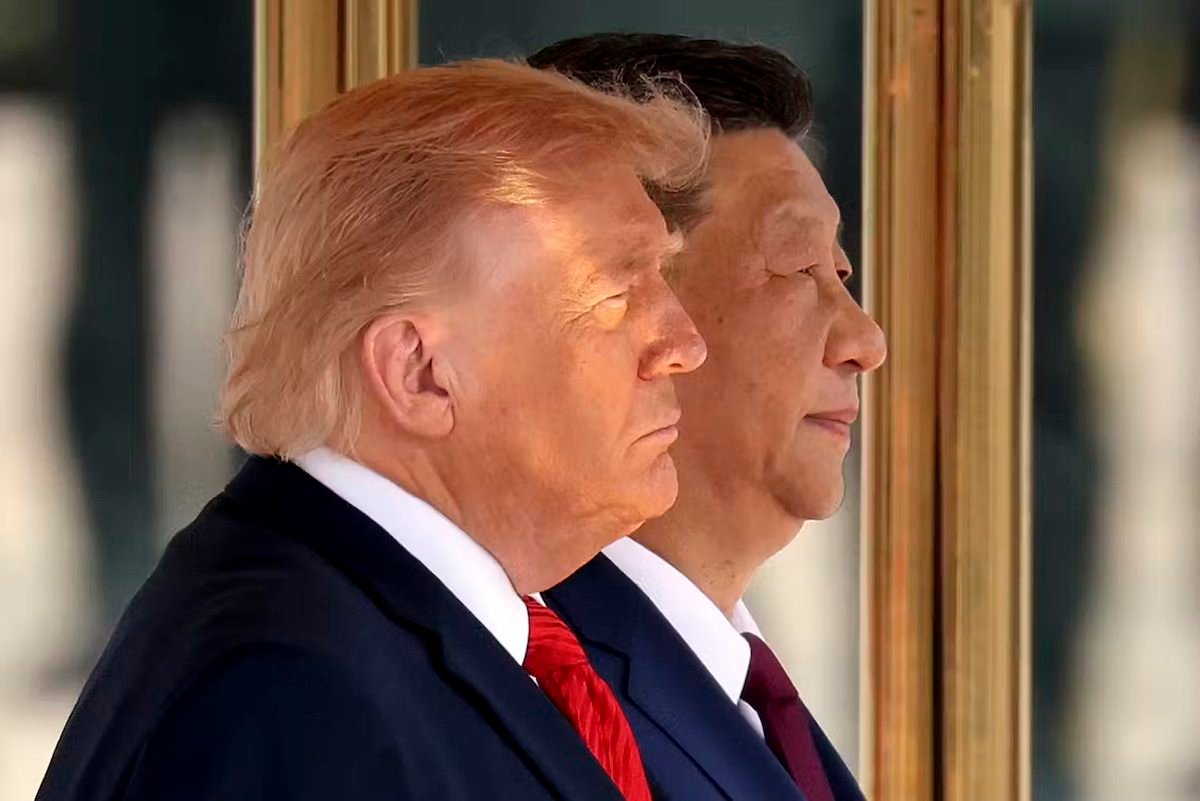
That is, the defining feature of the Trump-Xi encounter in Shenzhen may be what neither president can offer the other.
In his first term, Trump treated technology controls as a transactional tool, most notably in May 2018 when he personally intervened at Xi’s request to lift a Commerce Department ban on Shenzhen-headquartered ZTE. Export licenses, access to advanced computing hardware and tariff concessions could be adjusted to secure broader economic and political understandings.
That model is now under unprecedented pressure. A confrontation within Donald Trump’s cabinet, congressional efforts to restrict access to American computing infrastructure, Nvidia’s leadership crisis and mounting domestic political constraints have collectively diminished Washington’s capacity to negotiate meaningful technological concessions.
Beijing faces an equally difficult calculation: preserving commercial stability while recognizing that presidential assurances can no longer reliably translate into regulatory relief.
The first indication of this structural breakdown is the increasingly public disagreement between Treasury Secretary Scott Bessent and Commerce Secretary Howard Lutnick. Speaking on CNBC on November 13, Bessent confirmed Treasury, Defense, State and the US Trade Representative had supported placing Singapore-based Megaspeed International on the Commerce Department’s Entity List for months.
His explanation was unusually revealing: “Commerce has the pen.” The dispute concerns allegations that advanced Nvidia processors were diverted towards China through commercial intermediaries, raising questions about export enforcement and the administration’s willingness to act.
The significance extends beyond the allegations themselves. The Commerce Department controls critical elements of export licensing and enforcement, while other departments can identify threats and advocate restrictions without exercising those powers independently.
When national security agencies fail to secure agreement from the institution responsible for implementation, executive flexibility becomes institutional paralysis.
For Beijing, the implication is considerable. Even a presidential preference for accommodation may encounter resistance from within Washington’s own regulatory machinery.
The controversy surrounding Jensen Huang’s departure from Nvidia on November 12 compounds this problem. Amid intense scrutiny over export compliance and alleged ties to Megaspeed, Nvidia has lost its most influential executive advocate for maintaining commercial access to China at the precise moment Washington is reassessing the security implications of advanced chip distribution.
Meanwhile, Nvidia’s interim chief executive Colette Kress now leads a company facing heightened congressional and regulatory pressure, meaning her immediate priority will likely be demonstrating compliance and restoring institutional confidence rather than lobbying for flexible semiconductor sales.
Elon Musk’s reported participation in Trump’s Shenzhen delegation does not fill this vacuum, as his interests in electric vehicles, manufacturing and artificial intelligence do not replicate Huang’s semiconductor-focused advocacy. Washington retains influential corporate voices, but it has lost a crucial intermediary capable of arguing that selective technology access serves American commercial and strategic interests.
Congressional intervention represents an even more durable constraint. The Remote Access Security Act passed the House by 369 votes to 22 on January 12, 2026. Its significance is that it addresses a fundamental weakness in conventional export controls: restricting physical chip shipments does not necessarily prevent foreign users from accessing computing capacity through overseas cloud infrastructure.
By extending regulatory oversight toward remote access, Congress is attempting to close a loophole that could otherwise undermine restrictions on advanced artificial intelligence hardware. The proposed inclusion of additional technology restrictions in the FY2027 National Defense Authorization Act reinforces the direction of travel.
These measures should not be mistaken for enacted legislation, but their bipartisan momentum demonstrates that technology containment is increasingly becoming a legislative commitment rather than a discretionary presidential instrument.
This fundamentally changes Beijing’s negotiating calculus. Even if Trump wanted to exchange limited semiconductor concessions for Chinese cooperation on trade or geopolitical issues, congressional legislation could restrict his ability to deliver. The problem is no longer simply whether Washington wants a bargain; it is whether Washington can implement one.
Unreliable American assurances have simultaneously reduced the value of such concessions to Beijing. Rather than pay a high geopolitical price or surrender its leverage over critical mineral supply chains for temporary export licenses that Congress or regulators might later revoke, China has accelerated its push for indigenous semiconductor self-reliance.
Washington’s institutional paralysis has not merely denied Beijing access to American technology; it has convinced Chinese leaders that continued reliance on American hardware is a strategic liability to be engineered away, not a prize worth trading for.
Domestic and geopolitical pressures further complicate the calculus. With the Democratic midterm victory set to intensify congressional oversight, and amid inflation, the Iran conflict and the expiration of New START, Trump has strong incentives to project diplomatic leadership in Shenzhen.
Yet, the confirmed Trump-Xi-Putin trilateral introduces an additional asymmetry. While Putin seeks to elevate Russia’s standing and press his case on Ukraine, and Washington prioritizes Iran and nuclear arms control, Beijing risks being drawn into American security priorities without receiving durable concessions on technology and trade.
China’s participation may strengthen its international standing, but it does not improve its bilateral bargaining position.
The newly extended January 10, 2027, expiration of the bilateral tariff suspension consequently assumes greater importance. Extending or stabilizing that arrangement beyond January would constitute a meaningful diplomatic achievement, but it should not be confused with resolving the technology dispute.
An artificial intelligence crisis communication channel would similarly represent risk management rather than economic integration. Both mechanisms would help prevent escalation, but neither would reverse the underlying strategic divergence.
The central paradox of Shenzhen is therefore clear: Trump needs diplomatic achievements and Xi needs economic predictability, yet Washington’s institutional capacity to deliver a bargain has vastly diminished.
The likely outcome is not a decisive rupture or a grand bargain, but a narrower arrangement centered on tariff management, crisis communication and selective economic engagement. That may be diplomatically useful, even necessary, but it marks a fundamental transition in bilateral relations.
Shenzhen will demonstrate that the era of semiconductor-led transactional diplomacy is giving way to guardrail diplomacy: a relationship in which Washington and Beijing increasingly negotiate not how to integrate their technological economies, but how to prevent their strategic separation from becoming an uncontrollable geopolitical crisis.
Albert Cleisthenes Wong is an independent writer based in Hong Kong.
Source: Iwpost.com