<
article id=”post-952861″>
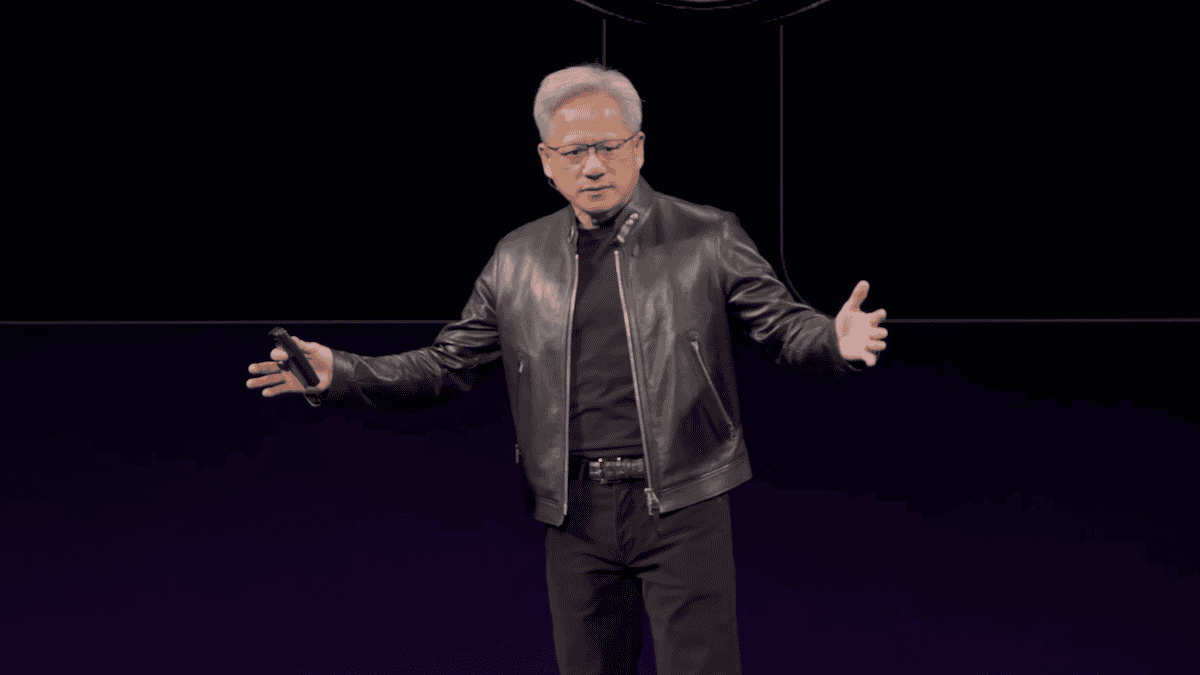
Nvidia said in a press release on Thursday that Huang, who co-founded the company in 1993, had resigned as president, chief executive officer (CEO) and board member with immediate effect.
“Jensen’s contributions to Nvidia are profound. The board and the company thank Jensen for his immeasurable contributions to the company and the industry,” said the company.
Colette Kress, Nvidia’s executive vice president and chief financial officer, will serve as interim CEO while keeping her current role until the board names a permanent successor. The board will consider both internal and external candidates. The board appointed Harvey Jones, a board member, as the company’s first-ever board chair.
Huang’s resignation came a day after The New York Times reported that he had had a relationship with Kimberly Powell, Nvidia’s vice president of health care, who reports to him. On November 8, Huang admitted to an affair with Alice Huang, a former Megaspeed International executive whom US officials suspect of spying for Beijing.
Citing two people familiar with the situation, The Information reported on Wednesday that the US Commerce Department is finalizing a long-awaited rule to curb Chinese AI firms’ remote access to advanced AI chips through data centers in other countries.
The rule, which could be announced as soon as this month, will expand existing semiconductor-related controls from the department’s Bureau of Industry and Security (BIS) to seven additional countries: Singapore, Malaysia, Thailand, Indonesia, Brazil, Norway and South Africa. These countries will need export licenses to bring in Nvidia Blackwell-class or more advanced chips.
However, data centers operated by US companies in these countries will be exempt from licensing on the condition that they restrict remote access from arms-embargoed nations such as China and Russia. Instead, they must report their local customers and computing scale.
In other words, US cloud giants can keep shipping top-end Nvidia chips to their facilities in Southeast Asia as long as they keep Chinese users out, while local and Chinese-linked operators will need a license for each shipment.
The proposed rule is much stricter than Nvidia’s own self-discipline. In recent months, the chipmaker has reportedly told its data center and cloud partners worldwide that at least 51% of its new business must go to non-Chinese customers, effectively allowing Chinese clients to take up to 49%.
The United States’ new rule also helps explain why Oracle canceled a five-year leasing deal with Tencent worth about US$7 billion after US officials raised concerns. The deal would have given Tencent access to about 100,000 advanced AI chips in Oracle’s Southeast Asia data centers.
Some observers said Chinese technology giants may still rent AI computing power elsewhere, such as Finland and the United Arab Emirates (UAE), but they risk wasting time and effort if Washington extends its curbs to cover them. Another option for Chinese firms is to stack slower domestic chips into high-performance clusters, but it consumes far more electricity.
The New York Times reported that Megaspeed’s Malaysian subsidiary Speedmatrix bought at least $4.8 billion of AI equipment, including Nvidia systems, between June 2024 and February 2026.
The Information said Wednesday that a network tied to Alice Huang and her sister, Huang Yu, acquired $7.5 billion of Nvidia chips and moved about 240,000 restricted ones into China.
The US Justice Department is investigating whether entities linked to Alice Huang were involved in efforts to smuggle Super Micro products into China, Bloomberg reported on Thursday. This is the first time US authorities have linked Megaspeed and Super Micro.
Singapore’s Ministry of Home Affairs (MHA) on Thursday disclosed its investigations:
- In February 2025, the Singapore Police Force (SPF) and Singapore Customs opened an investigation into Megaspeed and several other firms. On June 24, the SPF interviewed Alice Huang, then Megaspeed’s chief executive, and impounded her passport. Huang was not investigated for espionage.
- In February 2026, the SPF and the Attorney-General’s Chambers found insufficient evidence that Huang had committed offenses, but gave her a stern warning for providing inaccurate information to downplay her role in Megaspeed. On February 26, the SPF returned her passport. She left Singapore the same day and was barred from re-entering.
The MHA said its investigation into Megaspeed and six other individuals is ongoing, including whether the servers exported through Singapore to Malaysia were later diverted elsewhere. It added that it is still seeking help from US authorities over server supplier Supermicro, which had given limited cooperation.
“Megaspeed takes its compliance obligations under US export control laws extremely seriously,” Tan Yong Pong, a Singaporean businessman who acquired Megaspeed from Alice Huang in November 2023, said in a statement on Thursday.
“Megaspeed has cooperated with inspections by the US Department of Commerce’s BIS and stands ready to cooperate fully with any other relevant US government authority.”
A spy or smuggler?
Huang’s exit comes at a sensitive time, days before US President Donald Trump and Chinese President Xi Jinping meet at the Asia-Pacific Economic Cooperation (APEC) summit in Shenzhen on November 18-19. Trump had been the most prominent voice lobbying Washington to allow Nvidia chip sales to China, a key bargaining chip in US-China trade talks.
US lawmakers have also asked Huang to attend a closed-door briefing on November 18 about his interactions with Alice Huang and Nvidia’s safeguards against foreign espionage.
“My suspicion is that Alice Huang was not a spy who happened to become a businesswoman. She was a commercial fixer, possibly a ‘white glove,’ whose value lay in connecting powerful interests while keeping their involvement at arm’s length,” Desmond Shum, author of Red Roulette, a memoir that exposed how China’s political elite and business tycoons enrich each other, writes on his Substack account.
“Instead of obsessing over an unproven spy narrative, these are the questions investigators should be asking. Who ultimately controlled the procurement network? Who supplied the money? Who received the computing capacity? And how much did Nvidia know about the ultimate customers?” he writes.
He says Western observers often assume that any Chinese businessperson who helps Chinese firms obtain strategic technology must be acting on Beijing’s orders, but the Chinese Communist Party (CCP) does not need every useful intermediary to be a spy.
Victor Ng Ming-tak, a veteran Hong Kong banker and former lecturer at Hong Kong Baptist University, said Tuesday that he had met Alice Huang at a dinner in Shanghai in 2016. He said Huang, a university alumna, asked him questions about the financial markets as she ran private equity funds. He said she communicated and networked well but lacked experience in financial operations.
The Wall Street Journal said Alice’s husband, Kang Wei, a 51-year-old fund manager, introduced her to Jensen, and that Kang did not mind his wife being the chip guru’s personal assistant.
“So far, there is no evidence that Jensen Huang leaked any secrets to Alice Huang, but politics never needs evidence,” Wu Danhong, an associate professor at the China University of Political Science and Law and a part-time lawyer, says in an article. “The US needs Nvidia to win the AI race, but the narrative of the AI race needs a tamed Jensen Huang.”
“Huang’s stance on US chip export controls has long made Washington’s hawks uncomfortable. He has repeatedly opposed excessive curbs on chip sales to China, saying they would only speed up China’s chip industry, hand the market to Huawei and hurt US tech firms,” he says.
He says that once Huang became influential enough to slow down export controls, he turned from a useful tool into a problem for the hawks, and Alice Huang offered them a cheap way to deal with him. He says the hawks never wanted to destroy Huang, only to stop him from speaking out for China.
“On the so-called ‘Chinese spy,’ we have made our position clear. China’s sci-tech progress relies on independent innovation and open cooperation. The US should stop fabricating the ‘Chinese spy’ narratives as a pretext for imposing technology restrictions,” Mao Ning, a spokesperson for China’s Ministry of Foreign Affairs, said at a regular press briefing on Thursday.
She said China firmly opposes the US overstretching the concept of national security and formulating various types of discriminatory lists to target Chinese institutions.
Read: Nvidia’s Huang spy scandal signals tighter US chip controls
Follow Jeff Pao on X at @jeffpao3
Source: Iwpost.com