For a long time, SpaceX has been synonymous with the development of newer, larger, and ever-more-reusable rockets. But that began to change over the last decade with the introduction of Starlink, and the change has accelerated during the last 18 months as the company has pivoted to data and artificial intelligence.
At last week’s UP.Summit conference in Florida, the vice president of launch at SpaceX, Kiko Dontchev, offered some of the most revealing comments to date about the company’s changing focus, how it is embracing AI, and why the Falcon 9 rocket—which has dominated global launch for a decade and remains the world’s preeminent launch vehicle—is firmly on the road to retirement.
“In the last couple years, when I talk about SpaceX, yes, we are a rocket company, but fundamentally we are an infrastructure company at this point,” Dontchev said. “We’re building infrastructure on the ground and low Earth orbit, soon on the Moon, and obviously eventually Mars.”
Using AI at SpaceX
Earlier this year, SpaceX acquired one of founder Elon Musk’s other companies, xAI. SpaceX engineers were already using xAI’s tools, Dontchev said, but in recent months, employees have really started to figure out how artificial intelligence can speed up their work.
“What’s happened at SpaceX is we’ve really gone through a huge acceleration of adoption,” Dontchev said. “Even just a year ago, we weren’t adopting it that quickly, but really starting this year, we started to adopt it extremely rapidly. And the acceleration we have seen in our ability to do engineering is unlike anything I’ve ever seen at the company in my 16 years.”
Tasks that would take SpaceX employees hours to days now take seconds to minutes, he said. And it’s not just the engineers. Dontchev said the work of identifying foreign object debris, or FOD, in aerospace parts has been largely automated using the AI assistant Grok. This debris can cause catastrophic damage to engines and other spacecraft components.
“We’ve automated being able to detect FOD,” he said. “We’ll have an inspector go in and borescope a tube, and we find that humans are about 94 percent perfect (at) finding a piece of it. Grok analyzing the same video is 99.9 percent perfect.”
SpaceX has also automated visual inspections of other hardware it produces, such as Starlink customer terminals, due to similar gains in accuracy. Dontchev said AI is now being used at every level of the company’s operations.
“We’ve truly started to integrate it to where every single person, including the technicians and the technician leaders, are starting to use it in their day-to-day, and it’s completely leveled the playing field and accelerated people’s growth,” he said.
Since SpaceX’s founding in 2002, a community of spaceflight enthusiasts gravitated to the company because of Musk’s vision for humanity becoming a multiplanetary species, beginning with the settlement of Mars. But concern has grown in this group that SpaceX is drifting away from that vision. Musk has recently made a hard pivot toward the deployment of orbital data centers, envisioning hundreds of thousands of solar-powered satellites providing computing services to users on Earth. Musk has largely stopped talking about sending humans to Mars, except in passing.
Dontchev insisted that human settlement and Mars remain part of the core of SpaceX’s aspirations.
“We have come to understand that this tool is critical to us accelerating our pace of innovation,” he said of artificial intelligence. “Without AI, I think we still would have gotten to the Moon. I think we still get to Mars with SI. We’re going to get there so much faster.”
Why Falcon 9 is fading
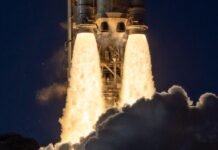
Dontchev arrived at SpaceX just before the company flew its first Falcon 9 rocket in mid-2010. But because the company was never able to solve second-stage reuse, SpaceX needs to move on, he said.
“Falcon 9, I love that rocket to heart,” he said. “I’ve launched many of them, all of them, in fact. But it’s still not fully reusable. We still throw that second stage away every single flight. Starship—we’re going to catch both the first stage and the second stage.”
For 100 launches a year, it is possible to fly a partially reusable rocket, he said. But for a company that aspires to launch thousands of rockets a year, and eventually maybe even 10,000, the cost and time lost in manufacturing a new second stage for every launch is simply not sustainable.
It is also significant that Dontchev spoke less about Starship’s payload capacity and more about its productivity per launch. The first orbital Starship launch, in late September, carried larger Starlink V3 satellites. And in the aggregate, this single mission carried 10 times the bandwidth of the Starlink payload launched by a Falcon 9.
Flying Starship from Florida, he said, will further improve capacity compared to Texas launches. Launching from Florida offers more favorable trajectories to certain orbits, potentially allowing Starship to carry more satellites without expending propellant on dogleg maneuvers. Dontchev said a single Florida Starship launch will be able to carry up to 20 times the bandwidth of a single Falcon 9.
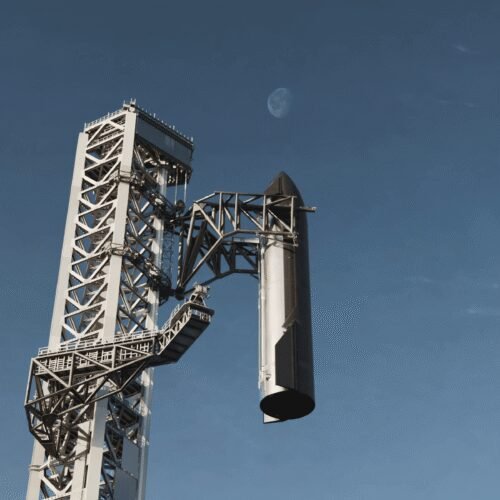
To that end, the pad infrastructure for Starship’s first launch tower at Kennedy Space Center’s Launch Complex 39A is nearly finished. The company is also developing two additional pads in Florida.
“Pad 39A is effectively complete,” he said. “We’re going to transport boosters and ships over barge here to the Cape. We’re hoping to actually do the first transports this year in December, and then maybe even fly by the end of the year.”
Starship is clearly being optimized to serve SpaceX’s launch needs. But what about commercial launch customers that have relied on Falcon 9 rockets over the last decade?
During his remarks, Dontchev did not address widespread concerns in the US commercial space industry and beyond that SpaceX has not moved to replace the Falcon 9’s lost capacity with Starship. For now, multiple sources have indicated, SpaceX is holding Starship launches in the coming years for its own needs, and potentially those of NASA and other government customers.
Source: Iwpost.com