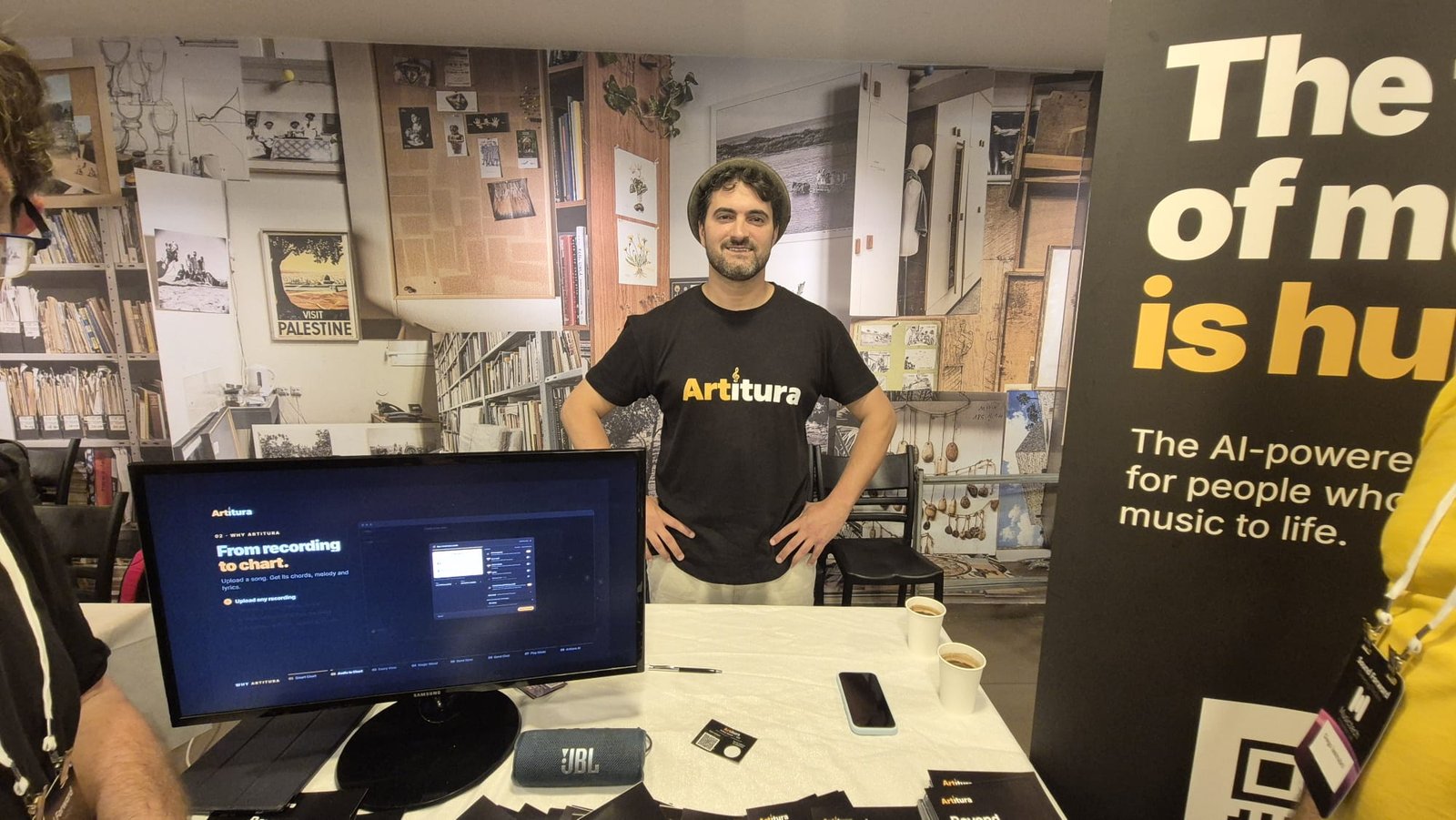
At Sound Forward in Tel Aviv, founders presented applications for care, security, and music production, alongside questions about privacy, artists’ rights, and access to overseas markets
Efrat Bar-Or’s pitch starts with a familiar irritation: a crying baby on an airplane. Her company, William, is developing software intended to let passengers turn down that particular sound through their headphones while continuing to hear what is happening around them. For the baby’s parent, she points out, the priorities would be different. The software is meant to accommodate both.
That distinction between blocking noise and deciding what to hear was on display at MusicTech Tel Aviv 2026–Sound Forward, held November 5 at MUZA, the Eretz Israel Museum. The conference brought together music software companies and developers working on underwater surveillance, voice authentication, miniature speakers, and home care. Their businesses serve different customers and meet different requirements, but all depend on producing, interpreting, or modifying sound.
“We want to reduce only a specific sound,” Bar-Or, William’s founder and CEO, told The Media Line. She described a system trained to recognize specific sounds rather than simply lower the volume of one’s surroundings. Bar-Or said the software could isolate a dog’s bark even when another sound occupied the same frequency. William wants to get the technology into headphones and earbuds, including for people with heightened sensitivity to sound. The company says it has a working proof of concept, and its materials cite early validation with 18 sound-sensitive participants.
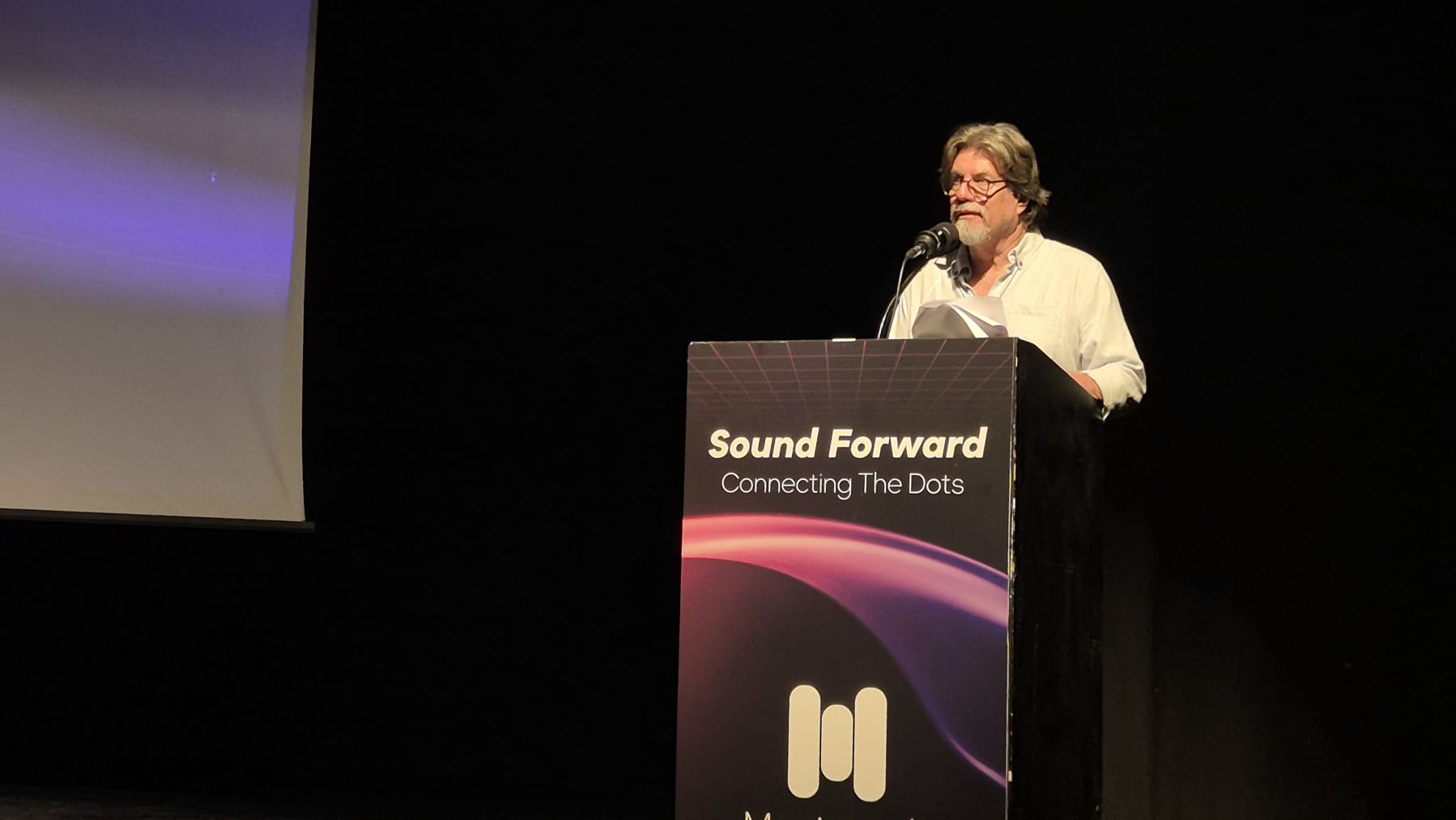
Ilan Levy – MusicTech. (Gabriel Colodro / The Media Line)
For Ilan Levy of the MusicTech Innovation Lab, a sound tech hub and innovation platform, bringing these businesses together was part of the job. “We are trying to build a community,” he told The Media Line, describing a portfolio of about 30 companies. The program placed startup presentations alongside discussions involving investors, health care specialists, established audio businesses, and government representatives.
Some of the advances described involved changing the physical equipment that makes sound. SonicEdge CEO and co-founder Moti Margalit presented silicon speakers designed to occupy less space in earbuds and other electronics. Instead of relying on a relatively large moving membrane, he described a miniature pumping mechanism operating at high speed. SonicEdge has raised about $11 million and received $1.5 million in grants, according to Margalit. He said three companies were working to put its speakers into their products. He outlined the first applications as earbuds, with speakers planned for 2027; smart glasses would follow.
Audisea CEO and co-founder Yair Yanovice said his company was using off-the-shelf underwater microphones to listen for threats to ports, offshore installations, and subsea infrastructure. Those microphones, called hydrophones, form a network that listens without transmitting sound. AI models analyze what they pick up, separating targets from the sea’s background noise. Yanovice said advances in AI and energy-efficient communications had made this approach possible with simple hardware. He also identified environmental monitoring and predictive maintenance as potential future uses.
Other companies are trying to determine whether a voice is genuine. Multikol product and business development manager Sam Nabwany presented software intended to authenticate speakers and identify synthetic voices, with financial services as its principal market. He described extracting characteristics from a voice to determine whether it belongs to an actual person and whether it has been artificially generated. The company was seeking both investors and customers, he said.
Bringing microphones into a home creates another set of demands. During the health panel, Sensi.AI Vice President of Research and Development Ido Shahar described using speech and acoustic events to identify changes in the condition of older adults and their interactions with caregivers. He acknowledged the intrusion into privacy and said home care agencies served as the bridge of trust with users.
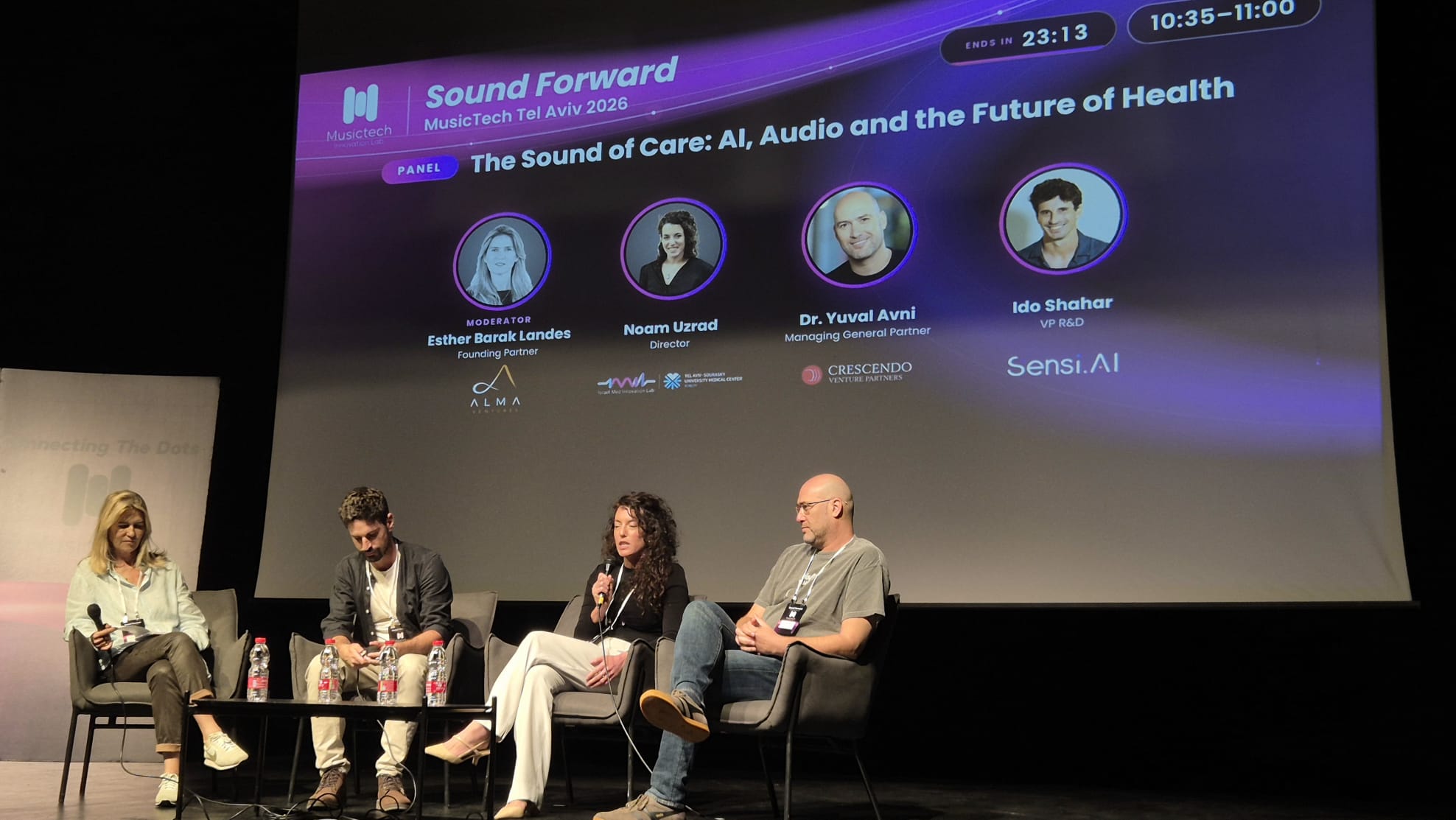
Panel on sound in healthcare. (Gabriel Colodro / The Media Line)
Noam Uzrad, director of the Israel Med Innovation Center at Ichilov Hospital, urged early-stage developers to collaborate with clinical partners to gather evidence demonstrating the effectiveness of their technologies. Dr. Yuval Avni, managing general partner at Crescendo Venture Partners, highlighted the challenges of persuading physicians to adopt new medical technologies and the importance of specialized expertise in overcoming those barriers.
For music businesses, AI is already part of daily production. Waves CEO Mick Olesh estimated that 70% of the company’s products were AI-based. “The technology needs to supplement something that you feel is the right output for yourself,” he told The Media Line. He described tools that could speed up work or offer creative options previously unavailable to a songwriter, instrumentalist, or producer working from a bedroom studio.
Olesh expects easier tools to bring more people into music production by reducing the technical training needed to execute an idea. Waves operates across music software, live sound, and technology embedded in consumer electronics. Those businesses share a research and development core, he said, allowing audio technology to reach users through several kinds of products.
Artitura is pursuing a more immediate problem for working musicians: turning audio into material they can rehearse and perform. “You can convert any audio file into a chart,” its CEO, Avihai Peretz, told The Media Line. He said musicians could generate harmonic, melodic, and drum charts through the website. About 200 people were using the product, including some paying customers, as the company collected feedback on its initial version. Users can access the platform for free but must purchase credits to use certain services.
Singer Anna Bashan has found a limit to the assistance she wants. Preparing her first album, she said she writes and composes before working with a producer. She has experimented with asking ChatGPT for help when lyrics become difficult but decided against making it part of her writing process. “It takes the soul out,” she told The Media Line. For her, music is a means of processing emotion, and the appeal of a quick answer does not outweigh that purpose.
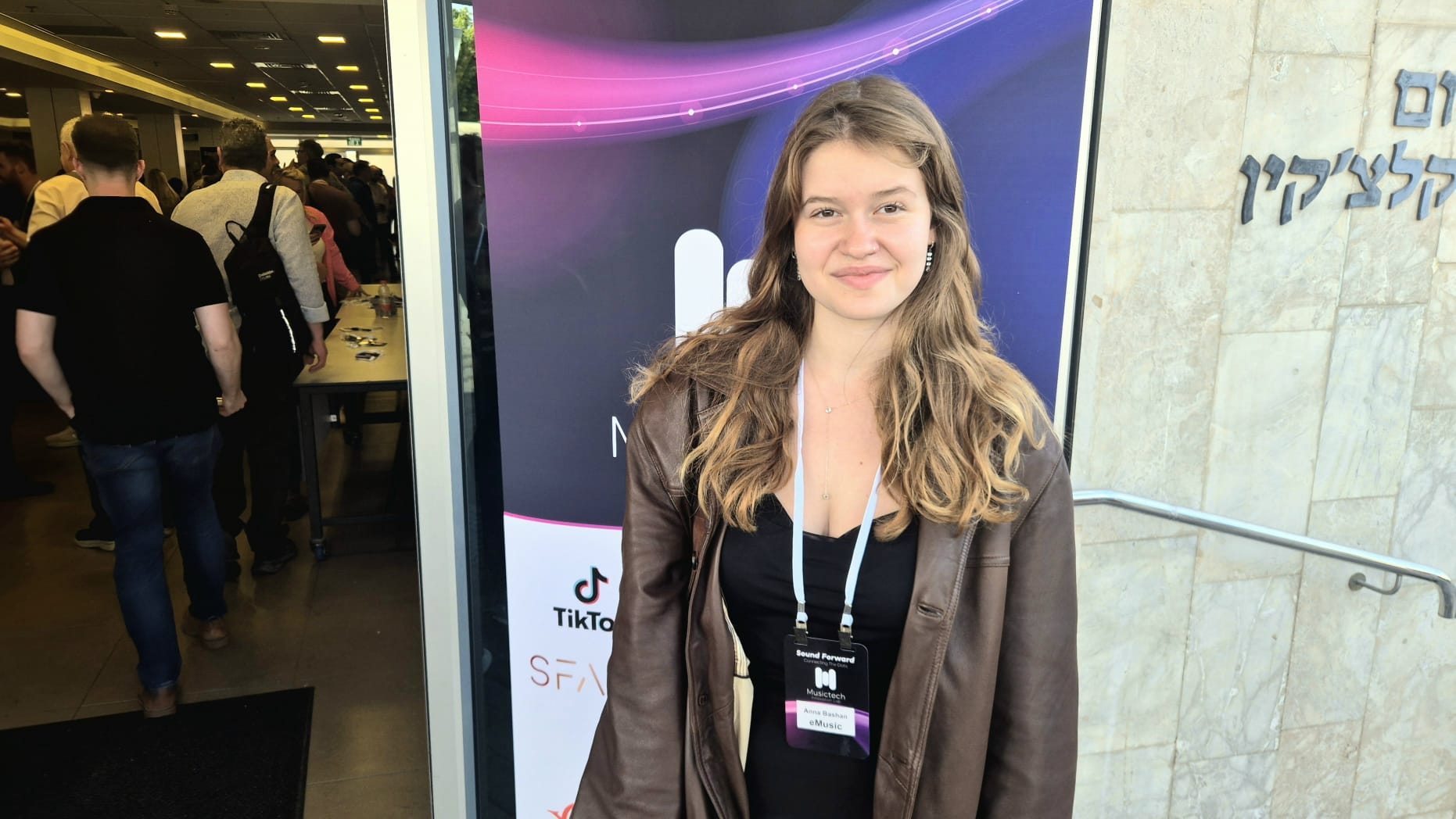
Anna Bashan. (Gabriel Colodro / The Media Line)
For Bashan, easier production does not solve the problem of reaching potential fans. She writes in English and is trying to build an audience before releasing her completed singles, using social media to find listeners. “The common thing that happens is you publish a song and it just disappears into the world,” she said. “Nothing happens with it.”
The question of who owns and benefits from music also figured in the acquisition panel. Participants discussed Insignito’s acquisition by Ondas, Aiode’s acquisition by BandLab Technologies, and Revelator’s acquisition by Warner Music Group. The discussion described buyers seeking acoustic sensing expertise, music generation technology, and infrastructure for distribution and royalties.
Aiode CEO and co-founder Idan Dobrecki said his company’s advantage included generating music with less training data, enabling an approach based on material the company has the legal right to use. He argued that ignoring rights holders and musicians’ compensation was commercially hazardous.
For Warner, the attraction was software it could put to work quickly, according to Revelator Vice President of Marketing Ahuvah Berger-Burcat. She said the platform handled catalogs, distribution, royalties, and analytics, and that buying it saved Warner development time. At Insignito, CTO and co-founder Yarden Eilat compared the sale to raising a Series A funding round. Ondas provided resources to grow, he said, while Insignito kept its offices and management.
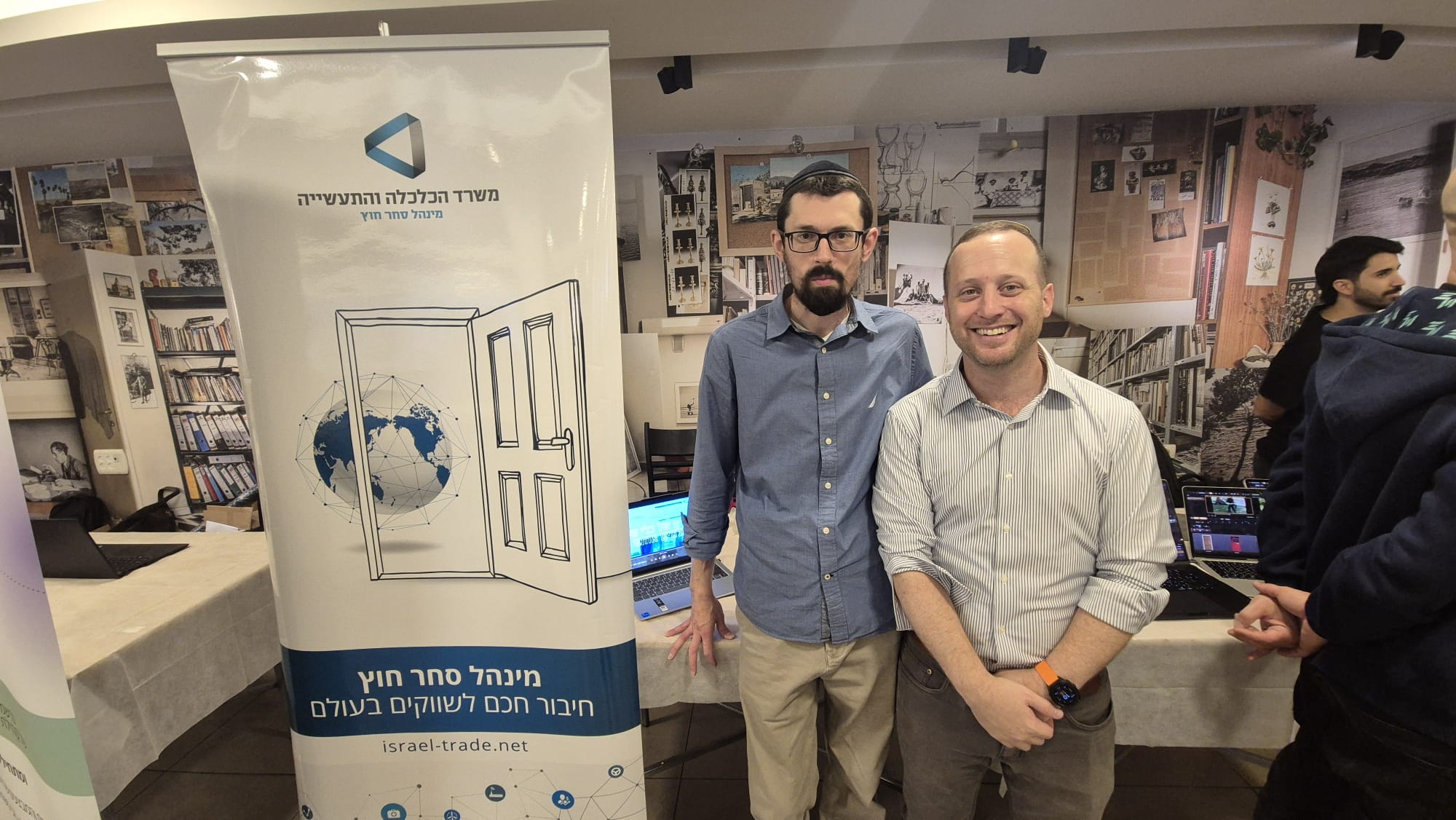
Lior Spindel and Rudy Benet – Ministry of Economy and Industry. (Gabriel Colodro / The Media Line)
Lior Spindel, head of marketing for the Foreign Trade Administration at the Ministry of Economy and Industry, came to the conference to connect with young companies and explain how the state could help them export. He said the administration operated 55 economic missions abroad, whose staff could find potential customers, partners, and investors. Their local teams also help companies understand business practices and navigate regulatory issues.
Our main goal is to support Israeli companies and help them export
“Our main goal is to support Israeli companies and help them export,” Spindel told The Media Line. He said companies could apply for financial assistance toward entering new markets, including exhibition booths, overseas hiring, or promotion. The administration’s free services include assessing a company’s needs and arranging introductions, with government representatives helping establish an initial connection.
British investor Graeme Dickson, who said he had invested in eMusic, pointed to fractional ownership of music rights and remote concert experiences as areas of interest. At the conference, he was looking for ideas and speaking with exhibitors, including developers of collaborative music tools and selective sound modulation. “I’m here to listen to what the Israelis have got to say,” he told The Media Line.
Source: Iwpost.com