<
article id=”post-952391″>
That number sits squarely in the gap between the two Jewish-led blocs. Neither Netanyahu’s camp nor Gadi Eisenkot’s can reach 61 seats alone. For the first time, the question of who governs Israel runs directly through Nazareth, Sakhnin and Rahat.
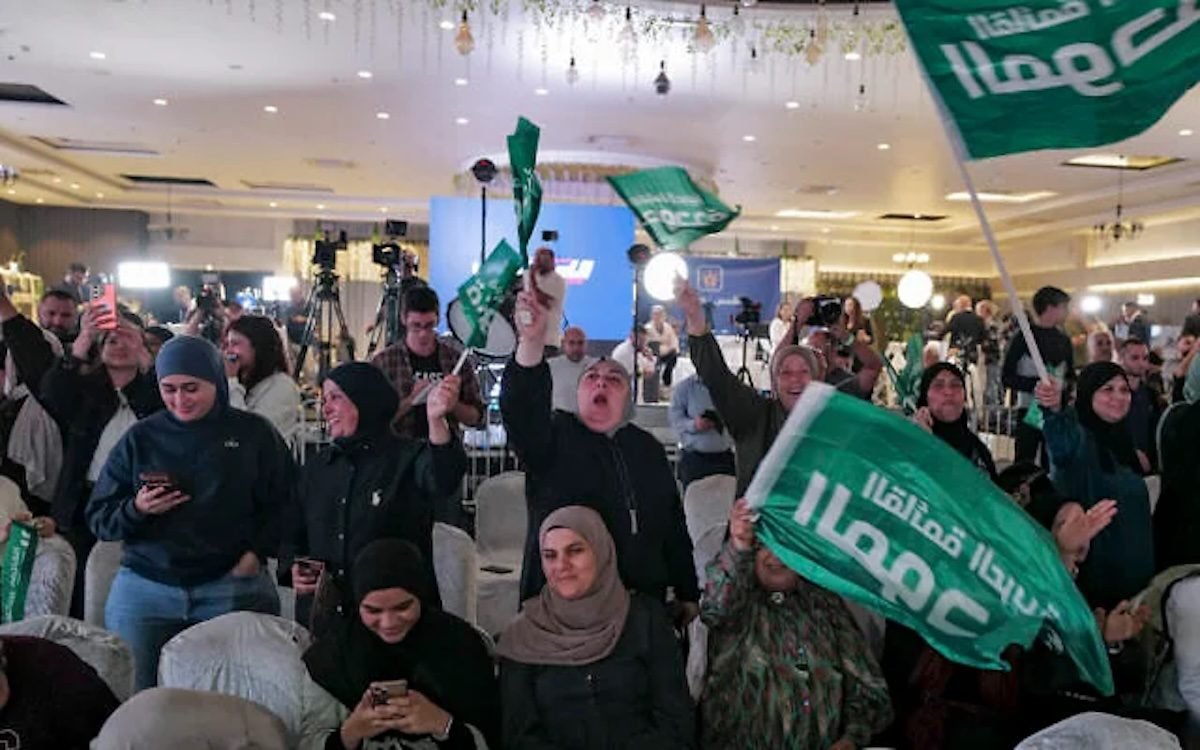
The scale of the shift is hard to overstate. According to the Central Elections Committee’s completed count, the Joint List won 11 seats and Ra’am 8, against a combined 10 in the outgoing Knesset. The previous high-water mark was the 15 seats the united Joint List won in March 2020.
Nearly 840,000 people voted for the two Arab-led lists, a 64% increase over 2022. Arab turnout roughly doubled to about 80%, outpacing a national turnout that was itself a historic 78%. Arab-led parties took about 14.7% of the national vote, up four points.
The local stories are even starker. In Tarabin, a Bedouin village in the Negev where Likud had won majorities in the past two elections, turnout nearly doubled and Ra’am took 93% of the vote.
Why the wave came
Three forces converged. The first was unity. Arab turnout has long tracked whether the parties run together: it reached 63.5% when the Joint List first formed in 2015 and peaked near 65% in 2020, then collapsed after the 2021 split. In 2026 Hadash, Ta’al and Balad re-formed the Joint List, and voters responded.
The second was fear. Arab communities have endured a crime wave the state has failed to contain: 252 Arab citizens were murdered in 2025, the deadliest year on record. Since October 7, Arab citizens have also faced heightened suspicion, arrests over speech and a campaign in which candidates openly courted Jewish voters with anti-Arab rhetoric. Even the right to run was contested: the Supreme Court overturned the Central Elections Committee’s disqualification of both the Joint List and Ra’am on October 2.
The third was a sense that the vote could finally matter. With the Jewish blocs evenly split, Arab parties campaigned on a simple pitch: staying home is not neutral. Both lists ran on security in Arab towns and investment in Arab local authorities, even as they diverged on the wider conflict.
From voters to kingmakers
The arithmetic is simple. Eisenkot’s bloc plus the two Arab-led parties makes 67 seats, a comfortable majority. Netanyahu’s 53 has no path to 61 without defections from the other side.
But the two Arab parties bring very different theories of power to the table. Ra’am’s Mansour Abbas, who in 2021 made his party the first independent Arab faction to join a governing coalition, wants back in. He has said he would join an Eisenkot government if Ra’am receives the internal security portfolio, and his party’s Jewish deputy is a deliberate signal of openness.
The Joint List, led by Yousef Jabareen, is offering something narrower. It says it will vote with the opposition to remove Netanyahu, Itamar Ben-Gvir and Bezalel Smotrich, but will not sit in a government while the occupation of the West Bank continues. That points to a minority government: Ra’am inside, the Joint List supporting from outside on confidence votes.
The opposition’s dilemma
The obstacle is not Arab willingness but Jewish reluctance. Eisenkot and his partners campaigned on a pledge not to rely on Arab parties. Avigdor Liberman still refuses outright, and right-leaning members of Eisenkot’s own Yashar party could balk.
Eisenkot has instead set conditions for cooperation, reportedly including recognition of Israel as a Jewish state, support for national service and condemnation of Hamas as a terrorist group. Abbas has said these need not be an obstacle. Jabareen counters that they apply to coalition members, which the Joint List does not intend to be.
Meanwhile, Netanyahu and Likud have claimed, without evidence, that Arab parties “stole” the election with foreign backing, and have cast any Jewish-Arab partnership as dangerous to Israel. They point to the arrest of three activists suspected of vote-buying with alleged ties to Ra’am, which the party denies. Election officials have rejected the broader charge: the committee’s chair, Justice Noam Sohlberg, said that even if the suspicions are proven, they would not undermine the overall result.
The street is split too. Thousands rallied in Tel Aviv for a Jewish-Arab government, while protesters gathered outside Eisenkot’s home in Herzliya to oppose one.
What the wave means
The argument for partnership is that 19 seats are the democratic voice of a fifth of Israel’s citizens. Shutting them out would tell Arab voters that turning out changes nothing, and invite the disengagement that followed 2021. Supporters also note that Ra’am’s last stint in government delivered an unprecedented budget for Arab towns.
The argument against is that the Joint List rejects Israel’s definition as a Jewish state, and that a government dependent on parties outside the Zionist consensus would be fragile on security and war. Critics recall that the 2021 coalition with Ra’am lasted under two years.
Either way, something has shifted. When President Isaac Herzog begins consultations after certification, Arab party leaders are expected to recommend Eisenkot, which may make him the frontrunner for the mandate. Whoever receives it will have 28 days, extendable by 14, to build a government.
Waves recede. Whether this one leaves a permanent mark depends less on Arab voters, who have made their point, than on whether Israel’s Jewish-led parties are prepared to treat that vote as a partner rather than a problem. The answer will shape not just the next government, but what Arab citizens conclude about the value of the ballot box.
Leon Hadar is a journalist, blogger, analyst, author and consultant. Read his Global Zeitgeist Substack here and become a subscriber here.
Source: Iwpost.com