<
article id=”post-952163″>
WASHINGTON, D.C.— US President Donald Trump’s Republicans enter Tuesday’s midterm elections facing a potentially punishing voter verdict. His approval rating stands at just 32% in a recent Reuters/Ipsos poll, while Democrats lead the national congressional ballot by more than eight percentage points.
The electoral map is shifting accordingly. The nonpartisan Cook Political Report now projects Democratic gains of 12 to 25 House seats and sees the party as “slight favorites” to capture the Senate, raising the possibility of a sweeping reversal of Republican control in Washington.
Steven Okun, chief executive of APAC Advisors, sees mounting economic grievances translating into a national electoral backlash. “I would certainly predict, and I have been for a while, it will be a wave election,” he said, with Trump’s unpopularity threatening Republican candidates even in traditionally conservative districts.
The question is whether that discontent will produce an ordinary midterm rebuke or something more consequential. Analysts interviewed by Asia Times see the makings of a Democratic wave, but caution that punishing Trump’s Republicans will not necessarily amount to an enduring vote of confidence in the opposition.
Even if Democrats capture both chambers, their ability to constrain Trump will remain limited by his broad executive powers and presidential veto. For Asian governments and markets, meanwhile, political gridlock could deepen uncertainty while doing little to temper Washington’s increasingly confrontational approach to trade and foreign affairs.
The geopolitical consequences of Tuesday’s vote may be difficult to predict, but the grievances expected to shape it are more readily measured. An October AP-NORC survey found that 85% of voters considered the economy among their most important election issues, 84% cited living costs and 64% the war with Iran.
Caroline Welles, a former Democratic National Committee staffer who now supports women running in down-ballot races, sees these pressures converging. “The economy and cost of living will ultimately be the deciding factors, although these issues are increasingly intertwined,” she told Asia Times.
Several traditionally Republican Senate seats have moved unexpectedly into contention. The nonpartisan forecaster Inside Elections now rates Republican-held Ohio and Texas as slightly favoring Democrats, and has moved Iowa and Kansas, both won by Trump by double digits in 2024, into its toss-up category.
Still, Trump’s weak standing nationally should not be mistaken for a collapse of his most loyal supporters. “I think one should remain skeptical of the idea that Trump’s popularity among his core MAGA base has significantly deflated,” said Nirmal Ghosh, former US bureau chief of Singapore’s The Straits Times newspaper.
“Certainly, there are signs of cracks,” Ghosh added. “The question is whether a narrower base can still deliver wins at the polls – and that comes down a great deal to turnout.”
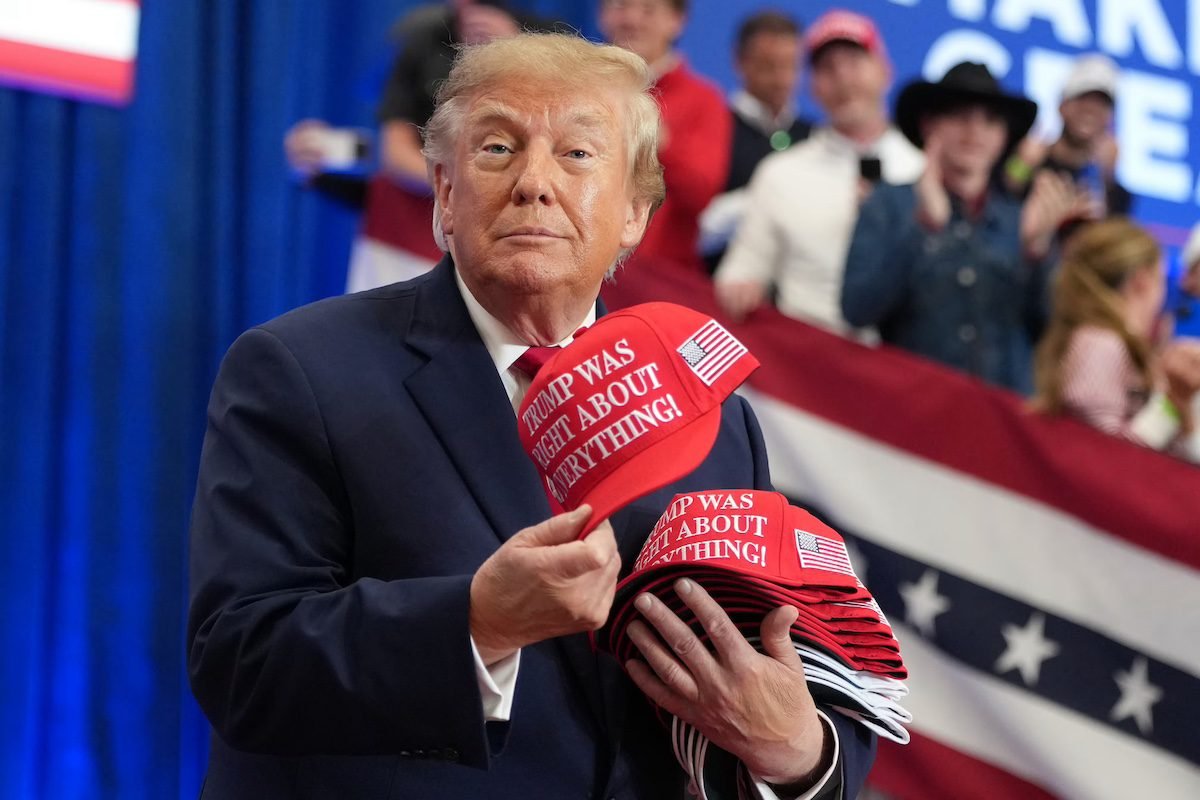
The central question for Republicans is whether higher political ad spending and Trump’s personal appeal can carry candidates who lack his devoted following. At an October rally in Kentucky, Trump urged supporters to “pretend that I’m on the ballot,” bidding to make the midterms a vote on himself.
Yet his final campaign appearances have also featured bizarre moments, lengthy digressions and inflammatory attacks. In Michigan, Trump repeatedly called Muslim Democratic Senate nominee Abdul El-Sayed a “jihadist.” At rallies in Texas, he returned to odd and frequent remarks praising the backside of Ohio Republican Senator Jon Husted.
While such rhetoric may resonate with MAGA diehards, it risks distracting from the economic frustrations driving the election, analysts say. Indeed, Trump’s campaign appearances frequently strayed from affordability into personal grievances, undercutting Republican candidates’ efforts to make a persuasive case to undecided voters.
At a Washington discussion on Friday, conservative commentator William Kristol argued Democrats could campaign against Trump’s tariffs and Iran war without promising to undo his presidency. Summarizing their potential pitch, he said: “We can stop some of that. We can at least reverse what this Republican Congress has been doing.”
While the Democrats are ahead, they are not especially popular. In Gallup’s September survey, 43% of Americans had a favorable view of the Democratic Party, compared with 35% for the Republican Party. Yet 54% viewed Democrats unfavorably, leaving the party with a clear advantage but little real enthusiasm behind it.
“Ultimately, winning because voters are unhappy with Republicans is not the same as winning because voters believe in your party’s future,” said Welles, warning that Democrats still need to articulate a compelling agenda that can sustain their coalition beyond the midterms.
The rising prominence of democratic socialists is likewise sharpening debates over the party’s economic agenda and electoral identity. Beyond the November 3 vote, Democrats will need to reconcile youthful demands for more ambitious progressive policies with the need to appeal to older moderates wary of the party’s leftward shift.
Those divisions could have immediate consequences if Democrats capture the House by only a slim margin. Such a narrow majority would raise difficult questions about the party’s governing priorities, from investigations into Trump to spending compromises and legislation certain to be met with a presidential veto.
Okun said a slim Democratic majority in the House of Representatives could amplify the influence of lawmakers aligned with the Democratic Socialists of America (DSA). “If the Democratic margin is seven or less, then DSA has a lot of influence, and they’re going to be able to dictate much more of the agenda,” he told Asia Times.
According to Reuters, deputy chief of staff Stephen Miller and budget director Russell Vought have spent months identifying actions Trump could take without congressional approval, including potential unilateral measures on tariffs, immigration and federal spending, while also planning for expected Democrat-led investigations and subpoenas.
For Democrats, winning legislative control would mark the beginning of a new phase of confrontation with a White House determined to preserve its agenda through executive power. The challenge would be to turn congressional oversight, spending powers and legislative resistance into meaningful constraints on the president’s authority.
The constitutional tools available to Democrats would be substantial, said Kevin McGahan, a political economist at the National University of Singapore. Control of congressional spending could allow lawmakers to challenge funding decisions and compel administration officials to explain their policies publicly, he said.
“Even if Trump continues to govern largely through executive actions, a Democratic majority could stall funding for policy implementation and trigger public hearings to rein in executive overreach,” McGahan said.
The Senate would provide another powerful lever. Democrats could refuse to confirm executive appointments and federal judges, while the House could use subpoenas and hearings to investigate the administration. But neither chamber acting alone could reliably override presidential vetoes or reverse unilateral foreign policy decisions.
If polling is accurate, the Democratic Party could soon face the strategic choice between investigating Trump and advancing an alternative governing agenda. Okun argued Democrats should “show what type of legislation you would pass, and force the president to veto it,” using those confrontations to define their platform before 2028’s presidential election.
That all assumes Tuesday’s results will be counted and accepted smoothly. Since the January 6, 2021, Capitol riot, concerns about contested electoral outcomes have sharpened. Recent immigration raids in a closely fought California congressional district have also sparked allegations that ICE enforcement activity could intimidate voters.
Kristol, for one, warned that closely contested results could test the resilience of American electoral institutions. “I think a lot depends on the margins,” he said, emphasizing the authority of state and local election officials. The Justice Department says ICE and FBI personnel will not monitor polling places.
Whatever the composition of the next Congress, the consequences for US foreign policy may prove less dramatic than the domestic political upheaval suggests. Democrats could frustrate Trump’s legislative agenda, but the president would retain wide discretion over diplomacy and military affairs, including his dealings with Beijing.
Xiangwei Wang, an Asia programs fellow at Harvard’s Kennedy School, expects continuity rather than a diplomatic rupture with China. “I do not anticipate any more shift in the broader trajectory of US–China relations following the US midterm elections,” he told Asia Times, citing the president’s broad latitude over foreign policy.
Indeed, Trump could devote more attention to diplomacy if he is constrained domestically. Direct engagement with Chinese President Xi Jinping might remain attractive to a second-term president seeking a foreign-policy legacy, Wang argued, even as disputes over trade, technology and security continue to vex relations.
Alicia Garcia-Herrero, chief Asia-Pacific economist at Natixis, expects little change in the US approach to Beijing, citing the “broad bipartisan hawkishness” in Congress. She said a Democratic majority would be unlikely to ease restrictions on advanced technology exports or soften the strategic competition between the two powers.
She does, however, anticipate greater congressional scrutiny of Trump’s approach to Taiwan. Democratic lawmakers could press for additional security assistance and oppose concessions negotiated directly with Xi, potentially complicating the leader-level diplomacy underpinning recent US-China trade truces, Garcia-Herrero said.
For Asia’s export-dependent economies, a Democratic victory could moderate some of Trump’s more unpredictable tariff decisions without fundamentally shifting trade policy. Garcia-Herrero sees scope for selective tariff exemptions but warns that “gridlock itself is the bigger risk” to investor confidence across Asia.
Wang, meanwhile, warned the upcoming midterm results are poised to “inject renewed volatility into US financial markets, the effects of which will inevitably spill over into Asian markets.” He cited anticipated political gridlock and concerns about lofty artificial intelligence valuations as overlapping sources of market pressure.
Okun, however, sees a more consequential danger to Washington’s relationship with Beijing. A resounding Republican defeat could weaken Trump’s influence over his own party, emboldening China hawks to cooperate with Democrats on advanced technology restrictions even as the president seeks to preserve engagement.
“I think that, regardless of the outcome of the election, we are at a high point in recent US-China relations, and the trajectory is going to be downward from here,” APAC Advisors’ Okun said, questioning whether Trump’s recent summits with Xi have produced a durable improvement in relations.
A more immediate danger lies in renewed fighting in the Middle East. The Associated Press reported on October 28 that US officials had warned regional allies to prepare for possible American strikes on Iran and Iranian retaliation soon after the midterms. Trump has reportedly not made a final decision on whether to resume major strikes on Iran.
With the Strait of Hormuz still closed, renewed fighting could further disrupt Gulf energy supplies and shipping. For Asian economies already grappling with tariffs and volatile energy markets, the fallout from another Middle East escalation could be felt well before the effects of US political paralysis.
Okun sees the election as a possible turning point in Washington’s calculations over Iran. The war’s broader unpopularity gives Trump little incentive to resume military action before the vote, he argued. “So, after the midterms, the political reason not to bomb is taken away,” he told Asia Times, without suggesting that new attacks were inevitable.
Okun questioned what more bombing could achieve, arguing that the administration’s objectives in Iran remain unclear. As he put it: “The question then becomes, what is the US strategy? We don’t know what the US strategy is.”