Israel’s political rivals must move beyond coalition vetoes and agree on security, reconstruction and accountability if a unity government is to deliver more than shared power
Israelis voted on October 27 with turnout not seen since 1999, only to produce a familiar result: a divided Knesset and no clear path to 61 seats for either main bloc. The country is consumed by coalition arithmetic and vetoes. Who will sit with whom? Who will never sit with whom? Missing is a convincing account of where Israel should go next.
For years, much of the opposition has rallied around “No Bibi.” Many Israelis have substantive objections to Benjamin Netanyahu’s record and approach to democratic institutions. But opposition is not a governing program. It cannot tell a reservist’s family how to make rent, a young couple in Kiryat Shmona when they can safely raise children there, or a high-tech founder why she should build in Beersheba rather than Berlin.
A movement defined by the man it opposes risks letting him define it. After October 7 and three years of war and upheaval, Israelis need more than someone to reject. They need a shared horizon.
When Leaders Put Country Above Camp
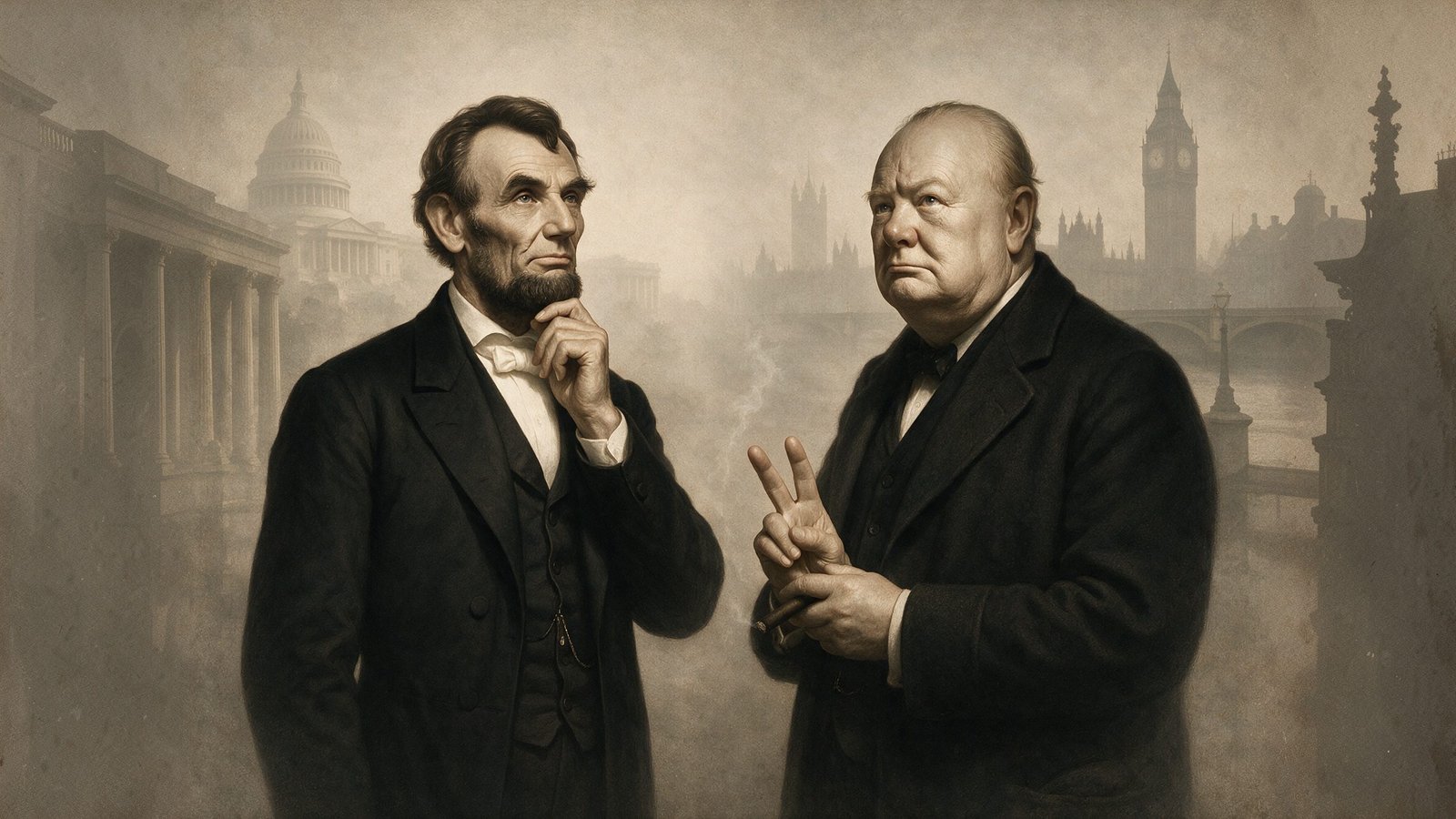
Abraham Lincoln brought former rivals for the 1860 Republican nomination into his Cabinet, among them William Seward and Salmon Chase. In 1864, with the Civil War raging, he sought reelection on a National Union ticket with Andrew Johnson, a Southern Democrat loyal to the Union. Lincoln understood that preserving the nation required a coalition broader than his party.
Winston Churchill, who had crossed the floor of Parliament twice, formed a wartime coalition with Labour in 1940. Its leader, Clement Attlee, became deputy prime minister in 1942. They governed together through the war, then competed at the polls in 1945. Unity was a mission, not a merger.
Neither leader surrendered his convictions. Both knew that some national objectives could not be held hostage to party differences.
Israel Has Done This Before
In May 1967, as Arab armies threatened Israel, Menachem Begin proposed bringing David Ben-Gurion back as prime minister in place of Levi Eshkol. Eshkol refused, but Begin joined his expanded government as a minister without portfolio, while Moshe Dayan became defense minister. Days later came the Six-Day War.
Begin did not stop being Begin. He understood that the hour belonged to Israel, not merely to his party.
In 1984, with inflation above 400% and Israeli soldiers entrenched in Lebanon, Shimon Peres and Yitzhak Shamir formed a rotation government despite profound differences. It enacted the 1985 Economic Stabilization Plan, curbed hyperinflation and withdrew most troops from Lebanon, while retaining a security zone in the south.
In October 2023, Benny Gantz and Gadi Eisenkot joined Netanyahu’s emergency government after the Hamas-led attack, putting political opposition aside. But unity is no magic charm: the Netanyahu-Gantz government of 2020 collapsed in a budget dispute before its promised rotation could occur. Trust, purpose and credible commitments matter.
Unity Must Mean More Than Sharing Power
The current numbers offer no easy answer. Netanyahu’s bloc holds 53 seats, eight short of a majority. The main non-Arab opposition parties hold 48; with the Arab-led parties’ 19, they could reach 67, but only by overcoming serious political disagreements. The Bennett-Lapid government of 2021 passed a budget and showed that disparate parties could cooperate, yet eventually fell after defections.
A broad national unity government would not eliminate disagreements. It could, though, create the room to make decisions without each faction threatening the government’s survival.
Such a coalition needs more than a list of ministries. It needs a written program with deadlines: a long-term security strategy; reconstruction for communities damaged by war; relief on housing and living costs; a fairer distribution of military and national service; an independent investigation of October 7; and protection of democratic institutions.
Nor can unity mean excluding citizens from the conversation. Arab citizens, religious and secular Jews, and political opponents all have a stake in what comes next.
The burden falls on both camps. The “No Bibi” parties must turn vetoes into proposals and decide whether they can negotiate without abandoning their principles. Netanyahu and his allies must accept meaningful power-sharing, binding commitments and accountability. If the identity of the prime minister blocks agreement, that too must be negotiable.
A unity government formed merely to keep one leader in office, or keep another out, would repeat the very mistake Israel needs to escape.
Lift Our Eyes
The psalmist wrote, “I will lift up mine eyes unto the hills.” Israelis have always looked toward Jerusalem, return, and a future others deemed impossible. Their leaders now owe them more than reasons to dislike their rivals. They owe them a reason to hope.
The party man asks, “How do I win?” The statesman asks, “How does Israel win?”
Lincoln, Churchill, Begin, and Peres faced versions of that question. Israel needs leaders willing not merely to count the seats they control, but to consider the future they can build together.