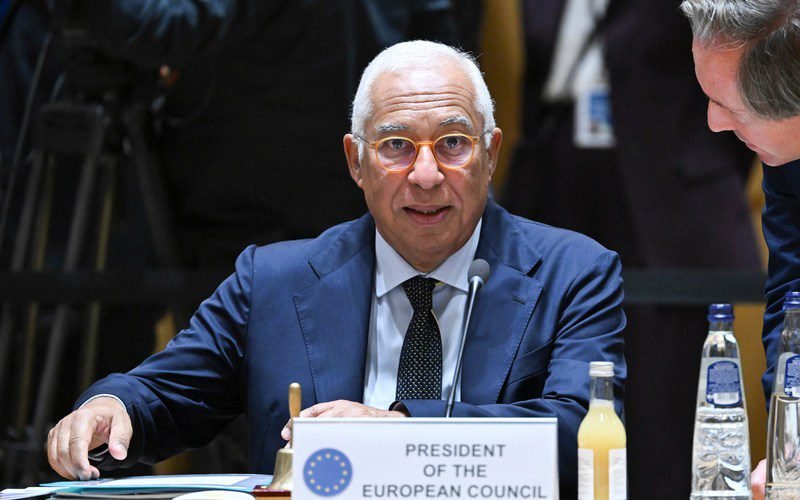
European Council President António Costa, charged with brokering compromises among the EU’s 27 national leaders, came under his sharpest criticism since taking the post nearly two years ago after a summit Thursday that ended in deadlock on energy prices and the bloc’s next long-term budget.
Leaders had hoped for progress on both issues at the two-day meeting, which was set to continue Friday. Instead, talks stretched over 14 hours with little to show for them. Costa, a Socialist and former Portuguese prime minister, leads a bloc whose most powerful governments are mostly not from his political family.
Finnish Prime Minister Petteri Orpo told POLITICO that the longer the budget talks drag on, the harder a deal will be, and he urged leaders to settle the matter this year.
The stakes are high. The EU is under pressure to ease a cost-of-living crisis and to settle its seven-year budget before national elections next year complicate matters. Divisions among member states are especially visible as U.S. President Donald Trump moves toward Russia’s position on the war in Ukraine, Europe’s economy struggles to keep pace with China’s and anti-EU nationalists gain ground in major capitals.
POLITICO spoke to 16 diplomats and officials, all granted anonymity to discuss a sensitive matter. All were either in the room Thursday or were briefed immediately afterward by leaders who were. Most were critical of Costa, though some were more positive. His spokesperson declined to comment.
The most heated exchanges concerned the EU’s carbon pricing system, including ETS2, a second phase already written into law that will put a price on carbon from heating and transport starting in 2028. Three diplomats said talks became so chaotic that Costa canceled the summit’s planned news conference and pushed discussions until after dinner.
German Chancellor Friedrich Merz was angered by what Berlin viewed as the obstinacy of Italian Prime Minister Giorgia Meloni, diplomats said. Germany, Spain, France, Portugal, the Nordic countries and the Netherlands faced off against Italy and the Visegrád Four of Hungary, Czechia, Slovakia and Poland. Five diplomats said Rome and the Visegrád group wanted ETS2 delayed because of its effect on energy bills.
Two diplomats from different countries said leaders were furious that Costa let the talks spiral. One said he prefers to finalize conclusions beforehand with ambassadors and dislikes drafting text on the spot. Another diplomat said he lost control of the room and failed to circulate proposed amendments in time, leaving leaders to debate without them as talks ran past midnight. Two officials compared him unfavorably with predecessors Charles Michel and Donald Tusk.
Concerns also extend to the budget. Four diplomats said northern countries fear Costa favors the south. One diplomat accused him of not acting as an honest broker, and another said he belongs politically to the opposing camp. Fiscally cautious countries want him to propose further cuts before a special budget summit, confirmed Thursday for Nov. 26.
Many governments still back him. Belgian Prime Minister Bart De Wever called him capable and shrewd, crediting him with avoiding line-by-line drafting at the table, a habit that irritated leaders under Michel. Other diplomats blamed Meloni and the Visegrád group for reopening agreed language. One critic of Costa’s budget stance still called his conduct impeccable and described him as a skilled deal-maker.
Costa is expected to seek a second term next year.
Read more via Politico