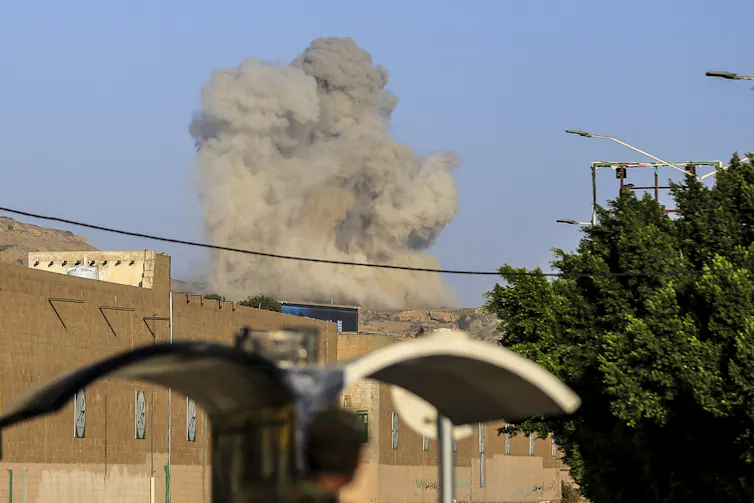
A deadly Houthi attack on Riyadh’s international airport has highlighted how the Yemeni group is reframing its perceived “Iran proxy” role and shifting its regional focus to its ongoing battle against Saudi Arabia. The Oct. 10 strike, in which 13 people were killed and hundreds injured, was the most violent episode on Saudi Arabian soil since the beginning of the war in Iran in February.
It was followed by further – albeit less deadly – missile barrages in the days since. The violence, moreover, comes just as the kingdom is hosting a major conference for oil producers.
As a longtime analyst of Yemeni politics, I see the latest attacks as another illustration of both the expanding regional stalemate across the Middle East and the need to understand how Yemen’s decade-long war is having effects far beyond its territory.
Houthi narratives
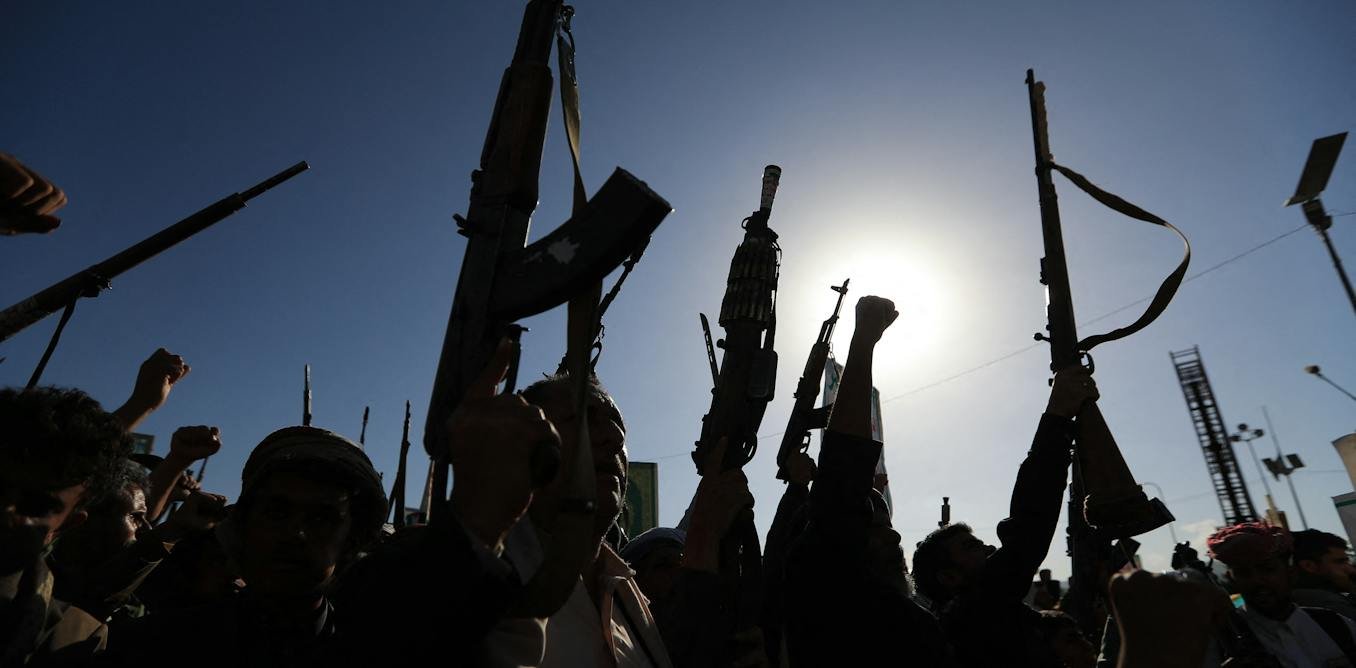
The Houthi movement first emerged as a militarized political actor in Yemen in 2004 and has been locked in a multiyear civil war against the internationally recognized, Saudi-backed central government. Currently, the Houthis control about a third of the territory and two-thirds of the population. They are undoubtedly Yemen’s most powerful armed force, despite lacking access to warplanes, and have developed an arsenal of long-range missiles and drones.
All along, the Houthis have frequently been portrayed by their adversaries and many external observers as a proxy for Iran, the chief regional rival to Saudi Arabia.
It’s true that the movement has long been broadly aligned with Tehran and frequently shared regional objections, even if the relationship is complex and varied. At the same time, the evolution of the Houthi movement remains intimately connected to Yemen’s domestic political context and to a historical feud specific to the country – something I and many other scholars have researched.
What is particularly significant in the current context of an escalating fight with Saudi Arabia, however, is the way in which the Houthi leadership has sought to reframe its military engagement over the course of 2026 so that it does not appear to be directed by Iran.
This shift is analytically important because it reveals how Houthi leaders understand the political effectiveness of particular narratives and how they seek to legitimize their actions.
A belated return to war
When the United States and Israel launched their attack on Iran on Feb. 28, many observers expected the Houthis to enter the conflict swiftly. Their previous intervention in the Red Sea – between November 2023 and May 2025 – in support of Palestinians after Israel’s war in Gaza had, to some extent, provided a blueprint for disrupting maritime traffic through the Strait of Hormuz.
The symbolic returns of their earlier campaign had been considerable. On the one hand, it demonstrated the Houthis’ willingness to act in support of Gaza at a time when many Arab governments were widely perceived as turning their backs on the plight of Palestinians. It also revealed the movement’s capacity to disrupt global supply chains and affect international trade far beyond Yemen.
But the Houthis remained on the sidelines for several months after the initial U.S.-Israeli strikes on Iran. Their leaders appeared to disregard reports that Iranian decision-makers had called on them, in July 2026, to close the Strait of Bab el-Mandeb to maritime traffic.
Assuming that the Houthis would automatically act at Tehran’s command reflected a misreading of Yemeni history and of the identity markers that shape the movement’s political legitimacy. Acting in support of Palestinians could be framed for a domestic and regional audience as an expression of Arab solidarity. But acting on behalf of Iran, a non-Arab Persian country composed almost entirely of Twelver Shia Muslims, was considerably more difficult to rationalize in Arab Yemen where Twelver Shia Muslims are absent and Sunnis are the majority.
The Houthis’ reentry into the regional conflict in August took place alongside a shift in their political narrative, which increasingly centered on their long-standing adversary, Saudi Arabia.
Although the strategic consequences of their actions may ultimately benefit Iran in its own regional and international conflicts, the Houthis see their military campaign against Saudi Arabia chiefly as an act of national defense.
An earlier airport bombing
During the summer of 2026, an important episode went largely unnoticed in the Western media: the Houthis’ attempt to establish the reopening of Sanaa International Airport through the surprise departure of a Tehran-bound flight and its subsequent return.
The airport, located in the Houthi-controlled capital, had been closed since late 2024 following Israeli strikes. Its continued closure meant that access to and exit from Houthi-controlled territory remained subject to restrictions imposed by the movement’s adversaries. These included the authorities controlling Aden, the interim capital of the internationally recognized government.
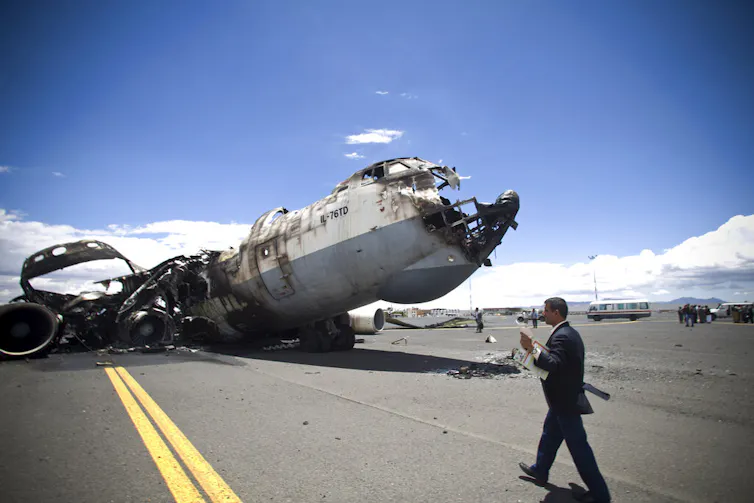
From the Houthis’ perspective, their sovereignty consequently remained incomplete. The airport’s closure not only restricted civilian movement but also limited their ability to send supporters abroad for training and potentially to receive military equipment. On July 13, the Saudi military’s subsequent bombing of the Sanaa runway, as the incoming aircraft from Tehran approached, provided the movement an opportunity to reignite its confrontation with Riyadh.
After more than three years of a de facto ceasefire and difficult negotiations, Riyadh appeared, as in its dealings with Iran, increasingly eager to extricate itself from the region’s protracted conflicts. Sensing an opening, the Houthi leadership responded by invoking a logic of tit-for-tat retaliation.
The Houthis’ tactics today are a kind of mirror to the 2015 launch of a Saudi-led bombing campaign and blockade of the Houthi-controlled parts of Yemen that has led to years of protracted civil war. The Houthis now claim the right to impose reciprocal restrictions on Saudi Arabia, particularly by targeting its ports and oil-exporting infrastructure.
Saudi’s Houthi blowback
The Houthis’ new tactic serves two purposes. First, it allows the Houthis to redirect responsibility for the economic and humanitarian crisis in and around Sanaa toward the Saudi-enforced blockade rather than their own governance failures, mismanagement and corruption. Second, it provides a rationale for escalating the conflict across the region.
Previously, the Houthi military leadership had halted attacks on Israeli-linked shipping in the Red Sea following the formal Gaza ceasefire of October 2025, despite having repeatedly come under bombardment. It had likewise suspended attacks on American vessels following an agreement with the Trump administration in May 2025.
These decisions demonstrated a degree of pragmatism beneath the movement’s inflammatory rhetoric. That pragmatism appeared to persist even as the Houthis resumed their regional military engagement, with American diplomats reportedly meeting Houthi representatives in Oman in September 2026.
With Saudi Arabia, however, the Houthis felt less compunction. Riyadh was already facing repeated barrages of Iran missiles as a consequences of its alliance with the U.S. and facing an energy export squeeze. So with the Saudi airport incident, the Houthi leadership feels it has trapped Saudi Arabia, with consequences extending to the global economy.
This retaliatory strategy was bolstered by successful Houthi moves in early September to establish a degree of control over the Strait of Bab el-Mandeb, one of the world’s most important maritime choke points. That gave the Houthis leverage over shipping crucial for Saudi Arabia in the Red Sea.
Drones and ballistic missiles, as the attacks on the Riyadh airport illustrate, also give the movement the capacity to strike targets across much of Saudi Arabia.
The targeting of civilian infrastructure in Saudi Arabia, particularly airports, illustrates the retaliatory logic the Houthis have invoked to justify their actions.
It’s far from clear what the consequences of this increasingly aggressive Houthi campaign will be. The region seems poised for ongoing strife, and it’s an open question whether it will draw back in the likes of the U.S., which has been reluctant to return to full-scale regional conflict.
Yet none of that should obscure the plight of civilians in Yemen. Rather, it should serve as a reminder of the suffering of a population exhausted by a war that has lasted for more than a decade and has devastated the already meager infrastructure of what was the poorest country in the Middle East even before the conflict started.