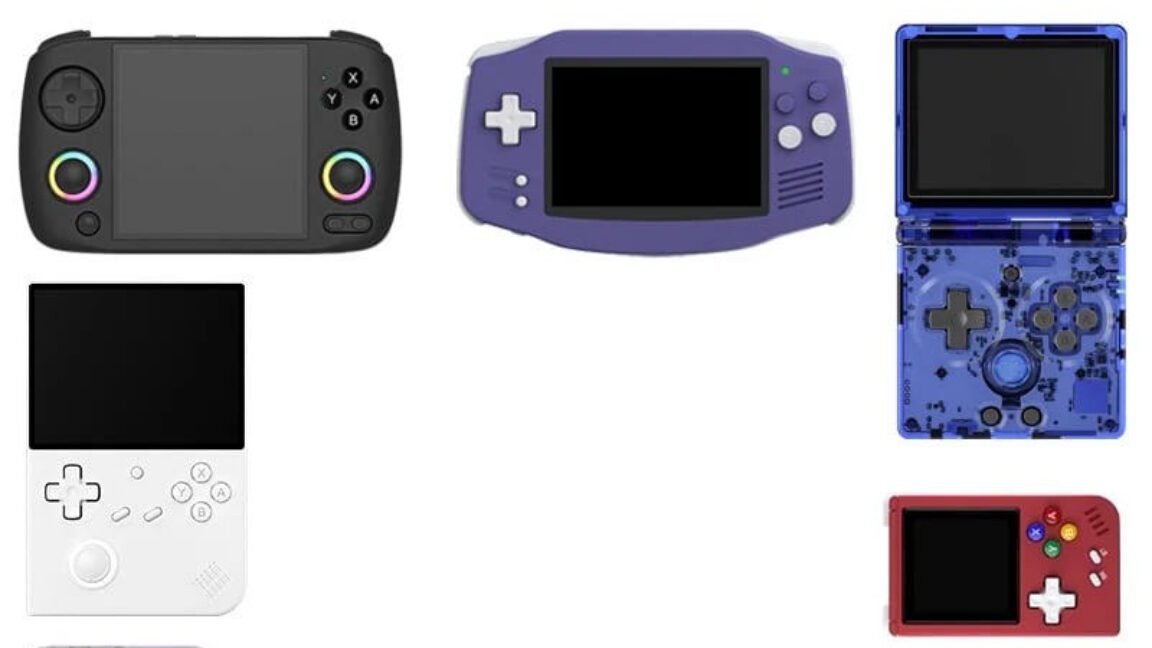
For years, Chinese hardware manufacturers have carved out a market niche with an array of handheld Android gaming devices focused on retro emulation and/or more modern game-streaming capabilities. Now, though, a major game industry trade group is targeting one of those manufacturers, Anbernic, asking the US Trade Representative (USTR) to add the company to its list of “Notorious Markets” that “engage in or facilitate substantial copyright piracy or trademark counterfeiting.”
TorrentFreak was among the first to notice the request from the Entertainment Software Association (ESA), which was submitted to the USTR last week. In it, the US trade group—which represents major publishers including Nintendo, Microsoft, PlayStation, Amazon, Epic, EA, Ubisoft, and more—notes that Anbernic devices “are routinely offered or shipped with removable memory cards preloaded with hundreds or thousands of unauthorized copies of copyright-protected video games published by ESA members.”
While many online sellers do include an SD card full of ROMs alongside emulation hardware of all types, Anbernic itself does not appear to do the same when selling directly from its website. Regardless, the ESA argues that these ROM-laden Anbernic devices selling through “normal retail channels” help to “normalize hardware-based piracy by delivering illicit catalogues through a polished consumer product.” This, the ESA says, meets the threshold for a “superfake,” an ill-defined designation that applies to “high-quality counterfeit trademark goods … on a commercial scale.”
Being included on the USTR’s Notorious Market List wouldn’t bring any additional direct legal consequences for a company like Anbernic. However, the USTR says the list “encourages the responsible authorities to step up efforts to combat piracy and counterfeiting” and notes that the list itself “increase[s] public awareness and help market operators and governments prioritize intellectual property enforcement efforts that protect American businesses and their workers.” Inclusion on the list could also presage a Section 301 investigation that could lead to legal consequences or restrictive import controls on the devices.
“Includes thousands of games!”
The ESA’s call-out of Anbernic to the USTR highlights the breakdown of a polite fiction that has long undergirded the distribution of emulators and emulation-focused hardware in the United States. In the not-too-distant past, software and hardware distributors that wanted to appear legitimate took pains to push perfectly legal emulators while completely disavowing any knowledge of the kind of copyrighted ROMs that could get them in legal hot water. If an end-user wanted to later find and load up those kinds of illegal ROMs on their own (instead of running legal homebrew games or backups of their own cartridges), well, that was nobody else’s business, was it.
These days, though, it’s trivial to find third-party sellers on Amazon, eBay resellers, annoying TikTok advertisers, or even reputable news sites boldly trumpeting and selling devices that include “thousands of games” from the past, ready to play from the moment you turn them on. To court customers who have never even heard of BitTorrent trackers or Warez sites, these sellers have brought illicit ROM distribution out of the Internet shadows and made it a core part of their business.
As major online retailers continue to ignore this blatant copyright infringement on their platforms, it’s no wonder the ESA has felt the need to act. But focusing on Anbernic, which just makes the hardware that powers these emulators, is an odd choice when these centralized e-commerce sites could do a much better job at preventing the wholesale advertising, sale, and distribution of illegal ROMs directly to consumers.