Within two months of it being signed, Saudi Arabia, Turkey and Pakistan invoked the Mecca mutual defence pact in response to attacks by Yemen’s Houthi rebel forces.
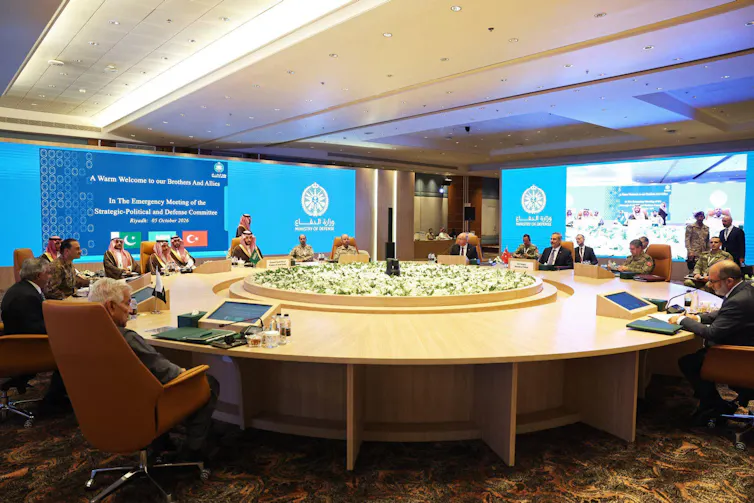
The three countries agreed on October 5 to activate what Saudi defence minister Khalid bin Salman called collective deterrence measures against the Houthis. Islamabad and Ankara have undertaken to provide “agreed military forces and capabilities” and ensure their rapid deployment to the kingdom.
The same day this agreement was struck, Saudi-backed Yemeni government forces opened a counteroffensive, supported by 100 Saudi-led coalition jets from Arab and regional states, to push the Houthis back from the Bab al-Mandab, the strait they seized in September.
For a month it had looked as if the pact may turn out to be a hollow promise. Islamabad and Ankara issued messages of condemnation after a string of Houthi rebel attacks on the kingdom, but did little else. Analysts were talking of the alliance as a stress test for the alliance. And the question was whether Pakistan and Turkey would fail the test. So the two countries’ decision to deploy troops means that pact has now passed that stress test – but in the narrowest sense. Its members have turned up. But what they brought a shield, rather than a sword.
Pakistan’s defence minister, Khawaja Asif, announced that Pakistani and Turkish forces would play a supporting role, involved in reconnaissance, while Saudi forces do the fighting.
Pakistan was already in the kingdom in strength, with around 8,000 troops, a squadron of JF-17 fighters, drones and an HQ-9 air defence system operated by Pakistani crews. Its contribution can quickly assert itself.
Turkey’s cannot. Under Article 92 of Turkey’s constitution, sending troops abroad needs parliamentary approval and, despite two months having passed, the parliament has yet to ratify the pact. The alliance has, however, begun to build institutions, appointing a retired Pakistani general, Numan Mahmud, as its first secretary general.
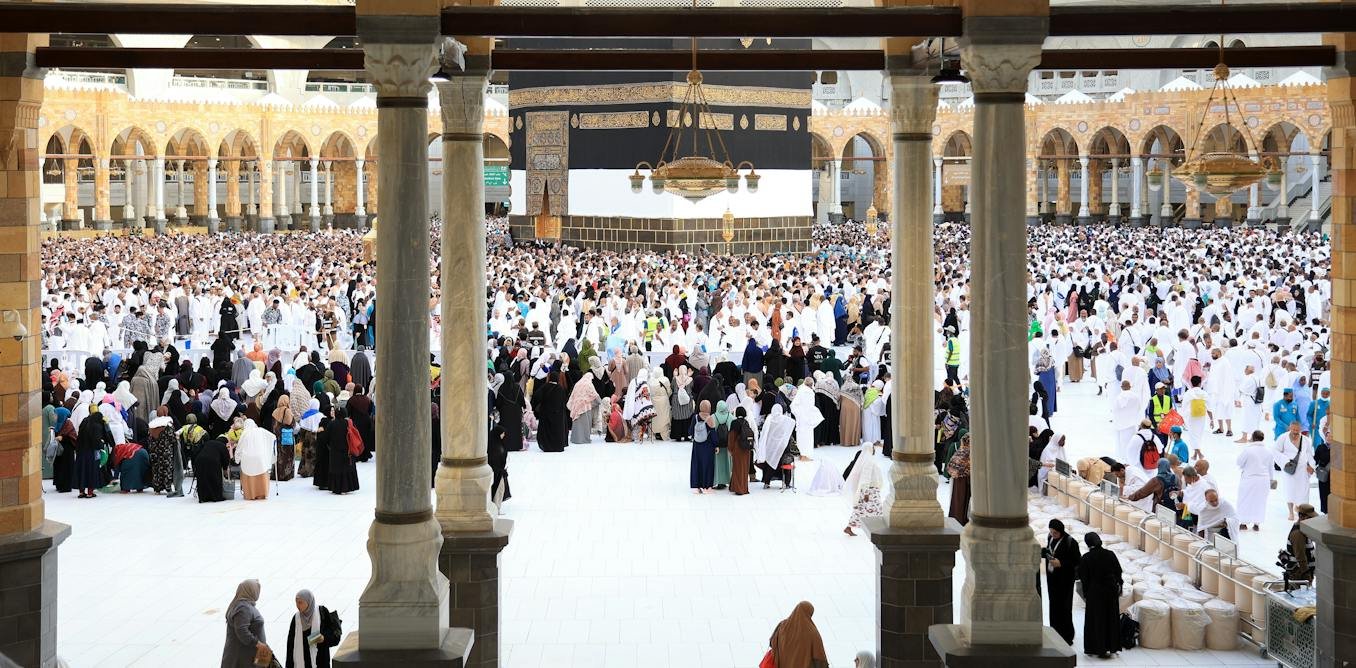
This matches the line Pakistan drew over Yemen once before. In April 2015, its parliament voted unanimously to stay neutral in the Saudi war against the Houthis. But it pledged to stand shoulder-to-shoulder with the kingdom if its territory or the holy cities were threatened. The statement on October 4 used almost the same terms.
The wording is deliberate. It ties Pakistan’s commitment to the one cause no Pakistani government can refuse, the defence of Islam’s holiest sites. But to nothing beyond that.
How it measures up against Nato
The comparison with Nato looks unflattering. Nato’s Article 5 mutual defence clause rests on 75 years of integrated command, common equipment and an American nuclear guarantee. The Mecca pact has a text, a secretariat and two months of history.
But Article 5 itself is less automatic than its reputation might suggest. It obliges each ally to take such action as it deems necessary, leaving each ally to decide what that means. It has been invoked only once, after the attacks of September 11 2001.
When Turkey asked its Nato allies for help as the Syrian war spilled over its border, the answer was to reinforce Turkish air defences, not to send armies into Syria. The Mecca pact is following the same template.
The real difference lies elsewhere. Nato’s guarantee is credible enough that it has rarely been tested. The Mecca pact has been tested within weeks.
Turkey’s Nato membership is also worth examining: the alliance’s Article 6 confines the collective defence guarantee to the North Atlantic area. This means a Turkish soldier hit by a Houthi missile in Riyadh would fall under the Mecca pact, not Nato. Ankara now sits inside two collective defence treaties that do not overlap.
The al-Mandab Strait and the Red Sea
The Mecca pact will not, by itself, guarantee the reopening of the Bab al-Mandab, through which about 12% of global trade passes in normal times. This will depend on Yemeni ground forces and Saudi air power.
What the pact does is subtler. By putting Pakistani and Turkish air defenders around Saudi cities and oil installations, it frees Saudi aircraft and crews to fight over Yemen. Riyadh is assembling a ring of defensive partners so it can concentrate on the offensive.
But the danger is mission creep. Yemeni government forces now speak of marching on the capital, Sanaa – under Houthi occupation since 2014 – rather than simply recovering the coast. If so, a short campaign to restore the strait could become another open-ended war. Pakistan has signalled where its line falls – and foreign minister, Ishaq Dar, has stressed that the pact is defensive in nature. Reports that Pakistan flew four planeloads of weapons to Aden show how thin that line can become, and it is the one Islamabad must hold most firmly.
The bigger picture
For Washington, the Mecca pact has become a convenience. US president, Donald Trump, refused the crown prince’s requests for strikes on the Houthis in September after the group promised to spare American shipping. His secretary of state, Marco Rubio, now says the US will live by its defence agreement with Riyadh – which former Pentagon officials expect to mean assistance with intelligence and surveillance rather than combat.
Pakistan will also be sounding out where Iran sits. One Tehran analyst put the distinction plainly: a deployment limited to protecting Saudi installations can be tolerated – offensive operations against the Houthis cannot. That is exactly where Islamabad has placed itself, which keeps alive its role as a channel between Washington and Tehran. The pact is also defending a sea lane that matters more to Asian and Chinese trade than it does to American trade; a point not lost on Beijing, Pakistan’s closest strategic partner.
One more signal deserves notice. When the US stood aside in September, Israel reportedly offered to intervene on Saudi Arabia’s behalf. Riyadh’s public answer was to invoke a pact with its Muslim partners in the name of the holy cities, which says something about where it now believes its security must come from.
The real test is whether the pact can keep its forces on the right side of the Yemeni border if the war drags on, or if a Pakistani or Turkish soldier is killed on Saudi soil.