Diplomats from the 27 European Union countries are privately working out how the bloc would respond to a hybrid attack that kills several people, a scenario five EU diplomats and officials told POLITICO is looking more likely.
The planning has also exposed disagreement over how big a security role the EU should play and whether its work overlaps with NATO’s, according to the officials, who spoke on condition of anonymity to discuss confidential talks.
EU ambassadors have taken up the issue in recent weeks in a “restricted format” that bars phones and assistants. The talks intensified after an explosives-laden drone was found at Leipzig airport in August. Two diplomats said ambassadors met last Wednesday to focus on mass-casualty examples.
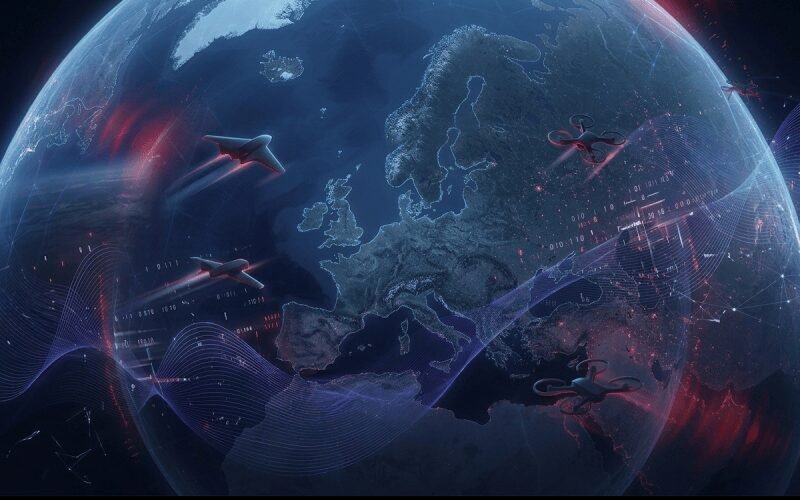
The EU has long discussed hybrid threats, which it and NATO define as subversive activity short of an act of war. It has a “hybrid toolbox” for responding to cyberattacks, election interference and sabotage. The EU says Russia has stepped up cyberattacks, sabotage and covert operations across the bloc since invading Ukraine.
The latest discussions have centered on sending emergency response teams, freeing up EU funds to help an affected country and deciding how EU leaders should communicate, one official said.
“We have to be prepared for something serious,” a senior EU diplomat said. A second official said casualties are “bound” to occur and that none so far was “sheer luck.”
Recent incidents include the Leipzig drone, a suspicious fire at a Polish ground station that handles Starlink communications and a plot to plant incendiary devices at transport hubs in the EU and U.K. Bulgarian officials said Tuesday that several sailors were missing after drones sank their ship in the Black Sea.
Teija Tiilikainen, director of the European Centre of Excellence for Countering Hybrid Threats, said Russia is using increasingly lethal tools and that deaths will eventually follow. A NATO diplomat said the death of an allied citizen would put heavy pressure on both organizations to act.
Some capitals say the EU is overstepping and duplicating NATO. Oana Lungescu, a former NATO spokesperson now at the Royal United Services Institute, warned that overlap could slow decisions. Several diplomats also cited the EU’s lack of secure communications and fears of leaks, including reports that Hungary’s former foreign minister relayed leader-level talks to his Russian counterpart. A diplomat from an eastern flank country said sensitive intelligence is kept out of EU settings for that reason.
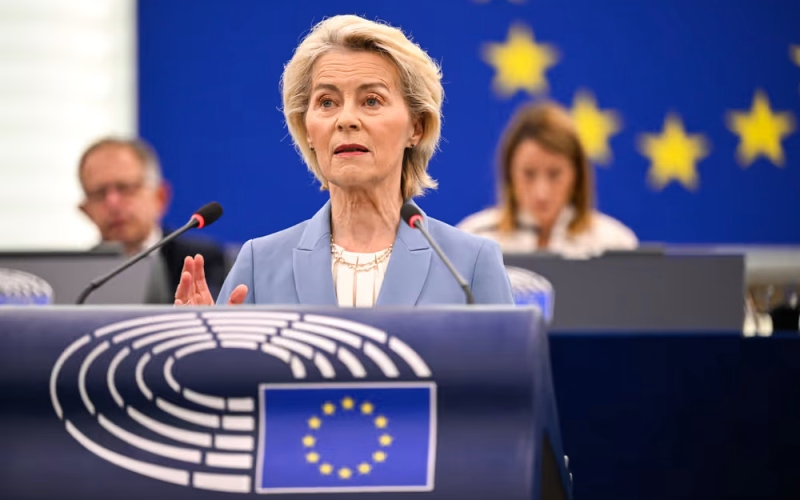
The debate coincides with European Commission President Ursula von der Leyen’s push for an “emergency security protocol” and a “European Security Council.” Two diplomats said both are expected in a European Security Strategy due in early November. Several diplomats said the measures would take months to set up and duplicate existing tools, such as the Integrated Political Response mechanism.
Under that mechanism, the rotating EU presidency can call emergency meetings at an affected country’s request. France invoked the EU’s mutual assistance clause, Article 42.7, after the 2015 Bataclan attacks, the only time it has been used. Lungescu called that a political decision that produced little beyond coordinated investigations.
She said NATO should handle intelligence-sharing and military deterrence while the EU focuses on civilian response. She added that Russian President Vladimir Putin does not distinguish between the two organizations.
Read more via Politico