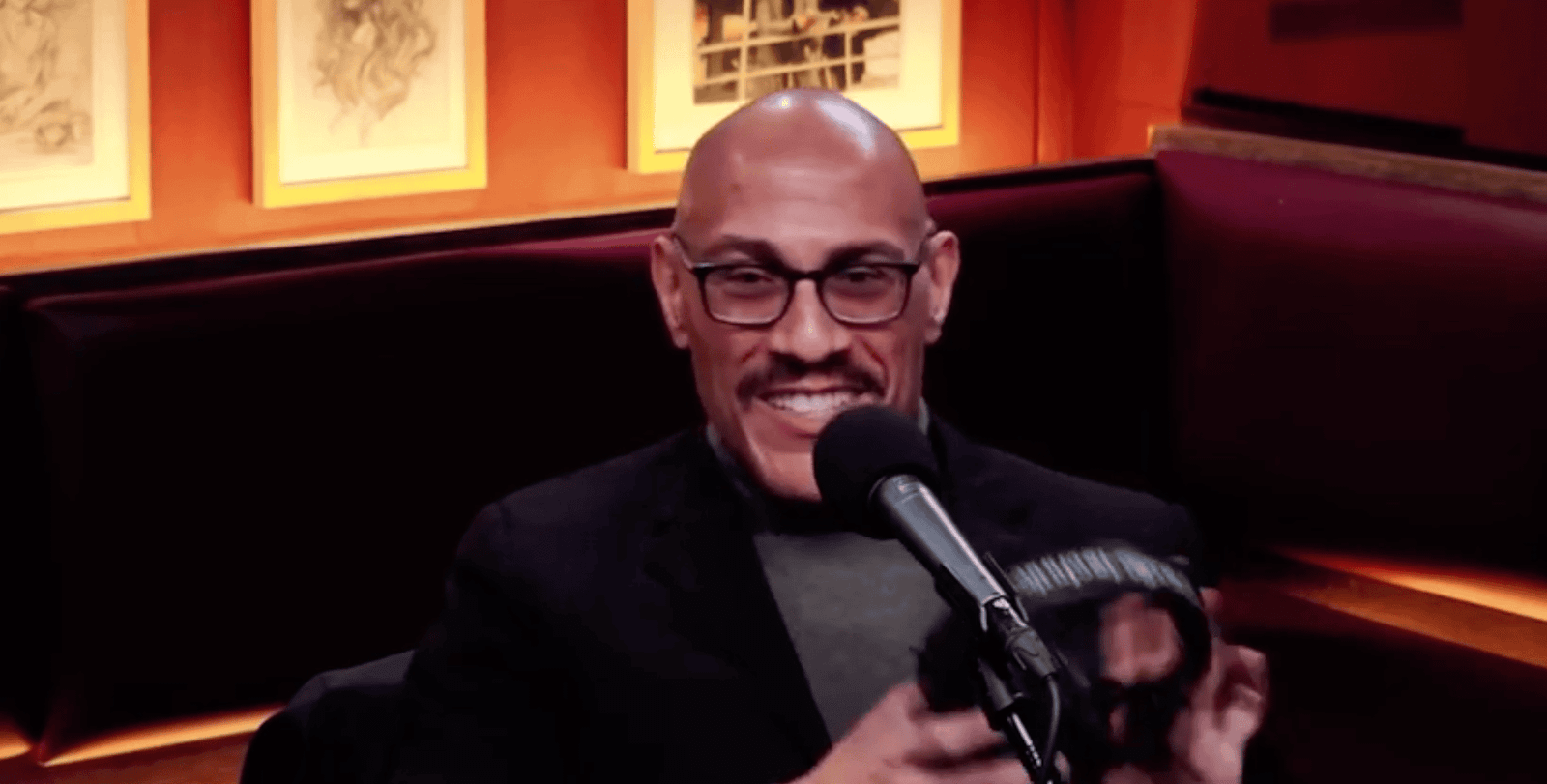
Journalist David Christopher Kaufman unveils The Octagon Project, a new education initiative intended to counter disinformation, encourage civic engagement, and help Jews and other supporters of Israel speak publicly with confidence
The day after Hamas’s October 7, 2023, assault on Israel, while families were still searching for loved ones and the scope of the killings was only beginning to emerge, David Christopher Kaufman watched a different battle ignite far from the southern Israeli communities under attack.
Across American campuses and city streets, he saw activists place the blame on Israel before, he says, “one soldier, one Israeli soldier had been deployed to Gaza.”
For Kaufman—a Jewish, Black and gay journalist, former New York Post editor, father, and founder of the Counterintuitive newsletter on Substack—the response was not simply shocking. It was clarifying.
“I was always Zionistic, always pro-Israel, always, I would say, sort of center of the road,” he says. “… It wasn’t that October 7th radicalized me. It was October 8th that radicalized me,” he told The Media Line.
It wasn’t that October 7th radicalized me. It was October 8th that radicalized me.
Now, as he prepares to launch The Octagon Project, Kaufman is turning that reckoning into a campaign focused on what he sees as the defining struggle of the moment: defending truth, confronting intimidation, and urging Jews who have retreated to the sidelines to speak again.
The Octagon Project is a new education initiative intended to counter disinformation, encourage civic engagement, and help Jews and other supporters of Israel speak publicly with greater confidence.
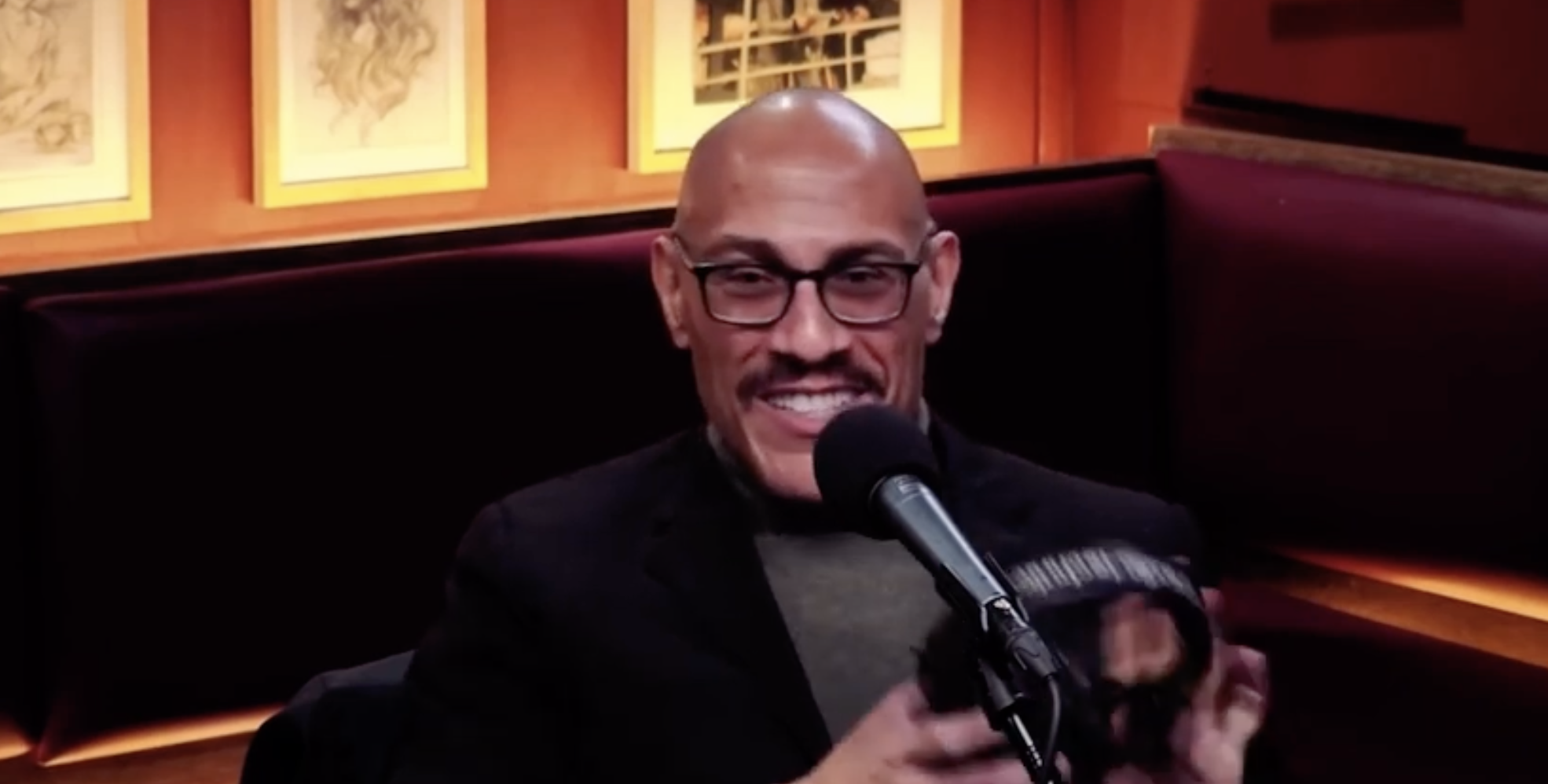
David Christopher Kaufman. (Screenshot: YouTube)
“What we saw on October 8, 2023, even while the blood was still flowing through the kibbutzim of southern Israel, while Hamas terrorists marauded through southern Israel, …” he says, “what we saw were these groups of anti-Israel, anti-Zionistic, antisemitic activists across America, especially at academic institutions, entirely blaming Israel.”
Kaufman says the language used by organizations claiming to speak for marginalized people made the moment more personal. “I’m a black or brown person. I’m what they would call a queer person. And I’ve often known what it’s like to be a marginalized person,” he says. “And I said, these people do not speak for me. I do not believe this way. And I have the ability to speak for myself, and I will speak for myself.”
“I won’t have my name or my identity weaponized against my own community and for agendas that I don’t support in any way whatsoever.”
I won’t have my name or my identity weaponized against my own community and for agendas that I don’t support in any way whatsoever
He describes the period since October 7, as an accelerating collapse of shared factual ground. “What I’ve seen … is an erosion, is a failure of truth,” he says. He points to what he calls “the lie of the genocide, the lie of Israeli apartheid, the lie that antisemitism is not a problem in the US.”
Its effects, in his view, are concrete: “And with that, fear, timidity, violence.” Jews and supporters of Israel, he says, fear “the specter of cancellation, of violence, of the mob” and often lack “the tools or the confidence in order to espouse the truth.”
Asked why so many people remain publicly silent, Kaufman says they need no permission to speak. “It’s our right as Americans, as fundamental Americans to protest and to push back.” Yet he believes the public narrative has been seized by an organized and amplified minority.
“Most Americans are not interested in Gaza. They’re not interested in America,” he says. “What you see is an over-representation and an over-reliance on the loudest voices that have drowned out everybody else.”
The Octagon Project, he says, aims to help those people “find their own voice, especially Jews.”
Kaufman’s concern about the Democratic Socialists of America (DSA), a US political organization that backs candidates who identify with democratic-socialist politics, is central to that mission. In response to a question about separating progressive politics from antisemitism, he rejected the premise that the danger is merely possible.
“Well, it’s not if they might have antisemitic values. They do have antisemitic values. There’s no question,” he says.
He contends that candidates backed by the DSA are subjected to ideological tests disproportionately focused on Israel and Zionism. “No other country, no other entity, no other ideology faces such stringent requirements,” he says. “And there is a double standard that is not represented for any other group besides Israel.”
“Israel is a country full of Jews,” he continues. “So, … this double standard, that is the antisemitism.”
What most alarms him is how quickly candidates aligned with that political movement have advanced. Kaufman points to a New York congressional race in which, he says, a Democratic Socialist presumptive nominee won by 2,000 votes in a district of more than 750,000 people.
“Think about that,” he says. “She will represent New York City in the Congress of the United States of America where she will have very real political power, and she won by just 2,000 votes.”
The lesson, he says, is not that the outcome was inevitable. “Somehow we, whoever we are, we have failed, and something must be done.”
Kaufman uses the word “radicalized” to explain his own shift, but he defines it as a political and moral awakening. “Yeah, I’m very much not a terrorist, and I don’t support terror of any kind,” he says.
“When I say radicalized, it means that I was very much awoken … to the reality of the threat that we face and the fact that something must be done about it,” he says. “And on some level, by any means necessary. I’m not necessarily talking about violence, of course, but if that means that we make this our fundamental political cause above everything else, that’s going to be acceptable.”
For him, that includes a new voting standard. “Any politician who has used the genocide lie and libel publicly is a politician I will not vote for, ever,” he says. Though he has long been an independent who voted Democratic in presidential elections, he adds: “If, in 2028, we have a candidate who has used the genocide libel as a Democratic nominee for president, I will not vote for them. It’s not even an option, period.”
Kaufman sees no contradiction between journalism and activism. “I fundamentally am rooted in this idea of the truth. And if we don’t actively and even radically fight for the truth, then what do we have left?”
That obligation is informed by his heritage. “As somebody who’s also African-American, I am sort of propelled and undergirded by the history of Black people in America and what it means to face injustice and what it means to face civil rights,” he says.
What I see facing Jews in America is a fundamental battle for civil rights, no different than African-Americans faced 40 or 50 years ago
“What I see facing Jews in America is a fundamental battle for civil rights, no different than African-Americans faced 40 or 50 years ago,” he argues. “I saw my father went to a segregated school in the South. That’s where I come from. And I see this battle facing Jews today as exactly the same.”
“I cannot stand as a Black person demanding equality for Black people if I don’t demand the same equality for Jews,” Kaufman says. “And those demands must be resolute. They cannot be compromised ever.”
He acknowledges antisemitic and anti-Israel extremism on the political right, but says that extremist currents on the left are especially potent because of their cultural influence and because dissent is less tolerated. “The left controls culture. The right controls politics in a way. The right controls power,” he says. “But we live in a highly culturally sensitive environment and moment, and you could say that the New York Times (NYT) in some ways is more important than the White House.”
His concern about the New York Times is personal. Kaufman says he initially took an allegation about Israel seriously precisely because it appeared in the newspaper where he once worked, and still retains “a fundamental trust in the New York Times and the essentialism of the New York Times.” But, he says, after reading it closely, “What I found was a piece of astounding unseriousness. Where was the smoking gun? Where were the whistleblowers?”
Still, he refuses to be pessimistic. “I still have hope,” Kaufman says. To give up on the NYT, he says, would be “to admit defeat in sort of the sanctity and the core values of our country.” As a father of small children, “I’m not ready to go there yet.”

David Christopher Kaufman. (Screenshot: Instagram)
Kaufman also rejects the idea that defending Israel requires defending every decision made by Israel. Having lived there for years at a time and followed its media in Hebrew, he says the country is too often presented as either uniquely virtuous or uniquely malevolent.
“When you spend time in Tel Aviv walking around the city, what you notice is just how regular it is,” he says. “It’s a city full of just regular people, regular Western-style people doing regular Western-style things, going to the mall, picking up their children, going to marriage counseling, going grocery shopping, having very normal lives.”
He believes advocacy should emphasize that normality. “Israel makes regular mistakes, just like every other nation,” Kaufman says. “We should hold Israel accountable to every mistake that it makes, but also within the context of the fact that every nation makes mistakes.”
The test, he says, is whether criticism seeks improvement or dismantlement. “If we can begin to talk about these errors and mistakes, not in an anti-Zionistic way, not in the language of, well, we must dismantle Zionism, but in a way of making Israel a stronger democratic nation, then that I think is very important.”
That includes confronting inequality. “Every thinking person who’s really spent time in Israel has to admit to themselves” that there is some degree of inequality, he pointed out. “That’s just the truth. That’s an unfortunate truth, but it is the truth.”
But, he says, the answer is not to deny Israel’s legitimacy. “We want to fix that to make Israel a stronger democratic nation. We want to fix that to make Israel more equal for all of its citizens, including its Arab citizens.” He calls that position an expression of “a deep love for Israel and an unbreakable belief in its legitimacy to exist and to exist as a Jewish nation.”
When the conversation turns towards “Mamdaniville” and the rising antisemitism in New York, Kaufman reserves some sympathy for what he calls “sideline Jews”—those who are neither anti-Zionist nor yet prepared to speak publicly.
“When I see sideline Jews, my first reflexive response is to feel compassion for them,” he says. “I’ve spent my whole life with a reality of what it means to be discriminated against.”
Most American Jews, he says, have not lived with what he calls “this feeling of vast physical insecurity.” That makes it deeply destabilizing to feel betrayed by a country that has offered safety and opportunity.
“It must be very, very difficult to suddenly wake up and realize that the country that you love, that you’ve called home, that your parents have called home, the country that has been incredibly good to you and the country that you have been incredibly good to in return … it must be incredibly overwhelming to feel that that country is betraying you,” Kaufman says.
He believes Jewish leaders have failed to prepare their communities for that possibility. “We haven’t seen our Jewish leadership really saying to American Jews, wake up people, the glory days are over, and we need to figure out a plan B,” he says.
According to Kaufman, The Octagon Project will seek new coalitions, but he does not favor repairing alliances that he believes abandoned Jews after October 7. “We don’t bring these people back to the table. We create an entirely new table,” he says.
He argues that work should begin within the Jewish community: “You have Jews of color, you have LGBT Jews, you have feminist Jews. So, number one, start at home, find them.” Efforts should then extend to outside partners, including Zionist Black, Latino, Hindu and Christian groups in his view. “Our allies are out there,” Kaufman says. “We need to make an effort and go find them.”
Those alliances, he says, must rest on “shared values, shared outcomes, shared agendas, not through philanthropy o,r dare I say it, white guilt.”
In three years, Kaufman hopes the project will help stop the advance of political extremism through better organization and new candidates. But the outcome he wants most is to help fearful Jews find their voices.
“What they have going for them is that they’re extremely well-organized and they’re extremely well-funded,” he says of the political forces he opposes. “Well, our side has the money. There’s no question about that. What we don’t have is the collective organization.”
He says he hears the same anxieties every day: “David, we are afraid. We don’t know how to engage. We are worried about our children. We’re worried about our jobs. We’re worried about our academic careers.”
“That fear and that worry is 100% legitimate,” Kaufman says. Yet he hopes it will not become permanent. “If we can find ways to empower Jews who have not yet found their voices, who I’ve said are suffering from the curse of timidity, if we can find them to step up and be revolutionary and be Jews who defend other Jews, then I will feel like I have done my job.”
As another October 8 approaches, Kaufman returns to the premise from which The Octagon Project began. “We are living in an era where lies have become the truth. I think that it started with Israel, Gaza, and the Jews.”
We are living in an era where lies have become the truth. I think that it started with Israel, Gaza, and the Jews
Then he invokes an old warning: “It’s a cliché. What starts with the Jews never ends with the Jews.”
For Kaufman, that is the reason to speak out.
“The erosion of the truth,” he says, “this is my biggest fear and warning. We need to fight back against this erosion of the truth.”