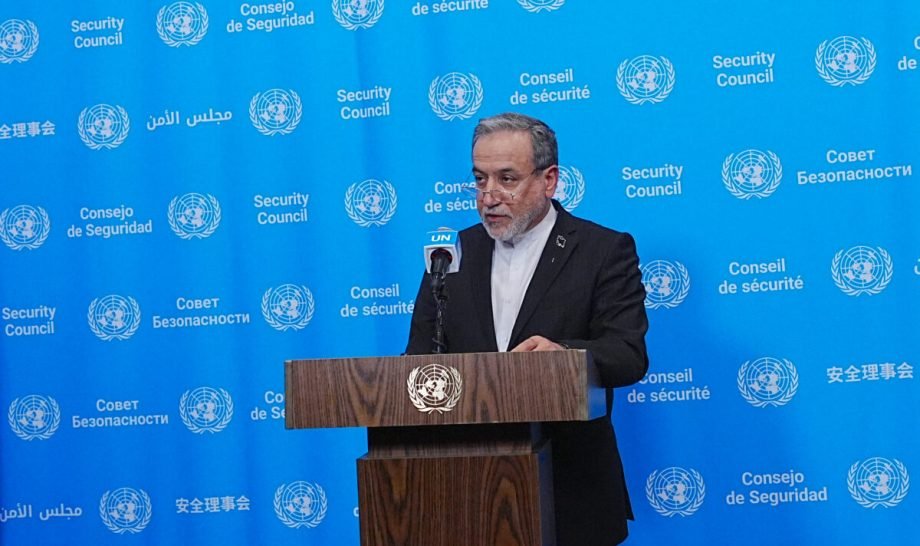
For a moment this week, the freeze between Washington and Tehran looked like it might actually crack. On 23rd September, Iranian Foreign Minister Abbas Araghchi sat down with US envoys Steve Witkoff and Jared Kushner in New York — the most senior direct contact between the two sides since the Islamabad Memorandum of Understanding fell apart two months earlier. Three days later, Araghchi told the New York Times and The Guardian that the Strait of Hormuz could reopen within a week, if Washington met Tehran’s conditions.
That one conditional sentence tells you almost everything about where this stands. Not resolved. Not fully back to war footing either. Suspended somewhere in between, where both sides already know roughly what a deal would look like, and neither has been willing to move first.
A memorandum that didn’t survive its own deadline
It is worth being honest about what actually collapsed here. The Islamabad Memorandum, signed 17th June after talks Pakistan brokered — with Army Chief Asim Munir reportedly playing a direct role — gave Washington and Tehran 60 days to turn a fragile ceasefire into something lasting. That window closed in mid-August with nothing to show for it. Iran’s position, as Araghchi laid out in a call with Japan’s foreign minister on 8th September, is that the region’s current tension traces back to what he called Washington’s “regrettable violation” of its Islamabad commitments, and that the US returning to those commitments is what would actually normalize the Strait. Washington hasn’t accepted that version of events. And in the space between those two positions, the fighting didn’t stop — both militaries traded strikes through early-to-mid September, and Iran seized a US underwater drone operating in contested waters along the way.
That’s the backdrop this year’s UNGA walked into. Not a lull that needs managing. An active, costly war still looking for an exit.
Why this round might be different
Two things set this month apart from the summer’s failed talks. First, the setting itself has changed — instead of formal, mediated summits like Islamabad or Bürgenstock, this was direct, informal contact between Iranian and American officials on the sidelines of the UN. That’s a format that lets both sides test the water without the political cost of watching another formal round collapse in public. Second, Iranian President Masoud Pezeshkian went out of his way to credit Pakistan’s “constructive efforts as a mediator” — which tells you Tehran still wants Islamabad in the room, even after the memorandum Pakistan brokered didn’t hold. That’s leverage Pakistan could use, if it chooses to.
Set against that, Trump’s own signals this week didn’t exactly line up. He praised Tuesday’s indirect talks, then turned around and gave what Al Jazeera’s Tehran correspondent called a “pugnacious” address to the same Assembly.
Analysts in New York — the Australian Strategic Policy Institute’s Adel Abdel Ghafar among them — describe it as “genuine” movement mixed with “a fair amount of posturing.” That sounds about right for a negotiation where both governments still need to look tough at home while quietly talking to each other.
READ: Iran just gave Washington a deadline. Watch Islamabad, not the White House
What a real deal would actually require
Reopening the Strait in seven days, if Araghchi’s offer holds, would only be a symptom of a deal — not the deal itself. Getting to something durable still means resolving three things the Islamabad Memorandum never really settled: verification mechanisms for Iran’s nuclear program that both sides genuinely trust; a regional security setup that doesn’t lean entirely on U.S. military guarantees the Gulf states have grown wary of; and unfrozen Iranian assets, which Araghchi has named specifically as a condition Washington still hasn’t met.
Skip past those in favor of a quick Hormuz reopening, and you repeat the exact mistake the June memorandum made — a deadline-driven document that looked like resolution without touching what actually caused the war.
Pakistan’s narrowing window
For Islamabad, this isn’t just about diplomatic prestige. Pakistan brokered the ceasefire that ended the initial war, hosted the Islamabad Talks that failed, and put its own name behind the memorandum that expired right on schedule in August. Pezeshkian’s public thanks this week suggests that credibility survived the memorandum’s failure — but it won’t survive forever if Pakistan keeps getting associated with frameworks that quietly run out the clock.
If the Araghchi-Witkoff-Kushner contact in New York turns into something real, Pakistan has an opening to step back in as convener rather than spectator. If it doesn’t, the next round of escalation happens with Islamabad watching from the sidelines of a process it used to lead.
The real test
The real test of this UNGA round isn’t whether Araghchi’s seven-day Hormuz offer actually holds — offers like that have been made and missed before, more than once. The test is whether Washington and Tehran can build something that survives contact with an actual deadline, which is exactly what the Islamabad Memorandum failed to do the first time. Everything Pezeshkian, Araghchi and Trump said in New York this week suggests neither side wants to be blamed for failure. Whether that turns into an agreement that actually holds — that’s the only question worth watching now.
The Makkah Pact’s first test: Can Pakistan defend Saudi Arabia without entering Yemen’s war?
The views expressed in this article belong to the author and do not necessarily reflect the editorial policy of Middle East Monitor.