
The Romans advised that to secure peace, you must prepare for war. The preparation was the point: weapons kept ready so they need not be used, readiness standing in for the fight. Their word for peace, pax, came from pacisci — to strike a bargain. Peace was a pactum, a deal, before it was anything else.
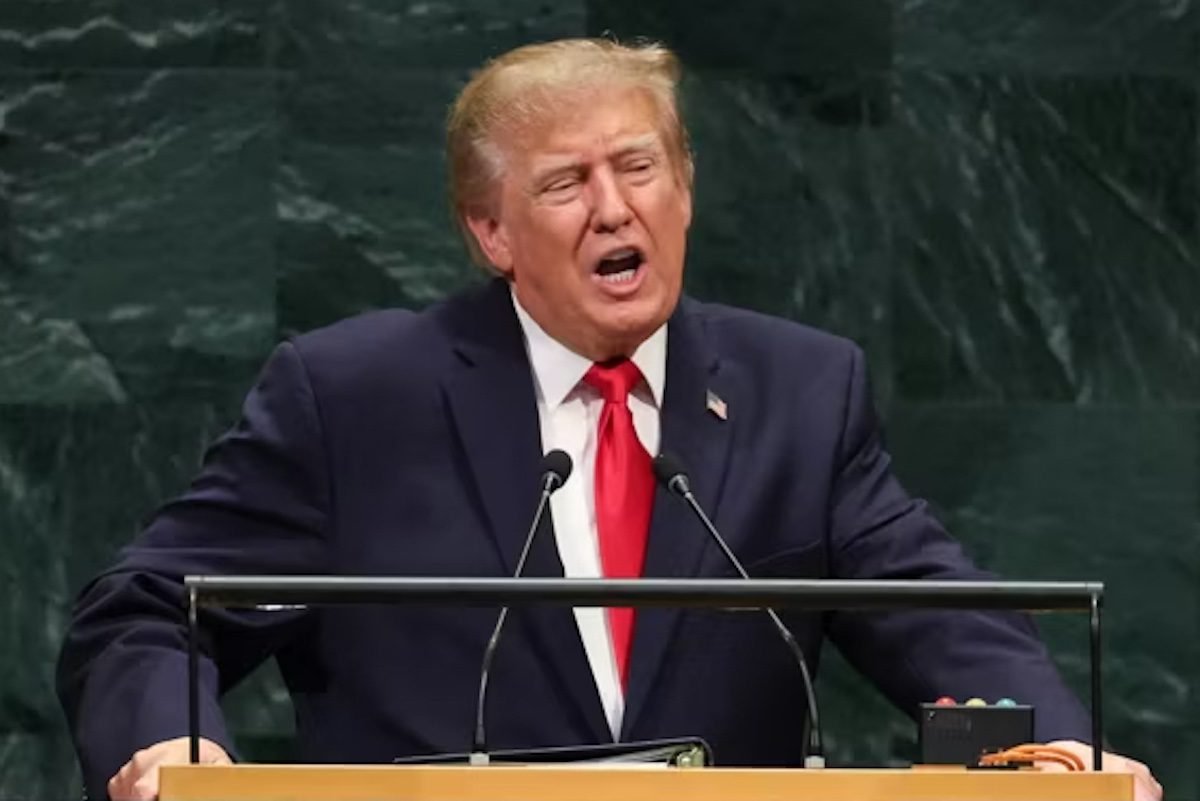
At the United Nations on September 22, President Trump rewrote the maxim. He framed the moment as a “big decision”: strike a deal with Iran or annihilate the Islamic Republic and drive it into hell. If you want a deal — a pactum — prepare for war. Better yet, wage one.
This is how Trump believes deals get made, and his UN address made it plain. The United States is nearly seven months into a war with Iran that he chose to start. He presented that war not as a diplomatic setback but as diplomacy by other means — the pressure that will force Tehran to sign.
Even as he threatened from the podium, his envoys Steve Witkoff and Jared Kushner met Iranian officials on the sidelines, and he spent the day courting Gulf states and Jordan. Threat and negotiation run on parallel tracks in the Trump administration — threats in public, the bargain in private.
But a deal forever imminent and never signed is not a path to peace; it is a pretext for the war that precedes it. Trump has pulled back from major strikes again and again — by the count of those tracking the war, he has backed off significant action on at least eight occasions — while keeping a deal just out of reach.
The asymmetry is the point: the war is certain, the deal is not. Pressure is easy to apply and hard to convert. An adversary given nothing but capitulation or destruction, with no off-ramp, does not sign — they escalate, or they wait.
Trump admitted as much when he noted that Tehran is watching to see how he fares in November at America’s midterm elections, where his Republican party is lagging in various polls.
Iran was the sharpest expression of Trump’s wider posture, but not the only one. He also defended aggressive US force against Venezuela on the grounds that the world cannot handle such threats itself.
The Greenland and Denmark deal he signed hands Washington greater control of the Arctic – strength turned into acquisition. And when he called the International Court of Justice “evil”, Emmanuel Macron answered him, pledging that France would keep backing the court.
The through-line is plain: American power, in this view, should be unbound, and the institutions built to constrain it are to be brushed aside, not negotiated with.
The old formula prepared for war in order to avoid it; the line between coercion and conquest was the whole point. Trump’s version erases that line. When war becomes the instrument that produces a deal, every deal is a truce until the next threat.
A rival may conclude that this president is moved by force, not diplomacy – the very reasoning that drove Iran’s quest for a nuclear bomb. An agreement signed under the threat of destruction is a hostage’s promise, kept only as long as the gun stays raised.
If every deal must be preceded by war and every war folded into an eventual deal, the result is not peace punctuated by conflict but permanent conflict punctuated by pauses.
The Romans knew that pax and pactum were kin: peace was a bargain kept. Trump has divorced them. He offers the pactum, wages the bellum and calls the space between them strategy. If you want a deal, prepare for war — and prepare, too, for the deal never to come.
Eric Alter is a non-resident senior fellow at the Atlantic Council’s Middle East programs and a former UN civil servant.