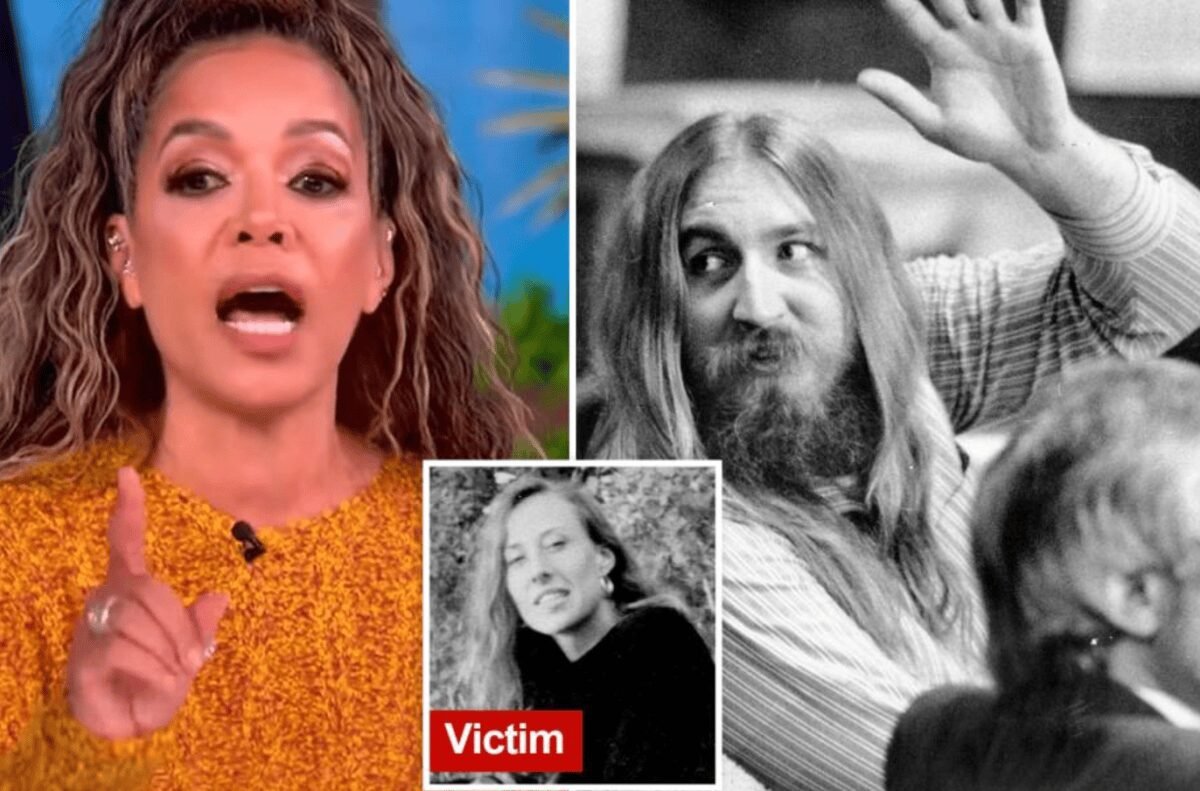
Sunny Hostin left her fellow “The View” hosts stunned after revealing she played a pivotal role in one of New York City’s most infamous murder trials more than three decades ago.
The 57-year-old legal analyst and former federal prosecutor said Tuesday that she was the lone holdout juror during deliberations in the 1991 trial of Daniel Rakowitz, the so-called “Butcher of Tompkins Square Park.”
Rakowitz was ultimately found not criminally responsible by reason of mental disease or defect in the killing and dismemberment of 26-year-old Monika Beerle.
Hostin dropped the bombshell while the ABC panel was discussing another closely watched insanity-defense case involving Massachusetts mother Lindsay Clancy.
“The reason I feel so strongly about this holdout juror is because I was a holdout juror in a case — in the Daniel Rakowitz case,” Hostin told the panel.
Her co-hosts immediately realized which case she was talking about.
“The guy who ate the victims?” Joy Behar asked.
“Yes,” Hostin replied.
A visibly shocked Alyssa Farah Griffin then asked, “You were on that jury?”
Hostin explained that the case happened before she attended law school and long before she became a federal prosecutor.
She said even some members of “The View” staff initially appeared skeptical when she mentioned the story during the show’s morning preparation meeting.
But producers found a New York Times article published after the February 1991 verdict that named juror Asuncion Cummings — Hostin’s maiden name.
The old report said several jurors described one holdout as being primarily responsible for preventing an earlier guilty verdict.
Hostin told her co-hosts Tuesday that she was that juror.
“That was me,” she said.
Hostin said she became convinced during the trial that Rakowitz was psychotic and should not be held criminally responsible under the insanity standard.
According to Hostin, the deliberations became so heated during the nine days the jury was sequestered that another juror threw a chair at her.
“They were so angry with me,” she recalled.
But Hostin said she continued challenging the other jurors about the evidence until the panel eventually reached a unanimous verdict finding Rakowitz not criminally responsible by reason of insanity.
The crime behind the trial was one of the most disturbing to grip New York during the late 1980s.
Beerle, a Swiss-born dance student living in Manhattan’s East Village, was killed in August 1989.
Rakowitz later admitted dismembering her body and boiling portions of her remains. Contemporary accounts also reported that he claimed to have eaten some of Beerle’s remains and served human flesh in food given to homeless people.
Her skull was later recovered from the Port Authority Bus Terminal, where it had been placed in a container.
The gruesome details earned Rakowitz the nickname “The Butcher of Tompkins Square Park.”
Despite those facts, the central question before the 1991 jury was whether Rakowitz was legally responsible for his actions.
That distinction is important.
Under New York Penal Law, a defendant claiming lack of criminal responsibility because of mental disease or defect must show that, because of that condition, he lacked substantial capacity to understand the nature and consequences of his actions or to understand that what he was doing was wrong.
It is an affirmative defense, meaning the defense carries the burden of establishing it.
Rakowitz’s jury ultimately concluded that standard had been met.
The verdict did not mean Rakowitz simply walked out of the courthouse.
He was committed to a state psychiatric facility following the trial and remained under psychiatric confinement for decades.
His mental condition was revisited years later.
In 2004, another Manhattan jury found that Rakowitz was no longer considered dangerous but remained mentally ill, according to contemporaneous reporting. He continued to be held in New York’s psychiatric system rather than being released outright.
Hostin referenced that long confinement while defending the insanity defense Tuesday.
“But he is still in a mental institution being treated,” she said, arguing that psychiatric confinement can itself amount to a serious loss of freedom.
The revelation came during a discussion of the Lindsay Clancy case in Massachusetts.
Clancy was accused of killing her three young children and raised a defense based on her mental condition at the time of their deaths.
Her trial ended in a mistrial after jurors were unable to reach a unanimous decision.
That case has since produced a separate battle over the conduct of the lone holdout juror, with Clancy’s defense attorney seeking further scrutiny of the juror.
Hostin strongly objected to the idea of aggressively investigating a juror simply because that person refused to go along with the majority.
She said her own experience showed why jurors must be free to evaluate evidence independently, even when the rest of the room strongly disagrees.
“Jury duty is duty,” Hostin said. “It is one of the most important things I think I’ve ever done in my life.”
She added that her own experience was “extremely difficult” but argued that targeting a juror for making an unpopular decision could discourage people from participating honestly in the jury system.
The unexpected revelation clearly caught the rest of the panel off guard.
At one point, Griffin exclaimed, “And you got this guy off?!”
Guest co-host Star Jones jokingly tried to move away from Hostin at the table as the audience laughed nervously.
Hostin, however, stood by the decision she made as a young juror more than 35 years ago.
“That’s how much I believe in the insanity defense,” she said.