TOKYO – If US President Donald Trump plans to make a big issue of the yuan on Thursday, Xi Jinping’s team just complicated things for the White House.
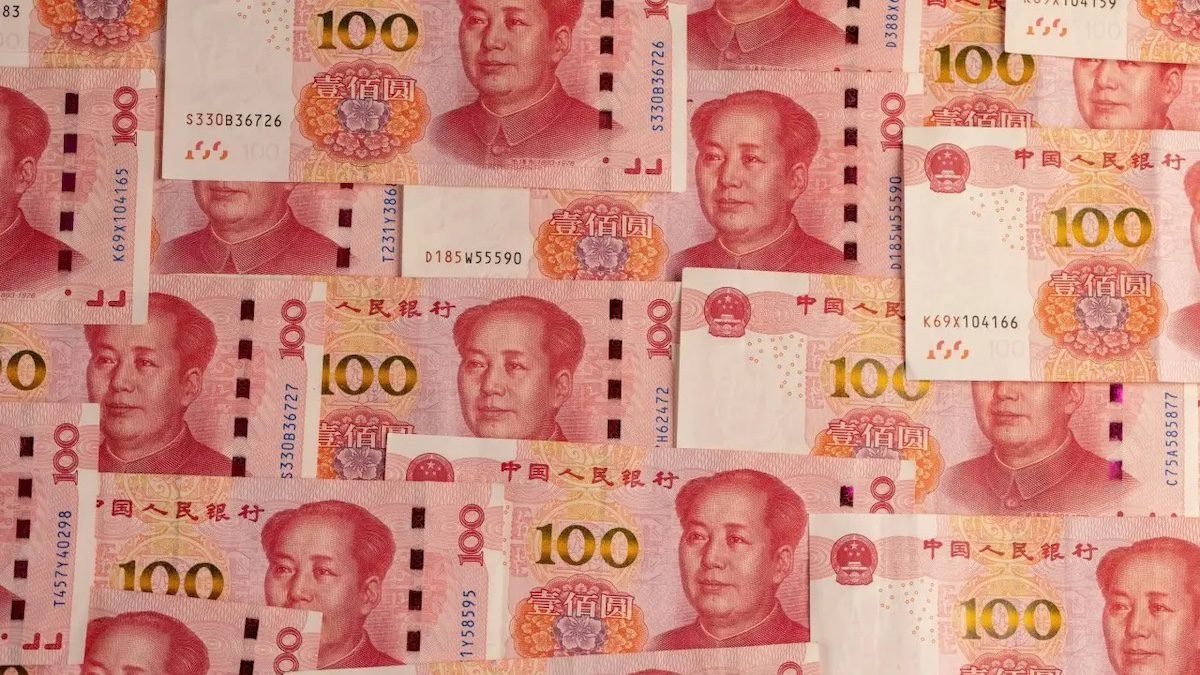
The yuan started the week at its strongest level since July 2022. The People’s Bank of China is guiding the currency of the second-biggest economy higher in the days ahead of Trump’s high-stakes faceoff with President Xi.
It followed PBOC Governor Pan Gongsheng’s move to ratchet up the daily currency fixing for an eighth straight day, the streak unseen since 2023.
The timing is no coincidence. It essentially takes exchange rates off the Trump-Xi discussion table. That alone would ratchet down tensions as the two leaders sit down to discuss trade, tariffs and other impediments to global commerce.
And, perhaps, remind Trump and Treasury Secretary Scott Bessent that their real exchange-rate quarrel in 2026 is with Tokyo, not Beijing.
There’s ample room to criticize China’s policy mix. Its massive state subsidies, government-directed credit, forced technology transfers, land concessions, discriminatory regulations that disadvantage foreign firms and other non-tariff barriers warp global competition in sectors like batteries, chemicals, electric vehicles, green tech, manufacturing, and solar panels.
But arguably no major economy could make better use of a weaker exchange rate in 2026 than China. Though its deflation challenge has receded from global attention, “Japanification” risks abound. In the 1990s, bad loans in the banking system caused Japan Inc. to seize up. For China, it’s a cavitating property sector, where roughly 70% of household wealth is tied up.
“China’s property downturn has weakened household borrowing, construction and local government revenues, while industrial production and exports remain comparatively strong,” explains economist Daniel Muggleton, publisher of the Geopolitics Explained newsletter.
“The result is an economy where significant productive capacity exists in areas such as electric vehicles, batteries, artificial intelligence and other technologies, but domestic demand is not always sufficient to absorb it,” Muggleton says. “This creates the risk that continued investment produces overcapacity rather than the stronger growth China needs.”
As Xi’s men work on a broad restructuring plan to revitalize the economy, a weaker exchange rate could buy them some time. Yet Team Xi is going the other way, with Pan’s PBOC being extremely cautious about interest rate cuts.
One reason Pan isn’t cutting rates faster: a desire to preserve the progress Beijing has made in deleveraging the financial system in recent years. The PBOC worries cutting rates might incentivize bad lending and borrowing decisions all over again.
A weaker yuan also might trigger fresh defaults among property developers as they find it harder to make payments on offshore debt. Already, global investors are keeping close tabs on liquidity problems at China Vanke and others.
Putting yuan internationalization in jeopardy is another concern. For nearly a decade, Xi’s government has worked to increase the yuan’s use in trade and finance. Beijing stepped up cooperation with the BRICS — Brazil, Russia, India, China, South Africa — and Global South nations to pivot away from the dollar-centric world order.
Reverting back to the easy money policies and excesses of the past might alarm international funds. It also might hurt the yuan’s chances of securing reserve-currency status.
A weaker yuan might lead Japan, South Korea, and other top Asian economies to think they have political cover to meddle with exchange rates. That might precipitate a chaotic race to the bottom in markets. That would not go unnoticed by the Trump White House, which threatens the biggest trade war in world history.
The Trump factor is another wildcard. The last thing Xi’s Communist Party wants is to give Trump another reason to slap additional tariffs on Asia’s biggest economy. So Team Xi is going into Thursday’s summit making it very clear there’s little reason to discuss the yuan exchange rate.
Not that the issue can be ignored. Count economist Brad Setser at the Council on Foreign Relations is among those who view the yuan as being 30% undervalued.
As Setser points out, the International Monetary Fund recently revised its estimate of the yuan’s undervaluation up to 21%, based on a GDP current account surplus of 3.7 to 3.8%. “But that surplus is under-reported, and should be around 5%, implying a 30% undervaluation,” he says.
The yuan’s stability, despite deflationary dynamics, should equalize the exchange rate topic in Washington this week. Thursday’s summit is more about preserving the trade-war ceasefire than strategic wins.
The Trump-Xi summit is meant to “stabilize a fragile trade detente, rather than deliver a grand reset,” says analyst Miriam Schive at theWorld Economic Forum. “It comes, once again, amidst a turbulent geopolitical, technological and economic global situation.”
Since the leaders’ last meeting in Beijing in May, Schive says, China’s exports have surged, the artificial intelligence race has intensified and conflict in the Middle East has escalated further.
With the leaders’ 2025 Busan truce due to expire in November, both sides are under pressure to extend the pause on major tariff escalation and rare‑earth export controls while signaling progress on trade, AI and critical minerals.
Edgard Kagan, an economist at the Center for Strategic and International Studies, notes that “in many ways, the visit is the message” of this summit. Kagan adds that “neither of them has an interest in — at least at this point — an escalation on trade issues.”
The overriding issue, notes analyst Veasna Kong at Moody’s, is that “the bilateral relationship, strained by trade tensions and more, is nearing an important milestone—the 10 November expiry date for a trade truce reached in 2025.” A likely move to extend it would be a relief and, perhaps, a win for global markets.
Yet Bessent’s Treasury Department seems far more preoccupied with Japan right now. It’s something of a reversion to the mean. After all, 40 years ago, the weak yen preoccupied Tokyo. So much so that President Ronald Reagan’s White House orchestrated the “Plaza Accord” to strengthen the yen.
Today, talk of a “Mar-a-Lago Accord” concerns China. Yet Bessent is far more focused on the yen as the currency trades near 1985 lows. This is partly because Japan is the biggest foreign holder of US Treasuries, with US$1.1 trillion.
Bessent clearly fears how news of Japan dumping large blocks of US Treasuries would play out in world markets. In late July, when the US Treasury began its joint intervention efforts with Tokyo to stabilize the yen, Bessent’s team funded it by selling euros, not dollars.
Back in the Plaza Accord days, when Trump was a New York real estate mogul, the future US president rarely missed a chance to rail against Japan. Trumponomics, it follows, is ripped straight from the headlines of 1985.
The tariffs, the aggressive deregulation, the trickle-down-economics tax policies, and Trump’s obsession with a new “Plaza Accord” to produce a more advantageous exchange rate all point to a worldview that’s stuck in the mid-1980s.
A quick YouTube search will turn up myriad clips of 1980s-era Trump accusing Japan of having “systematically sucked the blood out of America – sucked the blood out! They have gotten away with murder. They have ended up winning the war.”
Around that time, Hollywood was churning out Japan-bashing blockbusters. One such production was “Gung Ho,” a comedy starring Michael Keaton. It depicted a culture clash between Japan Inc. salarymen and Detroit auto workers.
Bessent, of course, can’t be happy that global markets are calling his bluff. Over the last month, traders defied Bessent’s calls for lower oil prices and bond yields and a higher yen. Three weeks ago, the 10-year Japanese government bond (JGB) yield hit a 30-year high of 3%. Today, it’s just 2.95%, indicating that traders are handing Bessent his hat.
Of course, Xi has every reason to worry about Trump’s plans for the US dollar. During Trump’s first presidency from 2017 to 2021, China was the biggest holder of US Treasuries. Today, it’s No. 2 and, increasingly, a distant one. In July, China’s US debt holdings hit an 18-year low of $618 billion.
Beijing has many reasons to worry about its dollar stockpile. From Trump’s attacks on the Federal Reserve’s independence to his unhinged tariff policy to his geopolitical adventurism to this White House’s general erraticness, both Beijing and Tokyo have valid reasons to worry. Add in Trump’s well-understood desire for a weaker dollar.
All this has Xi’s Communist Party smelling an opportunity. For a decade now, Team Xi has worked to create a globally trusted yuan that rivals the dollar in global trade, finance and as a reserve currency. The Trump era is widening the road for Xi’s yuan ambitions in real time.
This won’t be clear from the summit agenda in Washington this week. But global markets are already looking ahead to next week and the week after that – when China quietly returns to confounding the yuan naysayers, one fixing at a time.
Follow William Pesek on X at @WilliamPesek