Welcome to Edition 9.11 of the Rocket Report! The most interesting story of the week, in our view, is a deep dive by Stephen Clark linked below into the dwindling fortunes of United Launch Alliance. As recently as a decade ago the launch company co-owned by Boeing and Lockheed Martin could claim dominance over the US industry. But those glory days are fading fast. So what’s next for a company that is tied to an expendable rocket?
As always, we welcome reader submissions, and if you don’t want to miss an issue, please subscribe using the box below (the form will not appear on AMP-enabled versions of the site). Each report will include information on small-, medium-, and heavy-lift rockets as well as a quick look ahead at the next three launches on the calendar.

Avio seeks to cash in on Falcon 9 retreat. Italian launch services provider Avio has seen an influx of customers who were unable to secure launch opportunities with SpaceX, European Spaceflight reports. “I can tell you SpaceX has already gone captive because we have a whole bunch of customers coming to us and saying, ‘Oh my God, can you fly us?” Avio CEO Giulio Ranzo said during the company’s September 10 earnings call. In recent months, SpaceX told multiple prospective customers that it was no longer accepting new orders for commercial Falcon 9 launches.
Europe’s answer to this, a subsidy? … According to Ranzo, some customers who had been turned away by SpaceX used the International Space Summit in Paris last week to lobby European institutions for financial support that would help offset the higher cost of launching with a European provider. Although prices for Avio’s Vega C rocket are not public, it likely costs about $60 million for a launch on the solid-fueled rocket. In our view, subsidizing launches on expendable launch technology is a poor plan. The continent should increase investment in developers of more competitively priced rockets.
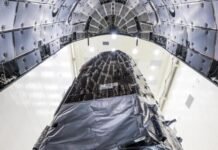
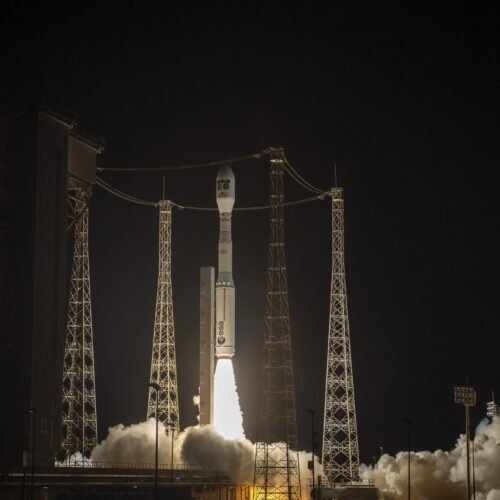
Vega C successfully lofts two satellites. Speaking of Avio, a Vega C rocket launched on Tuesday from French Guiana, successfully carrying the European Space Agency’s FLEX Earth Explorer satellite and the Copernicus Sentinel-3C into low-Earth orbit. It was just the second launch of the Italian-made Vega rocket this year. A new launch adapter called Vespa allowed both satellites to be stacked inside the rocket’s fairing, the European Space Agency said.
Two for the price of one … An evolution of Europe’s Vega family of rockets, Vega-C can launch 2.3 metric tons into low-Earth orbit. “Preparing and launching two satellites together is no easy task,” ESA’s director of Earth observation programs, Simonetta Cheli, said. “My thanks go to the many experts who have contributed throughout both satellites’ development, testing, and preparation for launch, and who have worked tirelessly to ensure that both satellites have reached orbit safely.”
French company test-fires new rocket engine. French launch startup Sirius Space Services has successfully test-fired a complete prototype of its STAR-1 rocket engine for the first time, European Spaceflight reports. The company announced the milestone on Sunday, stating that it had conducted the first hot-fire tests of the complete STAR-1 engine at Airborne Engineering’s propulsion test facility in southern England.
Playing a starring role … According to the company, the testing included multiple successful ignitions. These tests marked the first time that all of the engine’s critical subsystems had operated together. These included the turbopumps, combustion chamber, injector plate, avionics, and software. The liquid oxygen and methane-fueled STAR-1 is designed to produce 55 kN of thrust. The engine will be used across the company’s planned family of launch vehicles, which will use a common core stage featuring nine STAR-1 engines.

China launches four rockets in two days. China carried out four launches in quick succession, starting Tuesday, using its Jiuquan and Hainan spaceports and a maritime mission from the East China Sea, Space News reports. The rockets were: LandSpace’s Zhuque-2E, Orienspace’s Gravity-1, the Chinese space agency’s Long March 12, and ExPace’s Kuaizhou-11. The launches occurred within 44 hours of one another.
A maturing commercial industry … Notably, three of the four launches were from commercial or quasi-commercial entities distinct from the Chinese government. This highlights the growth of the country’s commercial space industry and suggests that the buildout of constellations in China will no longer depend on the country’s traditional fleet of Long March rockets. The industry, as well, is moving rapidly from rocket test flights to operational missions.
SpaceX hits Falcon 9 milestone. SpaceX launched a trio of satellites for its oldest commercial customer, SES, on a Falcon 9 rocket flying Sunday afternoon from Florida. Notably, this was SpaceX’s 700th Falcon rocket launch to date, split between 687 Falcon 9 rockets and 13 Falcon Heavy rockets, Spaceflight Now reports.
A lot of missions for a single rocket … SpaceX launched the mPOWER-F mission using the Falcon 9 first stage booster with the tail number B1080. This was its 29th flight after launching four missions to the International Space Station, the European Space Agency’s Euclid observatory, SES’ Astra 1P, and 22 batches of Starlink satellites. This was also the 400th orbital launch to take flight from Space Launch Complex-40, of which SpaceX was responsible for launching 345.
Two launch companies spar over Mars mission. NASA finally reached a decision earlier this month on the development of a “Mars Telecommunications Network” spacecraft, selecting Blue Origin to develop, launch, and operate a $700 million spacecraft at Mars, Ars reports. However, the other main competitor for the award, Rocket Lab, was not happy—at all. The company filed a protest of NASA’s decision with the US Government Accountability Office.
A war of words … “The agency’s punitive review of Rocket Lab’s technical volume was inconsistent, making incorrect assertions and conclusions,” Rocket Lab said as part of the protest. In response, Blue Origin said the protest could potentially delay the mission’s goal of launching in 2028. “We remain confident in the strength of our proposal, in NASA’s rigorous selection process, and in Congress’s clear intent to support competition for the Mars Telecommunications Network program,” Blue Origin replied.

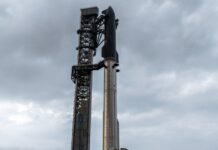
SpaceX set for first Starship orbital flight. Pending regulatory approval, SpaceX said this week it intends to launch its 14th Starship mission as early as September 22, Ars reports. The company set a target liftoff time of 7:15 am local in Texas (12:15 UTC), with a 75-minute launch window. (Note on Thursday, new notices to mariners indicated the launch target had slipped to September 28.) This flight is notable, as it will be the first time that SpaceX attempts to launch the experimental vehicle into orbit.
Delivering a long-promised capability … The super heavy lift rocket will be carrying 26 of the larger V3 Starlink satellites into an orbit 275 km above the Earth. SpaceX said the Starship upper stage will seek to complete six orbits around the Earth before completing its mission after about 10 hours. Reaching orbit would mark a significant milestone in the company’s Starship development campaign, which conducted its first test flight on April 20, 2023, and has since made progress in fits and starts.
What does the future hold for United Launch Alliance? Pretty much every rocket company in the United States, save one, has embraced two fundamental tenets: reusability and diversification. The exception? United Launch Alliance, which was founded in 2006 during an era when the US government was the dominant force in the domestic launch market. But 20 years later, with the rise of SpaceX and a host of new startups building medium-lift and large rockets, the time of ULA’s dominance is long past. In a new feature, Ars explores where the company may go from here.
Getting back to flying … The rollout of the company’s new Vulcan rocket has been dogged by problems with the vehicle’s solid rocket boosters. But soon, perhaps by the end of this month, Vulcan could return to flight with a commercial launch of satellites for Amazon. This comes amid worsening finances for the company, co-owned by Boeing and Lockheed, and has been seeking to raise additional funding. A new owner willing to invest in new technology could be the company’s only long-term hope.
Chinese space company reveals Raptor 3-like engine design. The Chinese launch startup Space Pioneer, which has raised nearly $1 billion, showcased a new design for its Tianhuo-21 methane-liquid oxygen engine this week, which was subsequently shared on social media. From outward appearances, the engine looks strikingly similar to SpaceX’s Raptor 3 engine. Its thrust, 2,450 kN at sea level, is also virtually identical to that of the Raptor 3.
Would it be difficult to replicate? … In response to Space Pioneer’s engine design, SpaceX founder Elon Musk said copying Raptor 3 would not be easy. “I would recommend against a new company trying to make Raptor 3,” he said on X. “While it appears simple on the outside (necessary to survive extreme heat without a heat shield), the inside has very complex geometry that can only be manufactured using highly modified 3D metal printing.”
Falcon Heavy nailed Roman telescope’s launch. NASA’s Nancy Grace Roman Space Telescope is gliding toward its distant observation post on a pinpoint trajectory so precise that engineers estimate the spacecraft’s fuel load will last twice as long as their initial expectations, Ars reports. The $4.3 billion observatory’s designers originally planned to load enough propellant into Roman’s four fuel tanks for a minimum lifetime of five years, plus a potential five-year mission extension.
That was a conservative estimate … “As a result of exquisite planning by our orbital dynamics team, brilliant execution by the operations team, and a precise launch from SpaceX, Roman has fuel for at least 22 years of potential science operations,” Jamie Dunn, center director at NASA’s Goddard Space Flight Center, said. The Roman telescope launched August 30 from NASA’s Kennedy Space Center in Florida aboard a SpaceX Falcon Heavy rocket, kicking off a mission to widen our view of the Universe.
Blue Origin studying full-flow staged combustion. Blue Origin and the Rocket and Space Propulsion Division of the Air Force Research Laboratory at Edwards Air Force Base have announced an expanded private-public partnership to develop new rocket propulsion technologies, the company said this week. The new agreement comes as “we work to develop next-generation rocket propulsion technologies,” said Nicholas Robertson, senior vice president of engines at Blue Origin. “Studying these historic and technical artifacts grounds our engineering models in real government research.”
Also working on lunar-lander engine … The Blue Origin news release notes that the Air Force lab has done pioneering work in oxygen-rich and full-flow staged combustion technologies. The company said it would also continue to collaborate on testing and maturing the BE-7 lunar lander rocket engine with the Air Force at the Area 1-42 High Altitude Rocket Test Facility at Edwards.
Next three launches
September 19: Electron | Owl by the Dozen | Māhia Peninsula, New Zealand | 03:15 UTC
September 19: Long March 2D | Unspecified payload | Taiyuan Satellite Launch Center, China | 10:50 UTC
September 20: Falcon 9 | Starlink 15-27 | Vandenberg Space Force Base, Calif. | 01:47 UTC