State Oil Company of the Republic of Azerbaijan (SOCAR) has become one of Türkiye’s largest foreign investors and a core pillar of the Baku–Ankara energy partnership. Since acquiring Petkim in 2008, the Azerbaijani state energy company has built an integrated portfolio spanning petrochemicals, refining, gas transit, logistics, storage, and power generation. SOCAR reports approximately $18.5 billion invested in Türkiye, while Azerbaijani officials cite around $19 billion; the additional $7 billion polyolefin expansion remains a future commitment, not current investment. This portfolio creates commercial value for Azerbaijan and strengthens its regional influence, while Türkiye gains capital, industrial capacity, refined products, petrochemical feedstock, gas connectivity, and electricity generation. The partnership is therefore a potential win-win, although exposed to market volatility, geopolitical instability, regulatory uncertainty, and the energy transition.
From Petkim to an integrated industrial platform
The foundation of SOCAR’s Turkish strategy was the acquisition of a 51 percent stake in Petkim through Türkiye’s privatisation process in 2008 for approximately $2.04 billion. Petkim is Türkiye’s first and only integrated petrochemical producer, supplying raw materials to sectors including plastics, packaging, construction, automotive manufacturing, textiles, pharmaceuticals, and agriculture.
Reuters reported that Petkim operated 16 production plants and produced approximately two million tonnes of petrochemicals in 2024, meeting around 11 percent of Türkiye’s domestic demand. Petkim’s own investor-relations material currently refers to approximately 9 percent of Türkiye’s petrochemical raw-material needs. The difference demonstrates why market-share figures should always be connected to a specific year, product category, and calculation method.
Petkim is strategically important because Türkiye remains dependent on imported petrochemical products.
SOCAR’s ownership therefore gives Azerbaijan access to a large industrial market while supporting Türkiye’s efforts to expand domestic production. The investment also moves Azerbaijan beyond the traditional role of a crude-oil and natural-gas exporter.
By participating in the production and marketing of higher-value industrial materials, SOCAR can capture downstream margins that would otherwise accrue to third parties. Türkiye benefits from greater access to industrial inputs used throughout its manufacturing economy.
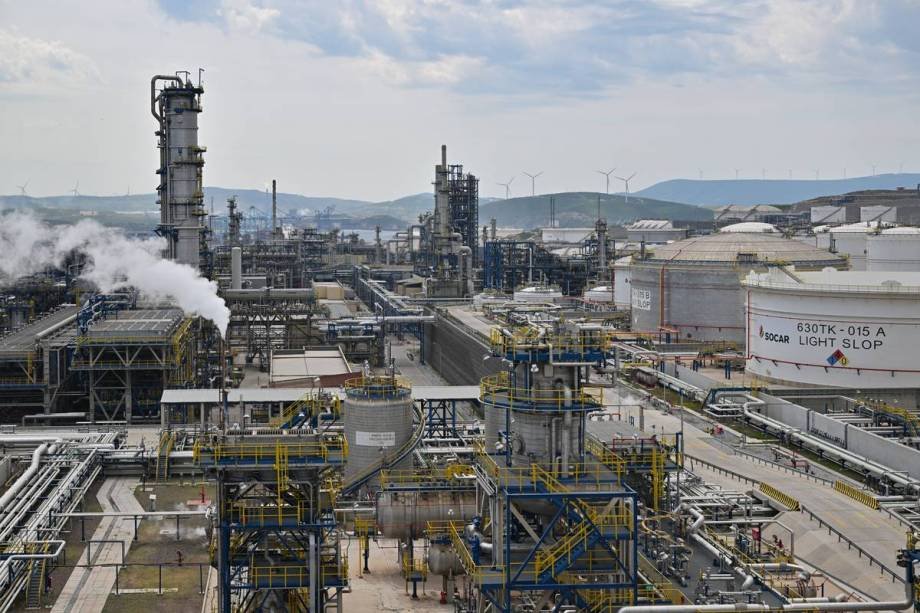
The STAR Refinery deepened this integration. Located in Aliağa, İzmir, the refinery was inaugurated in October 2018 after a reported investment of $6.3 billion. Azerbaijan’s State Oil Fund states that the project was designed to process approximately 10 million tonnes of crude oil annually and produce naphtha, diesel, jet fuel, and other refined products. The current STAR Refinery profile lists annual crude-processing capacity of 12 million tonnes and storage capacity of 1.9 million cubic metres. The difference reflects the distinction between initial project documentation and later company-reported operating capacity.
The illusion of redundancy: Why oil markets are misreading Gulf supply risk
STAR’s strategic value lies in its relationship with Petkim. Naphtha produced by the refinery can serve as a feedstock for petrochemical production, reducing Petkim’s exposure to external suppliers. STAR also produces refined fuels that Türkiye would otherwise need to import. The refinery was consequently designed not simply as an isolated processing facility but as part of a wider industrial cluster linking crude procurement, refining, petrochemical production, storage, logistics, and domestic demand. This integration can improve feedstock security and give SOCAR greater control over the value chain.
TANAP and the geopolitics of transit
The Trans-Anatolian Natural Gas Pipeline (TANAP) is at the heart of the Azerbaijan–Türkiye energy partnership. It connects the South Caucasus Pipeline with the Trans Adriatic Pipeline, carrying gas from Azerbaijan’s Shah Deniz field across Türkiye to Turkish consumers and European markets.
Stretching approximately 1,811 kilometres, TANAP is the central link in the Southern Gas Corridor, with an initial capacity of around 16 billion cubic metres per year and room for expansion. Its final cost is reported differently: the World Bank puts it at approximately $6.3 billion, compared with an $8.6 billion appraisal estimate, while TANAP reports a final cost below $7 billion. These differences reflect changing budget estimates and accounting methods, not necessarily conflicting information.
TANAP gives Azerbaijan a major route into European markets, provides Türkiye with additional gas supplies and transit revenues, and offers Europe another source of energy. Its ownership structure also reveals the project’s wider significance. Southern Gas Corridor CJSC, BOTAŞ, BP Pipelines, and SOCAR Caspian Holding are the shareholders, with SOCAR Caspian Holding holding a direct 7 percent stake. Through these arrangements, SOCAR is doing more than selling gas through a pipeline: it is helping shape the infrastructure and institutions that turn Azerbaijani gas into long-term market access, commercial value, and political influence.
The move from gas to power
SOCAR’s acquisition of Gama Enerji’s İç Anadolu combined-cycle natural-gas power plant extended the company’s Turkish portfolio into electricity generation. The agreement, signed in December 2025, transferred 100 percent of the 870 MW facility to SOCAR Türkiye for approximately $225 million. The transaction was completed, and the plant began operating under SOCAR Türkiye in February 2026. SOCAR describes the acquisition as completing its gas-to-power value chain and increasing portfolio flexibility in the Turkish electricity market.
The acquisition should not automatically be described as a direct Azerbaijani gas-to-electricity project. Public information confirms the plant’s ownership, capacity, and gas-fired technology, but does not establish that its feedstock will be supplied entirely by Azerbaijan. Its strategic importance is more precise: the plant gives SOCAR a position in electricity generation and trading, allowing it to participate in another segment of Türkiye’s energy system. It also provides dispatchable capacity that can complement variable renewable generation, although profitability will depend on gas prices, electricity prices, utilization rates, and market regulation.
SOCAR’s Turkish portfolio has also included gas-distribution companies, terminals, storage facilities, and related logistics. These assets have helped the company build a presence across multiple stages of the energy chain.
Some assets, including Bursagaz and Kayserigaz, have subsequently been subject to divestment decisions, demonstrating that SOCAR’s strategy is not simply to accumulate infrastructure but also to adjust its portfolio according to commercial priorities.
Commercial logic and geopolitical leverage
For Azerbaijan, investing in Türkiye turns finite hydrocarbon resources into lasting industrial and energy assets. Refining and petrochemicals create greater value from those resources, while TANAP connects Azerbaijani gas to European markets and power generation broadens SOCAR’s commercial reach. The Asian Infrastructure Investment Bank identifies access to European markets and reduced dependence on oil revenues as major benefits for Azerbaijan. (AIIB) Türkiye gains the capital and infrastructure needed to expand its industrial base: STAR and Petkim support domestic manufacturing, TANAP strengthens gas connectivity, and the İç Anadolu plant gives SOCAR a larger role in electricity generation. These investments matter for a country that still relies heavily on imported energy, even though they cannot shield Türkiye from global prices or external supply risks. The partnership is mutually beneficial, but its success ultimately depends on commercial viability, sound regulation, and competitive costs.
Constraints and risks
The win-win character of the partnership has clear limits. Refining margins, petrochemical spreads, and gas-fired power economics can deteriorate quickly during periods of weak demand or oversupply. SOCAR’s proposed $7 billion expansion of polyolefin capacity remains a plan rather than a completed investment, and Reuters reported that a final investment decision was expected by the end of 2026. The project will therefore depend on market conditions, financing, feedstock competitiveness, and long-term demand.
The Syria option: Rethinking Middle Eastern oil exports beyond Hormuz
The energy transition presents a further challenge. Renewable-energy growth, efficiency improvements, electrification, and decarbonization policies may eventually reduce demand growth for some refined products and natural gas. At the same time, gas-fired generation may retain value as a balancing resource for variable renewable power. SOCAR’s long-term success will depend on whether it can use its existing industrial platform to develop lower-carbon activities rather than relying exclusively on hydrocarbons.
Regional instability, sanctions exposure, changes in Turkish regulation, and fluctuations in energy tariffs create additional uncertainty. The partnership is strongest when political cooperation supports commercially viable projects. If political alignment becomes a substitute for commercial discipline, both sides could face higher financial and strategic risks.
Conclusion
SOCAR’s investments in Türkiye demonstrate how a state-owned energy company can combine commercial expansion with national strategy. Petkim, STAR, TANAP, gas infrastructure, logistics assets, and the İç Anadolu power plant are not merely separate investments. Together, they connect Azerbaijani resources with Turkish industry, domestic energy consumption, electricity generation, and European markets.
Azerbaijan gains market access, downstream value creation, export diversification, and geopolitical influence. Türkiye gains capital, industrial depth, refined products, gas connectivity, and a stronger position as a regional energy hub. This makes the Azerbaijan–Türkiye energy relationship a genuine example of structured mutual gain.
Its durability, however, will depend on commercial discipline, transparent regulation, market competitiveness, and adaptation to the energy transition. The partnership will remain a win-win game only if political solidarity continues to reinforce not replace economic viability.
The views expressed in this article belong to the author and do not necessarily reflect the editorial policy of Middle East Monitor.