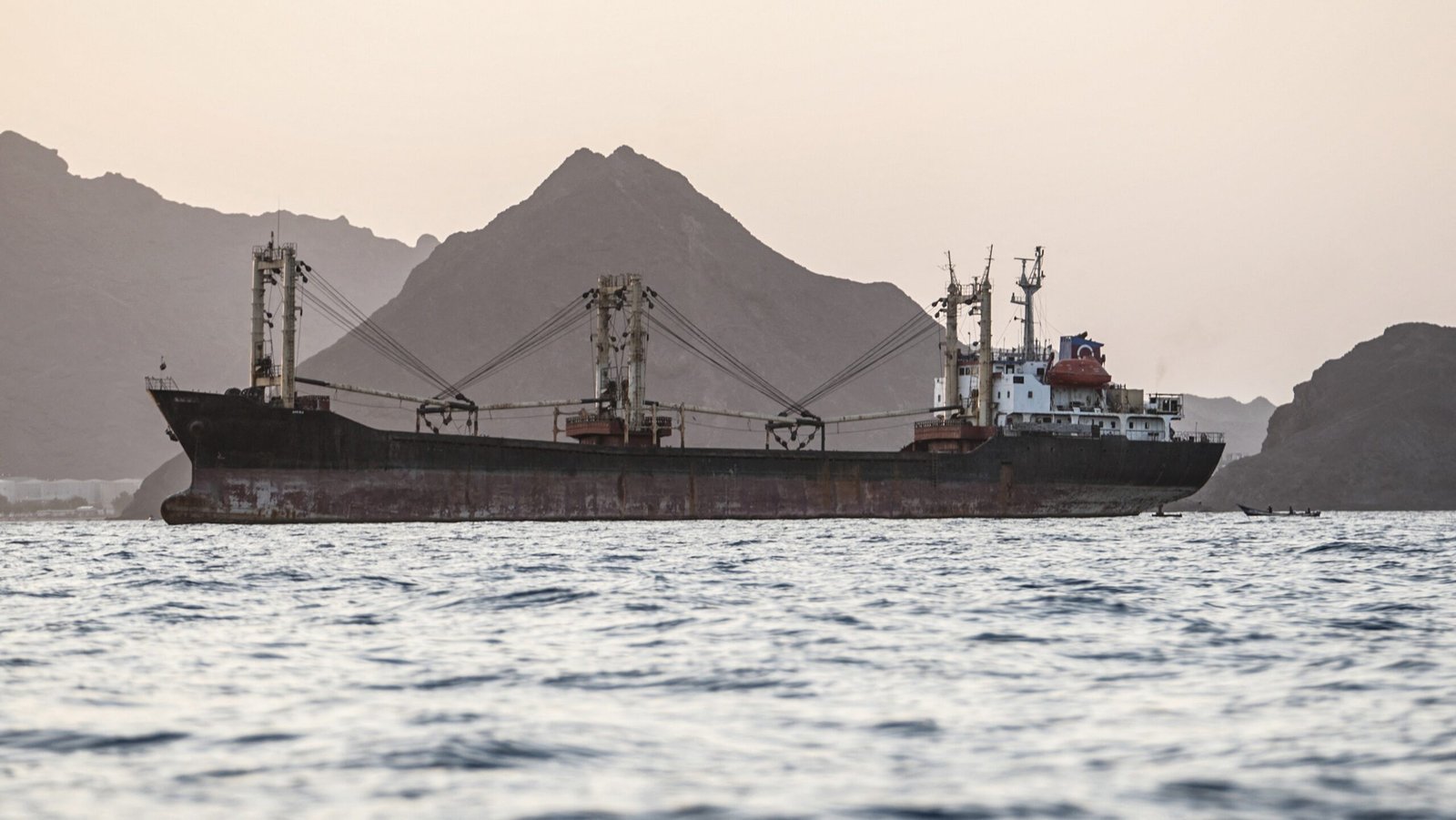
Attacks affecting Saudi Arabia’s East-West Pipeline and insecurity around Bab el Mandeb are weakening alternatives designed to keep crude moving when Hormuz is disrupted
The renewed confrontation between Washington and Tehran is increasingly being fought not only through military pressure but through the energy market, where disruptions to Gulf exports are pushing oil prices higher, testing the resilience of regional economies and creating a growing domestic challenge for the United States ahead of November’s midterm elections.
That pressure intensified Tuesday as Saudi Arabia’s principal route for exporting oil without passing through the Strait of Hormuz suffered another setback.
Oil loadings at the Red Sea port of Yanbu were suspended, shipping industry sources told Reuters, while Saudi Arabia’s East-West Pipeline remained offline following attacks on the kingdom’s energy infrastructure. Separately, Libya halted operations at three oil fields after protests led to the closure of a crude pipeline.
Brent crude futures were up $3.49, or 3.3%, at $109.20 a barrel by early Tuesday afternoon in New York, while US West Texas Intermediate crude rose $5.08, or 5%, to $106.46. Both benchmarks were on course for their highest closes in nearly four months.
The latest price increase reflects more than fear of a hypothetical closure of the Strait of Hormuz.
Traffic through the waterway has already fallen dramatically. Preliminary data from Kpler cited by Reuters showed that just four commodity vessels transited Hormuz on Monday, down from 10 on Sunday. Before the war, roughly 125 large commercial vessels passed through the strait each day. Some vessels may not be reflected in the figures because ships have increasingly switched off their tracking systems while making so-called “dark crossings” to reduce their exposure.
Markets are now trying to price both barrels physically removed from supply and the risk of what could happen next.
Charl Le Roux of MENA Strategic Watch in Dubai said both components are now embedded in the price.
The remainder is an uncertainty premium linked to the conflict’s duration and expansion into the Red Sea, making a rapid decline unlikely
“Brent crude is trading at $103.78 per barrel, up from approximately $70–73 before the conflict and near a weekly peak of $108. Of the roughly $30 increase, an estimated $12–15 reflects confirmed supply losses, consistent with Goldman Sachs’ risk-premium framework. The remainder is an uncertainty premium linked to the conflict’s duration and expansion into the Red Sea, making a rapid decline unlikely,” he told The Media Line.
Prices have risen further since Le Roux made that assessment, but the underlying forces he identified have become more pronounced. Oil markets are no longer pricing only the possibility that Iran could interrupt exports through Hormuz. Production, shipping, insurance and alternative export routes have already been affected.
Le Roux’s assessment points to tanker traffic falling sharply from prewar levels, production curtailments across parts of the Gulf and increasingly expensive maritime insurance. His report describes the crisis as having evolved from a single-chokepoint problem centered on Hormuz into a broader question of Gulf supply security.
The Strait of Hormuz has historically carried roughly one-fifth to one-quarter of global oil shipments, together with a comparable share of global liquefied natural gas (LNG). Only Saudi Arabia and the United Arab Emirates possess substantial operational pipeline capacity capable of moving exports outside the strait.
“Only Saudi Arabia and the UAE have operational pipelines that bypass the Strait of Hormuz, and together they cover less than half of pre-war transit volumes. Kuwait, Qatar, and Bahrain have virtually no bypass capacity. Qatar’s LNG exports are particularly vulnerable because liquefied gas must be shipped. Existing pipelines also provide only partial protection because they are fixed targets and cannot match Hormuz’s normal capacity,” Le Roux said.
Events in Saudi Arabia have now demonstrated the vulnerability of those alternatives.
The kingdom’s 1,200-kilometer East-West Pipeline, also known as Petroline, carries crude from eastern Saudi Arabia to Yanbu on the Red Sea, allowing exports to bypass Hormuz. The pipeline had become increasingly important during the war, moving roughly 4 million to 5 million barrels per day through the western route during parts of the conflict.
A drone attack forced the pipeline offline last week. On Tuesday, shipping sources said oil loadings at Yanbu had also been suspended. Saudi Arabia has informed some European customers that late-September crude cargoes will be canceled, while estimates for restoring the pipeline have ranged from days to several weeks. US Energy Secretary Chris Wright said Tuesday that he expected oil to begin flowing through the pipeline again within days.
The disruption threatens a route that has recently handled the equivalent of roughly 4% of global oil supply. Saudi output had already fallen sharply before the latest attack, with the International Energy Agency (IEA) putting August production at about 6 million barrels per day, its lowest level in more than three decades.
Higher prices have increasingly divided the Gulf between economies that can partially benefit from more expensive oil and those for which the costs of disruption outweigh those gains.
Saudi Arabia and the UAE entered the crisis with a substantial advantage. Both possess pipelines that allow some crude exports to avoid Hormuz, while their financial reserves give them greater room to absorb disruption.
Yet even for the better-protected producers, higher prices do not translate automatically into an economic windfall.
“Saudi Arabia and the UAE currently benefit financially from higher prices, supported by pipeline access; Aramco reported a 26% profit increase in Q1. Qatar, Kuwait, Iraq, and especially Bahrain is already net negative. Bahrain’s fiscal breakeven is approximately $137 per barrel,” Le Roux said.
Overall, disruption costs now appear to outweigh the region’s price gains
Le Roux added: “Meanwhile, regional costs are rising, including an estimated $58 billion in energy-infrastructure damage, Dubai hotel occupancy falling from 80% to 10%, and war-risk insurance increasing by 12–40 times. Overall, disruption costs now appear to outweigh the region’s price gains.”
His report estimates that approximately 80 regional energy facilities have been damaged, while aviation, tourism, shipping and logistics have all been affected. War-risk marine insurance, it says, has increased from around 0.25% of a vessel’s value before the war to between 3% and 10% in some cases.
Regional financial markets are also showing the strain. Saudi Arabia’s benchmark stock index fell 0.9% Tuesday, while Dubai lost 0.8% and Qatar fell 0.5% as investors reacted to the latest attacks and deteriorating shipping conditions.
The differences between Gulf states are increasingly determined by infrastructure, diversification and fiscal buffers rather than simply by whether oil trades at $80, $100 or $110.
Among the Gulf states, the UAE is one of the best positioned because of its diversified non-oil economy, substantial sovereign wealth, and pipeline access to Fujairah outside Hormuz. Saudi Arabia retains greater scale and considerable financial resources but remains more heavily dependent on oil and is simultaneously financing an ambitious domestic economic transformation.
Qatar presents almost the opposite case. It possesses significant financial reserves and a relatively low fiscal breakeven price, but its economic model remains highly dependent on LNG exports, for which there is no meaningful land-based alternative to Hormuz.
Kuwait similarly has significant financial buffers but no operational export bypass, while Bahrain faces a much weaker fiscal position. Iraq combines heavy dependence on oil with limited ability to reroute the bulk of its southern production.
“The UAE is best positioned for a prolonged confrontation because of its diversification and pipeline expansion, followed by Saudi Arabia, given its scale and reserves. Bahrain is the most exposed fiscally, physically, and economically. Qatar and Kuwait have substantial financial reserves but remain structurally vulnerable because neither has a viable Hormuz bypass,” Le Roux said.
Widening insecurity in the Red Sea adds another variable and is beginning to undermine the assumptions on which Gulf contingency planning was built.
For Saudi Arabia, the East-West Pipeline to Yanbu had been one of the principal mechanisms for moving crude away from Hormuz. The attacks that forced the pipeline offline demonstrated that infrastructure designed to diversify maritime risk can itself become exposed when a conflict spreads geographically.
The Houthi advance along Yemen’s Red Sea coast has added to the problem. Shipping through Bab el Mandeb has also declined, with Kpler data showing vessel traffic falling from 28 transits on Sunday to 21 on Monday. On Tuesday, Egyptian President Abdel Fattah el-Sisi and Saudi Crown Prince Mohammed bin Salman stressed the need to protect freedom and security of navigation through Bab el Mandeb and the Red Sea.
For oil markets, the development is important less because of the Saudi-Houthi confrontation itself than because it weakens the assumption that disruption in one shipping corridor can simply be compensated for through another.
The Red Sea is the most important new risk
Le Roux described the consequence in broader terms: “The Red Sea is the most important new risk. A Houthi missile struck a Saudi tanker 63 nautical miles from Yanbu, the terminus of Saudi Arabia’s main Hormuz-bypass pipeline, while Houthi forces captured Yemen’s Mokha port. Because the bypass strategy depended on the Red Sea’s security, Hormuz and Bab el Mandeb should now be treated as correlated risks. This supports a higher and more persistent risk premium,” he noted.
The implications are different for the United States.
As a major oil producer, the US is considerably less dependent on imported Middle Eastern crude than many European and Asian economies. American consumers remain exposed to internationally traded energy prices, particularly through gasoline, diesel, transportation and other costs that feed into inflation.
Refined fuels have emerged as a particular vulnerability. Middle Eastern exports of diesel, gasoline and jet fuel have remained nearly 60% below prewar levels, according to IEA estimates cited by Reuters, while attacks on energy infrastructure elsewhere have added to the pressure. US diesel futures reached a more than four-year intraday high Tuesday.
The political timing is particularly sensitive.
President Donald Trump said last week that he expected the Iran war to end “immediately after” the November midterm elections, arguing that Tehran was attempting to influence the vote. Separately, Reuters reported that some administration officials have sought to contain the intensity of the conflict ahead of the elections while leaving open the possibility of heavier military action afterward.
The US president has also said he does not regret the war despite its possible effect on Republicans in November.
Economic pressure is becoming more tangible. The White House has considered whether to use the Defense Production Act to expand US refining capacity, an unusual step reflecting concern about the vulnerability of domestic fuel markets to international supply disruption.
The financial effects are also spreading beyond filling stations. Rising energy prices have intensified inflation concerns as the Federal Reserve meets this week. US 10-year Treasury yields climbed to around 5% Tuesday, their highest level since 2007, while markets were pricing in at least a quarter-percentage-point interest-rate increase by the Fed.
A Congressional Budget Office (CBO) assessment released Tuesday put the direct cost of the six-month US war with Iran at about $38 billion and projected that continued fighting could add roughly $3 billion a month. The CBO also estimated that war-related energy disruptions could add about half a percentage point to US inflation in early 2027. The assessment did not include the cost of some recent attacks or additional federal borrowing associated with the conflict.
Francesco Sassi, a nonresident research fellow at RIE, Ricerche Industriali Energetiche, and a postdoctoral fellow at the University of Oslo, said a prolonged confrontation risks progressively removing Middle Eastern hydrocarbons from international markets.
“A long-term conflict between the US and Iran will deprive global markets of increasingly larger volumes of hydrocarbons from the Middle East, disrupting international access to regional production and squandering the political and economic scenarios for regional players as much as energy stakeholders,” he told The Media Line.
Sassi argued that uncertainty over the political endpoint of the conflict also complicates expectations for energy markets.
“Statements from the White House reveal that the US has no clear strategic goal or aim to cease this war, as long as the second Trump presidency continues to control both sides of Congress,” he noted.
His characterization of Washington’s objectives represents his assessment. The Trump administration has rejected comparisons with previous prolonged US wars and argues that pressure is weakening Iran, while outside analysts have questioned how the confrontation can be terminated without either a negotiated settlement or further escalation.
The latest market disruptions reinforce another problem for Washington: Greater pressure on Tehran can simultaneously increase incentives for Iran and its regional allies to use energy infrastructure and shipping routes as leverage.
“Many variables, including financial reserves, missile and drone stocks, domestic stability, oil revenues, or the durability of its regional networks, influence the Iranian capacity to withstand the conflict,” Sassi said.
“Nevertheless, I consider a real possibility that the Iranian capacity to further intensify the conflict through hybrid warfare and energy could create even greater problems for Washington, European, and regional allies,” he added.
Iran itself is under substantial economic pressure from sanctions and the costs of the confrontation. But economic vulnerability does not necessarily eliminate its ability to raise the costs for its adversaries.
Mohammad Ali Ghanamizadeh Fallahi, a researcher at the Iranian Institute for BRI Studies, said Tehran continues to possess several forms of asymmetric leverage.
“Iran is using leverage points such as the Strait of Hormuz, its missile capabilities, and its regional network to increase the potential costs of any large-scale military action against it,” he told The Media Line.
For Fallahi, maritime disruption has already changed the nature of the confrontation.
The reduction of maritime traffic in the Strait of Hormuz, mutual military confrontations, and threats against critical infrastructure have transformed the crisis from a bilateral confrontation into a global energy security issue
“The reduction of maritime traffic in the Strait of Hormuz, mutual military confrontations, and threats against critical infrastructure have transformed the crisis from a bilateral confrontation into a global energy security issue,” he noted.
The latest shipping figures give that assessment additional weight. Monday’s four recorded commodity-vessel transits through Hormuz represented a fraction of the roughly 125 daily commercial transits recorded before the war, while disruption has simultaneously spread to Saudi Arabia’s Red Sea export network.
Saudi Arabia has begun canceling some crude deliveries to Europe, forcing refiners to seek replacement supplies. Poland’s Orlen, which obtains about 40% of its crude from Saudi Aramco, has sought alternatives from the North Sea, the US, Kazakhstan, Algeria and Guyana, according to industry sources cited by Reuters.
Those developments illustrate how a conflict centered on Washington and Tehran is transmitting costs well beyond the combatants. Gulf producers face damaged infrastructure and constrained export routes; European and Asian buyers face higher prices and uncertain supplies; and US consumers face inflationary pressure even though the country itself is a major oil producer.
Fallahi nevertheless cautioned against interpreting Iran’s economic deterioration as evidence that Tehran is close to capitulation.
“From a political and economic perspective, Iran is facing increased vulnerability due to sanctions pressure, domestic economic challenges, and the growing costs of military confrontation. However, this does not necessarily indicate rapid collapse or a significant reduction in its ability to resist,” he said.
He said the greater danger lies in the possibility of escalation taking on a momentum of its own.
“From a military perspective, the main danger at the current stage is not necessarily a deliberate decision to start a full-scale war, but rather an uncontrolled cycle of escalation,” he concluded.