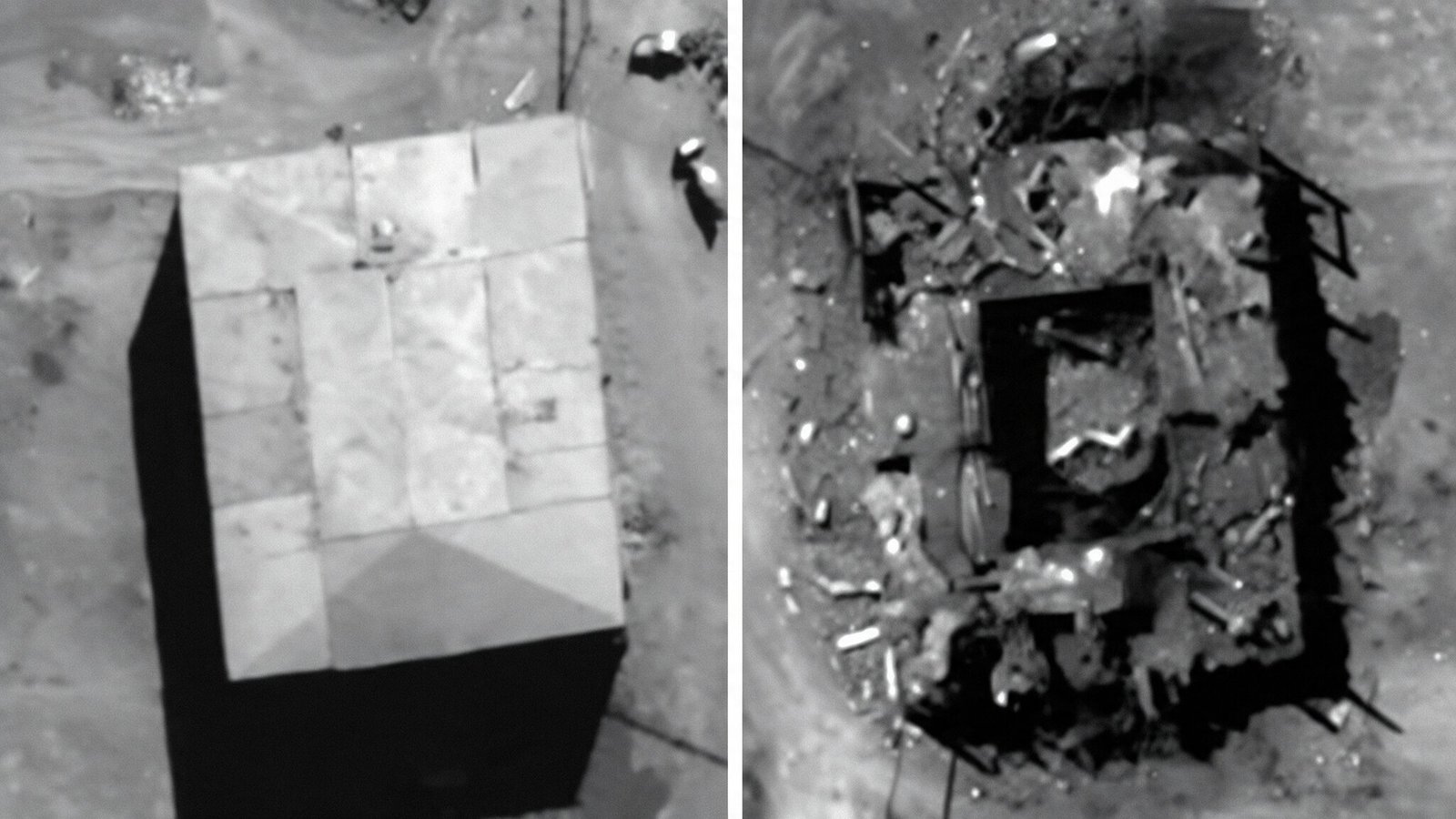
[DAMASCUS] Syria announced that it has begun working with the International Atomic Energy Agency (IAEA) to uncover and remove remnants of a nuclear facility buried beneath concrete in Deir ez-Zor province, while also providing information and documents related to a nuclear program that remained a source of dispute with the agency for more than a decade.
Syrian Foreign Minister Asaad al-Shaibani told the IAEA General Conference in Vienna that Damascus had granted agency experts access to the site and that Syrian teams were working alongside them to uncover the remains and provide design information and nuclear material inventory reports that the agency had sought since 2011.
Al-Shaibani said Syrian authorities had also placed around 73 tons of natural uranium under IAEA supervision and safeguards, adding that the material would remain securely stored inside Syria under international monitoring.
The measures mark a significant shift in the new Syrian authorities’ handling of one of the most sensitive files inherited from former President Bashar Assad’s government, which for years declined to provide full answers about the nature of the facility struck by Israel in 2007.
The site, known as al-Kibar, is located in eastern Syria’s Deir ez-Zor province. Israel destroyed the facility in September 2007. Syrian authorities later cleared and leveled parts of the site, complicating the IAEA’s subsequent efforts to investigate its original purpose.
Assad’s government allowed IAEA inspectors to visit the site once, in 2008. Environmental samples collected during that visit revealed traces of chemically processed uranium particles. Damascus maintained at the time that the installation was a non-nuclear military facility and declined to provide inspectors with full access to other locations the agency believed were connected to the case.
In 2011, the IAEA concluded that the destroyed installation was very likely a nuclear reactor that Syria should have declared under its safeguards agreement linked to the Nuclear Non-Proliferation Treaty.
That same year, the IAEA Board of Governors determined that Syria’s failure to declare the facility and to provide the required information constituted noncompliance with its safeguards obligations, and referred the matter to the UN Security Council. The case remained unresolved for years amid disputes between Damascus and the agency.
Following the fall of the Assad government, Syria’s new authorities adopted a broader policy of cooperation with the IAEA, including opening sites to inspectors and providing information about materials and facilities that had been under investigation.
The renewed access enabled the agency to conduct additional inspections and excavation at the Deir ez-Zor site, providing investigators with a clearer picture of the facility and its associated infrastructure after years of uncertainty and limited information.
IAEA Director General Rafael Grossi said the reactor’s design and characteristics were capable of producing material that could potentially be used in a nuclear weapons program. He stressed, however, that this did not establish that Syria’s former leadership had made a decision to build a nuclear weapon.
In a significant development, the IAEA Board of Governors moved in September to close Syria’s noncompliance file, which had remained open since 2011, after the agency determined that cooperation by the new authorities had enabled substantial progress in resolving outstanding questions surrounding the former program.
Al-Shaibani said Damascus now wants to move beyond addressing the legacy of past nuclear activities and expand cooperation with the IAEA on peaceful nuclear technology, including cancer treatment, agriculture, water management and scientific research.
He also pointed to the potential future use of nuclear technology in electricity generation as part of Syria’s recovery plans, saying such cooperation would take place within international frameworks and under strict safeguards.
Syria also renewed its call for the Middle East to become a zone free of nuclear weapons and other weapons of mass destruction, and for all nuclear facilities in the region to be placed under IAEA safeguards.
The government says the new approach is intended to rebuild international confidence and expand technical cooperation with international institutions during Syria’s reconstruction.
The latest steps reflect Damascus’ effort to close a file that generated years of international tension while recasting its nuclear policy around transparency and peaceful uses after a period marked by secrecy and confrontation with the IAEA.