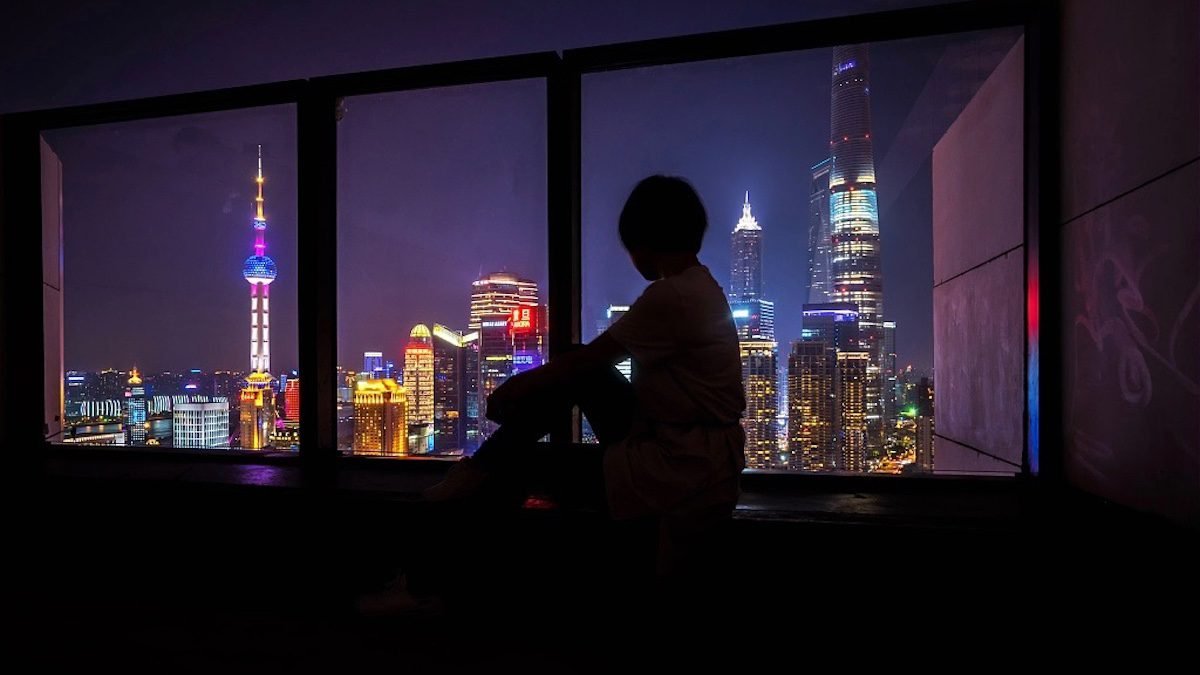
For most of modern history, the household was a bundle. Under one roof, families pooled rent and meals, raised children, cared for parents, kept each other company and insured one another against bad luck. Nobody itemized it, and national accounts barely noticed.
Across East Asia, that arrangement is coming apart, and one line item after another has turned into something you pay for. The loneliness economy is the usual name for the result; the unbundling of the family household is the more accurate one.
In South Korea, single-person households are now 36% of the total, the largest category. Japan was at 38% in 2020 and is expected to reach 44% by 2050; Tokyo is already past half.
China’s 2020 census found 125 million people living alone, equal to one in four households. Fertility has fallen in step. South Korea’s rate is 0.80, Hong Kong’s is 0.84 and Taiwan’s births fell 20% in 2025 alone.
The money has followed. Discovery Reports, a Chinese research firm, puts spending by singles in China at more than US$1 trillion in 2025, up about 50% in two years. The “silver economy” serving the elderly is expected to reach 30 trillion yuan, about $4 trillion, by 2035. Pop Mart, the toymaker behind Labubu, reported $5.4 billion in revenue last year, up 185%.
Two readings of these figures are common, and I think both miss the point. One is demographic doom: fewer people, smaller markets, decline. The other is the retailer’s view: never mind the birth rate, the consumer is still spending. The first ignores a market that plainly exists; the second overlooks where much of the money comes from.
A large part of the solo economy’s growth is a transfer rather than new activity. When a family cooks dinner, GDP records nothing. When one person orders a single-serving meal, streams a drama instead of talking to a spouse and hires a sightseeing companion for the weekend, the same functions show up as transactions. Output rises partly because the boundary of what gets counted has moved.
For anyone using Asian consumption data as a demand signal, this matters. Some of what looks like discretionary spending is a premium the solo consumer cannot avoid: one rent, one refrigerator, one electricity bill and nobody to share them.
The premium is physical as well. A study of EU households found that people living alone have the highest carbon footprint of any household type, roughly 9.2 tonnes a year each, about twice that of someone in a household of five or more. That is a European study, but the arithmetic travels, and it sits uneasily beside climate plans written in national rather than per-capita terms.
The solo economy, then, is three things at once: a real market, a statistical artifact and a loss of efficiency. Most policy arguments insist it is only one of them.
Markets are good at unbundling meals, entertainment and paid company. They are bad at unbundling the two things families did best: insurance against catastrophe and the last mile of care.
You can buy a single-serving hotpot. You cannot buy someone who notices that you did not wake up. Hence the check-in app bluntly named “Are You Dead?” that topped China’s paid app charts in January: miss two daily check-ins, and it alerts an emergency contact. It is a paid substitute for a job that, until recently, needed no product.
Governments have been improvising too. Japan created a minister for loneliness in 2021. Seoul has budgeted 451 billion won, about $326 million, over five years for counseling, a hotline and other measures against isolation and “lonely deaths.”
The World Health Organization’s Commission on Social Connection links loneliness to about 871,000 deaths a year, roughly 100 an hour, and estimates that one person in six is affected.
Living alone and being isolated are different things, and policy tends to blur them. Nearly half of South Koreans who live alone say they feel lonely at least sometimes, which means about half do not, and plenty of people in crowded homes feel nothing else.
A government that reads household size as isolation will spend in the wrong places. Brands worked this out first; the region’s marketing sells independence, not consolation.
The care gap is sharpest in hospitals. Serious illness assumes a next of kin: someone to consent for a patient who cannot sign a discharge, answer the phone at three in the morning.
Patients who arrive without a spouse, children or a sibling within reach turn surrogate decision-making, guardianship and discharge planning from ethics-seminar material into a limit on how quickly a hospital can free a bed.
Japan expects 10.8 million people over 65 to be living alone by 2050, one household in five, and its demographers warn that the number with no relatives at all is rising. Care systems are being built around a relative who, for a growing share of patients, will not exist.
The fixes are unglamorous: statutory non-kin surrogates, default care networks, long-term-care entitlements that follow the person rather than the family. They are also far cheaper than the emergency room.
The region’s most consequential export, though, may turn out to be neither the karaoke booth nor the check-in app but the rulebook for synthetic companionship.
China’s new rules for “anthropomorphic” AI services took effect on July 15. They prohibit virtual romantic relationships for minors, require a guardian’s consent for users under 14, oblige providers to intervene when a user signals self-harm and treat emotional over-dependence as a risk to be managed.
The United States is arriving at similar rules from the opposite direction, one legislature at a time. New York’s disclosure and crisis-referral law took effect last November and California’s in January; Oregon and Washington follow next January.
By June, 78 bills were in play across 27 states. In the European Union, the AI Act’s transparency obligations, among them the duty to tell people when they are talking to a machine, have applied since August 2.
Three legal traditions have therefore, within about a year of one another, begun treating engineered intimacy as a regulated product. Whoever builds companionship at scale for a population of one will also set the working standards for duty of care, disclosure, crisis escalation and data use in emotionally dependent relationships with machines.
For now, the most detailed of those standards are China’s.
Three things would help. First, measure care capacity, meaning who would notice an emergency, rather than counting household size. Second, treat check-in and companion apps as safety infrastructure and judge them by their links to emergency and clinical services, not by engagement.
Third, bring the law of chosen family up to date; surrogate decision-making, hospital next of kin, tenancy succession and caregiving leave still assume a spouse or child that a third of households will not have.
Ellen Xie, a comedy producer in Shanghai, has said that she and her single friends imagine forming “temporary families” as they grow old, and that some company will surely want to make money from it. She is right about the second part. Whether the law will recognize the first is the open question.
None of this makes Asia a cautionary tale. It makes the region the pilot site, with the rest of the world a few years behind but still in the same queue.
Y. Tony Yang is an Endowed Professor at the George Washington University in Washington, D.C.