Cyril Widdershoven, senior advisor at Blue Water Strategy, told TML: “It is clear that Riyadh may not choose the wider conflict, but that the conflict is increasingly choosing Riyadh.”
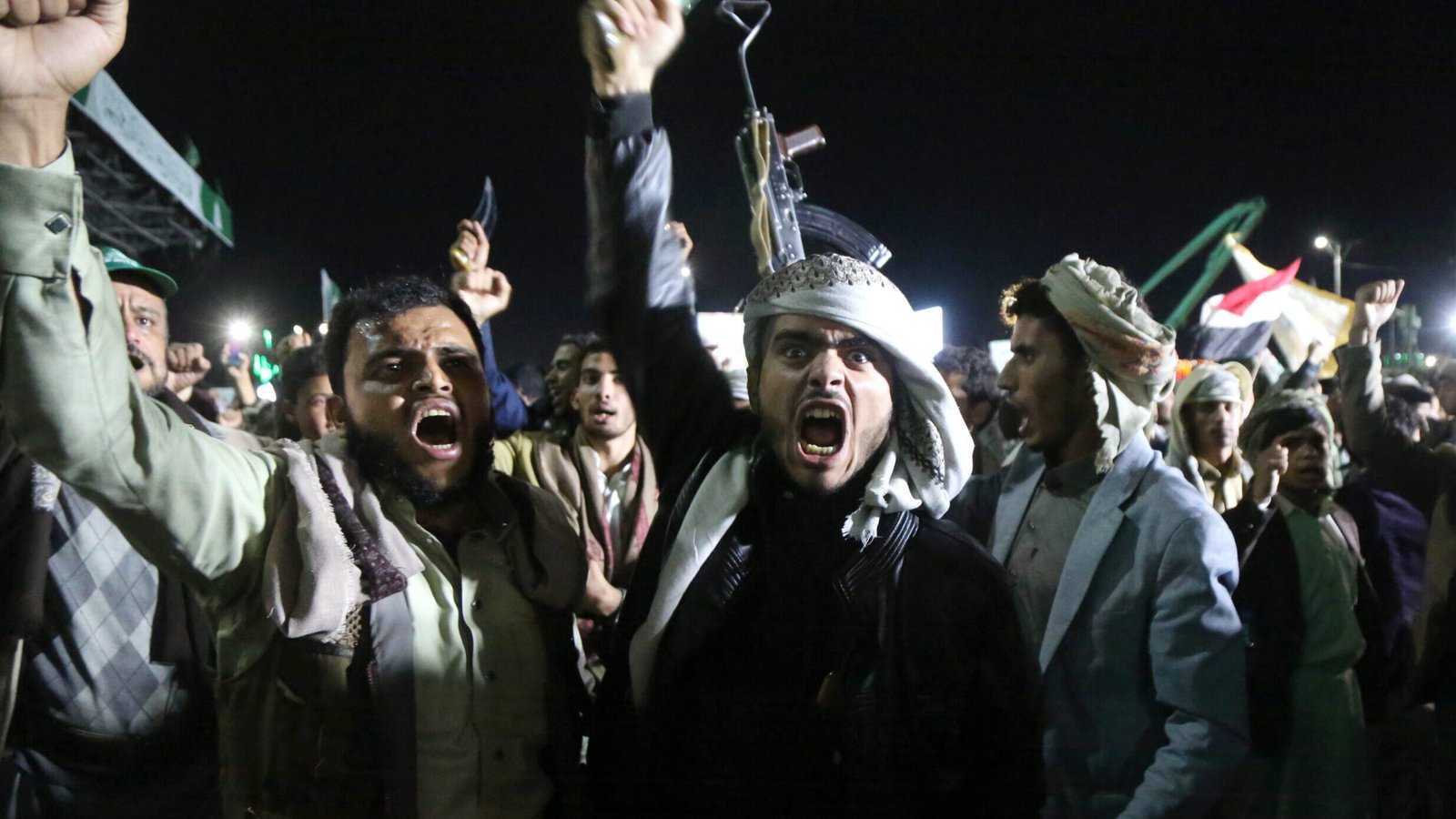
Saudi Arabia is confronting one of the most complicated security challenges it has faced since stepping back from large-scale warfare in Yemen, as a rapid Houthi advance along the Red Sea has coincided with attacks on Saudi territory and the temporary shutdown of the kingdom’s principal oil route bypassing the Strait of Hormuz.
In context textOver the past several days, the Iran-aligned Houthi movement has seized the port city of Mokha, pushed Saudi-backed Yemeni forces from remaining positions along the western coast, reached the Hanish Islands, and taken Perim, or Mayun, Island in the middle of the Bab el Mandeb Strait. The advance gives the group an unprecedented military position around the southern entrance to the Red Sea, although control of the land surrounding the strait does not necessarily amount to the ability to close or sustainably control the waterway itself.
Cyril Widdershoven, senior advisor at Blue Water Strategy, described the Houthi advance as a major change in the military balance, but cautioned against equating territorial gains with complete control of Yemen.
“What we are seeing right now is that the balance of power has shifted sharply in the Houthis’ favor. However, especially when looking from a military standpoint, territorial momentum should not be confused with uncontested national control.”
Territorial momentum should not be confused with uncontested national control
“Yes, they have Mokha, Perim Mayun Island and the remaining Red Sea coastline, and they also have broken the strategic depth of Saudi-backed forces, while clearly at present gaining direct leverage over Bab el Mandeb,” he told The Media Line.
“When taking the bird’s-eye view, this means that it is both a Yemeni military victory and an Iranian strategic gain. Tehran’s extremists and aligned forces can now exert pressure around two global energy chokepoints, which are Hormuz and Bab el Mandeb,” he added.
These two waterways sit on opposite sides of the Arabian Peninsula. Before the current war, roughly a fifth of global oil and liquefied natural gas trade passed through Hormuz, while Bab el Mandeb connects the Indian Ocean and Gulf of Aden to the Red Sea, Suez Canal, and Mediterranean. Saudi Arabia has increasingly depended on the western route as Hormuz traffic has been disrupted.
The advance has also reopened a front that had been largely frozen since a UN-brokered truce in 2022 reduced fighting across Yemen. The internationally recognized Yemeni government has said its forces are regrouping and intend to retake the areas lost to the Houthis, while more than 85,000 Yemenis have been displaced since the beginning of September, according to the International Organization for Migration.
At the same time, the confrontation is increasingly extending beyond Yemen.
The Houthis have resumed missile and drone attacks on Saudi Arabia, including attacks targeting southern cities and military installations. Saudi civil defense authorities said a projectile blamed on the Houthis struck the border area of At Tawal over the weekend, injuring two people and damaging a mosque and other buildings, while the Houthis separately claimed an attack against a Saudi military base in the Najran region.
The growing pressure comes as Saudi Arabia’s energy security has been hit from another direction. The kingdom temporarily shut its 1,200-kilometer East-West crude pipeline after drones struck facilities in the Riyadh and Medina regions. Saudi authorities said the drones originated in Iraq, but have not publicly identified the perpetrators. Baghdad condemned the attack and opened an investigation. Riyadh has so far refrained from retaliating at the Iraqi government’s request while reserving its right to respond.
There is no verified evidence that the Houthis carried out the pipeline strike. Yet its timing has magnified the consequences of the Houthi advance. The East-West Pipeline carries crude from Saudi Arabia’s eastern oil-producing regions to Yanbu on the Red Sea, allowing exports to circumvent the Strait of Hormuz. It has been moving roughly 4 million to 5 million barrels per day in recent months, according to shipping data and analysts cited by Reuters. With Hormuz heavily disrupted by the wider US-Iran confrontation, the pipeline has become one of Riyadh’s principal alternatives for getting crude to international markets.
Saudi oil buyers and traders said that storage at Yanbu could sustain exports for approximately five to seven days if the pipeline remains offline.
For Riyadh, the combination creates an uncomfortable geographic reality: the route designed to bypass pressure in Hormuz terminates on a Red Sea coastline whose southern entrance is now considerably more exposed to the Houthis.
Widdershoven said the events have therefore exposed the limits of Saudi Arabia’s infrastructure redundancy.
He said Saudi Arabia still had oil and gas export capacity but lacked a secure alternative route. The East-West Pipeline can currently transport roughly 5 million barrels toward Yanbu, he said, although higher long-term capacity estimates have exceeded 7 million barrels.
“However, the developments have now shown, not surprising to most, that the pipeline remains exposed across its long overland route,” he said.
“At the same time, Yanbu cargoes must enter an increasingly threatened Red Sea environment. Riyadh now is facing a ‘bi-pressure’ system: Hormuz constrains eastern exports, while Houthi power threatens the western outlet. Storage, partial pipeline redundancy, and tactical shipping arrangements can soften the shock, but none replaces secure access to both seas,” he added.
The Houthis have said navigation through the Red Sea and Bab el Mandeb remains safe for shipping other than Saudi-linked vessels, against which the group declared a blockade in July. That distinction may limit the immediate threat of a general closure, but it does not remove the commercial impact. Insurers, shipping companies, and energy traders price risk based not only on whether a chokepoint is formally closed, but also on the likelihood of attack and whether vessels can secure coverage and guarantees of safe passage.
Yet Abdulghani Al-Iryani, senior researcher at the Sanaa Center for Strategic Studies, argues that the dramatic Houthi gains should not be interpreted as evidence that the group can permanently dominate Bab el Mandeb.
“They don’t have the air defense or the fortifications required to withstand air attacks, air strikes. So, this means that soon enough they will have to withdraw or surrender to the government forces in these areas,” he told The Media Line.
For Al-Iryani, the offensive is better understood as the culmination of what he described as an “escalation trap” rather than the completion of a successful strategy.
“I still argue that they were caught in an escalation trap. They wanted to escalate against Saudi Arabia to get the Saudis to go back to the 2023 agreement, draft agreement, which was very favorable to the Houthis. Saudis have not agreed to do so,” he said.
They [the Houthis] got caught in this escalation trap that led them to overextension … in positions that they can’t sustain
“And the Houthis kept escalating, first against the Saudis, and then when that didn’t work, they escalated internally in Yemen. And they got caught in this escalation trap that led them to overextension, as is the case now, in positions that they can’t sustain, they cannot keep. And the main objective, the strategic objective of all of this, was to get the Saudis back to the negotiation table,” he added.
That assessment points to a central uncertainty: whether the Houthi offensive produces political leverage over Riyadh or instead triggers a counteroffensive that pulls Saudi Arabia back into more direct military involvement in Yemen.
Government forces have already promised to return to the Red Sea coast. Sultan Ali al-Aradah, a member of Yemen’s Presidential Leadership Council, said forces were regrouping after what he described as the “painful and regrettable” collapse of positions around Mokha.
Widdershoven similarly cautioned that Houthi predominance could generate the conditions for a broader anti-Houthi regrouping.
“However, this doesn’t mean a clear fait accompli, even that the offensive has humiliated and fragmented the anti-Houthi camp. At the same time, it will be the main factor that could also provide the common threat needed to force government forces, southern factions, Tareq Saleh’s National Resistance, and their Saudi and Emirati backers into renewed coordination.”
He added, “There is at present clearly Houthi predominance, but the situation should be read differently maybe. The medium-term risk is a new, wider civil war.”
The pressure on Saudi Arabia is also testing the recently signed Meccah Joint Defence Agreement between Riyadh, Ankara, and Islamabad. The joint defense agreement treats an armed attack against one of the three parties as an attack against all, but Pakistan said Thursday that no military response to the Houthi attacks was currently under discussion.
Al-Iryani argued that the pact does not necessarily mean other members would automatically enter a Saudi-Houthi confrontation.
“The Mecca agreement does not stipulate automatic support,” he said.
The Mecca agreement does not stipulate automatic support
“First, the country that calls for help can only call for help if they are attacked directly, not if the attack is in response to provocative action by the member of the agreement,” he added.
Al-Iryani nevertheless identified one scenario in which the equation could change.
“The Houthis can get desperate at some point and cross into Saudi territory, at which time the Pakistani brigades on the Saudi side of the border will engage them,” he noted.
Widdershoven was also skeptical that the new pact would provide Riyadh with an immediate military solution.
“In my view, the Meccah Agreement parties are not going to be involved; Turkey-Pakistan’s commitment to actively be involved is extremely weak, showing already the real importance of the deal. Saud [Arabia] is at present on its own, or it should be changing its strategy, asking Egypt, UAE, the USA, or even NATO to assist,” he said.
Washington’s position may prove equally important. Reports claimed that Crown Prince Mohammed bin Salman asked US President Donald Trump for military help against the Houthis last week, but Washington offered intelligence support rather than a new military campaign. President Trump later confirmed that he had spoken with the crown prince.
For Riyadh, this leaves few uncomplicated options. A return to a major Saudi-led war in Yemen would risk recreating the costs and political liabilities of the intervention launched in 2015. But accepting Houthi territorial gains without pressure could consolidate the group’s leverage over Saudi shipping and border security.
Widdershoven said Riyadh is therefore likely to combine several approaches rather than choose between war and negotiations.
“Riyadh’s least-bad option is a calibrated combination of deterrence, diplomacy, and limited military pressure. It does understand that a renewed large-scale intervention would be costly, politically unpopular, and unlikely to eliminate the Houthis.”
He said Saudi Arabia’s calculations differ from views circulating in Europe and the West, as negotiations alone “would risk legitimizing military gains achieved through force.”
“The Kingdom will be expected to reinforce border and infrastructure defenses, support Yemeni forces with intelligence and airpower, pressure Baghdad to suppress militia launch networks, and maintain indirect talks with both the Houthis and Iran. This certainly will be the official option to take. He cautioned, however, that it remained unclear whether this approach would ultimately be implemented, given public frustration and pressure from political hardliners.
The next diplomatic test will come on Monday in Oman.
Iranian officials say they will meet Gulf Arab states there and present an understanding reached with Oman on future shipping routes through the Strait of Hormuz. The proposal aims to create a controlled mechanism for commercial passage, but Iranian officials have stressed that it does not constitute an unconditional reopening of the strait. Oman has not publicly confirmed all of Tehran’s description of the arrangement, while Bahrain has said it will not participate in talks with Iranian officials.
Iranian Foreign Minister Abbas Araghchi has said Tehran will not fully reopen Hormuz until Washington meets Iranian demands.
The timing leaves Saudi Arabia in an unusual position. Tehran is offering Gulf governments a possible mechanism to restore some maritime access in the east while an Iran-aligned movement has strengthened its position around Saudi Arabia’s western maritime outlet.
Al-Iryani, however, cautioned against assuming that the Houthis can translate the areas they have seized into permanent control over global shipping.
If they decide to stop all traffic, obstruct traffic through the Bab el Mandeb Strait, of course, the international response would be very strong and very destructive to them.
“If they decide to stop all traffic, obstruct traffic through the Bab el Mandeb Strait, of course, the international response would be very strong and very destructive to them. Since they don’t have what Iran has, which is heavily fortified underground bases, it’s inconceivable that they can maintain that control,” he said.
The immediate question is therefore not whether Saudi Arabia has lost access to both Hormuz and Bab el Mandeb. It has not. Rather, Riyadh now faces simultaneous uncertainty around both routes, while its principal infrastructure connecting them has itself proven vulnerable.
For Widdershoven, this increasingly limits the kingdom’s ability to remain outside of the Iranian conflict.
“Saudi Arabia will try to avoid direct entry into the wider US-Iran war, but strategic geography is steadily removing that choice. If attacks continue from Yemen and Iraq while Hormuz remains constrained, neutrality will cease to protect the kingdom. It is clear that Riyadh may not choose the wider conflict, but that the conflict is increasingly choosing Riyadh,” he concluded.