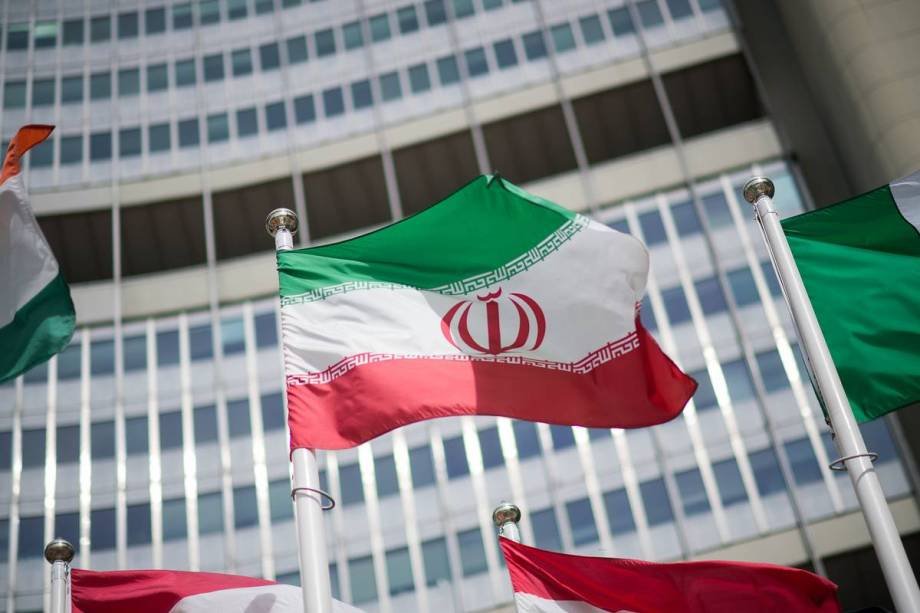
The nuclear confrontation with Iran is again moving in two opposite directions. On 9 September, the International Atomic Energy Agency’s Board of Governors referred Iran to the UN Security Council over alleged breaches of its non-proliferation obligations, the first such referral in two decades. A day later, Donald Trump warned Tehran against renewed activity near the Pickaxe Mountain complex close to Natanz.
Yet diplomacy has not disappeared. Oman is preparing talks involving Iran and Gulf states over the future of the Strait of Hormuz, while Iran and the UAE have joined other BRICS members in calling for restraint and a political resolution to the wider regional conflict. The coexistence of escalating nuclear pressure and continuing diplomatic activity points to the central strategic question: what is all the pressure supposed to achieve?
The United States has already accumulated substantial military and economic leverage over Iran. But leverage has strategic value only when it is converted into a political result.
Washington can continue using military strikes, sanctions and economic coercion as an open-ended policy, or it can use those instruments to pursue a verifiable agreement that prevents Iran from acquiring a nuclear weapon while reducing the costs and risks of a prolonged regional conflict.
This is not a choice between strength and weakness. It is a choice between demonstrating power and turning power into an outcome that can endure after military operations stop.
From pressure to leverage
The Trump administration’s stated objective remains clear. Its National Security Presidential Memorandum on Iran restored the policy of “maximum pressure” and declared that Tehran must be denied every path to a nuclear weapon.
The more difficult question is how that objective can be secured over time.
Military force can destroy facilities and delay a nuclear programme. It cannot erase technical knowledge, remove the political motivations that drive nuclear policy or determine the choices of future Iranian governments.
Sustained military confrontation may even strengthen the argument inside Iran that a more powerful deterrent is necessary to prevent future American or Israeli attacks.
That is the basic limitation of a purely military approach. Military power can damage capabilities; diplomacy is what creates enforceable rules for limiting, monitoring and verifying them.
READ: Iran says ‘US attack’ on commercial vessel in Gulf kills 1, injures 3
A durable nuclear arrangement would therefore have to address enrichment levels, uranium stockpiles, centrifuges, inspections, verification, research and development, sanctions and mechanisms for managing future disputes. The latest IAEA referral makes those questions more urgent, not less. Moving the dispute deeper into the UN system without maintaining a political channel risks generating additional pressure without creating a path towards resolution.
This does not mean Washington should abandon sanctions or military deterrence. It means distinguishing leverage from the objective itself.
Pressure is strategically useful when it improves the terms available at the negotiating table. When pressure becomes permanent policy without a defined diplomatic destination, however, it can impose costs indefinitely while leaving the underlying nuclear dispute unresolved.
Trump himself has at times recognised this distinction. In July, Washington temporarily paused military action to give negotiations additional room, while keeping open the possibility of renewed operations if diplomacy failed. The principle behind that decision remains valid: maintain leverage, but decide what that leverage is intended to buy.
The objective should be straightforward: the greatest possible verifiable restrictions at the lowest sustainable strategic cost.
That is not appeasement. It is bargaining from strength.
What a negotiated settlement should contain
A diplomatic alternative cannot simply consist of another general appeal for talks. It needs a staged framework with reciprocal obligations and clear benchmarks.
The first step should be a short stabilisation period. Washington and Tehran would halt further escalation and maintain direct or mediated communications. The immediate purpose would not be to settle every dispute, but to prevent further military exchanges from destroying the political space required for negotiations.
The second stage should be a time-limited nuclear negotiation focused on questions that can actually be verified: enrichment, uranium stockpiles, centrifuges, inspections and monitoring. Iran would accept measurable restrictions and enhanced international verification. In return, the United States would offer clearly defined and reversible sanctions relief linked directly to compliance.
Other disputes should not be ignored, but neither should they be allowed to make a nuclear agreement impossible. Missile capabilities, maritime security and regional tensions could move into parallel negotiating tracks once progress on the nuclear file creates a more stable foundation.
READ: US defence chief vows to ‘finish this fight’ with Iran
A final settlement would then require stronger verification, predetermined consequences for serious violations and a dispute-resolution mechanism designed to prevent every disagreement from producing another cycle of military escalation.
The June US-Iran memorandum demonstrated both the potential and the limitations of an interim approach. It created an extendable 60-day negotiating period and linked de-escalation to discussions over the nuclear programme, sanctions and Hormuz. Yet disagreements over sequencing and implementation prevented that opening from becoming a durable settlement.
The lesson is not that diplomacy failed. It is that the next agreement needs clearer obligations and a structure capable of surviving political shocks.
There is also a wider regional case for such an approach. Six months of conflict have demonstrated how quickly the Iranian confrontation can spread beyond the nuclear issue. Disruption around Hormuz has affected global energy markets, fighting has increasingly intersected with developments in Yemen and the Red Sea, and Gulf governments have repeatedly sought diplomatic mechanisms to prevent escalation from becoming permanent.
For Washington, prolonged conflict carries an additional strategic cost. Iran is not the only challenge facing the United States. Competition with China, relations with Russia, alliance commitments, technological competition and domestic economic pressures all compete for finite military resources and political attention.
This is where Trump’s own America First argument becomes relevant. If the administration can obtain enforceable nuclear restrictions while preserving deterrence, ending the confrontation through negotiation would not represent a retreat from American power. It would represent an attempt to use that power more efficiently.
The economic case reinforces the same conclusion. Brent crude has again risen above $100 a barrel as attacks on shipping and regional energy infrastructure intensify. A nuclear settlement would not resolve every Middle Eastern conflict, but reducing US-Iran escalation would remove one of the largest sources of uncertainty affecting energy markets, shipping and regional stability.
Trump has long presented himself as a president capable of obtaining better deals than his predecessors. Iran now offers a test of that claim. A sustainable agreement does not require Iranian capitulation. It requires verifiable restrictions that protect US interests, credible consequences for serious violations and a political endpoint that costs less than an indefinite war.
Maximum pressure has already demonstrated Washington’s capacity to impose costs. The more consequential test is whether those costs can now be turned into maximum leverage — and whether maximum leverage can be converted into a settlement that outlasts the next round of strikes.
OPINION: America can still strike. The hard part is what comes next
The views expressed in this article belong to the author and do not necessarily reflect the editorial policy of Middle East Monitor.