Welcome to Edition 9.10 of the Rocket Report! This week we’re celebrating a historic moment in Europe when a German rocket company successfully put its launch vehicle into orbit. Isar Aerospace became the first purely commercial European company to reach orbit, and impressively it did so on just its second launch attempt. How quickly can they scale up operations? How quickly will the second European launch firm reach this goal? Big questions, which for now we don’t have answers to.
As always, we welcome reader submissions, and if you don’t want to miss an issue, please subscribe using the box below (the form will not appear on AMP-enabled versions of the site). Each report will include information on small-, medium-, and heavy-lift rockets as well as a quick look ahead at the next three launches on the calendar.

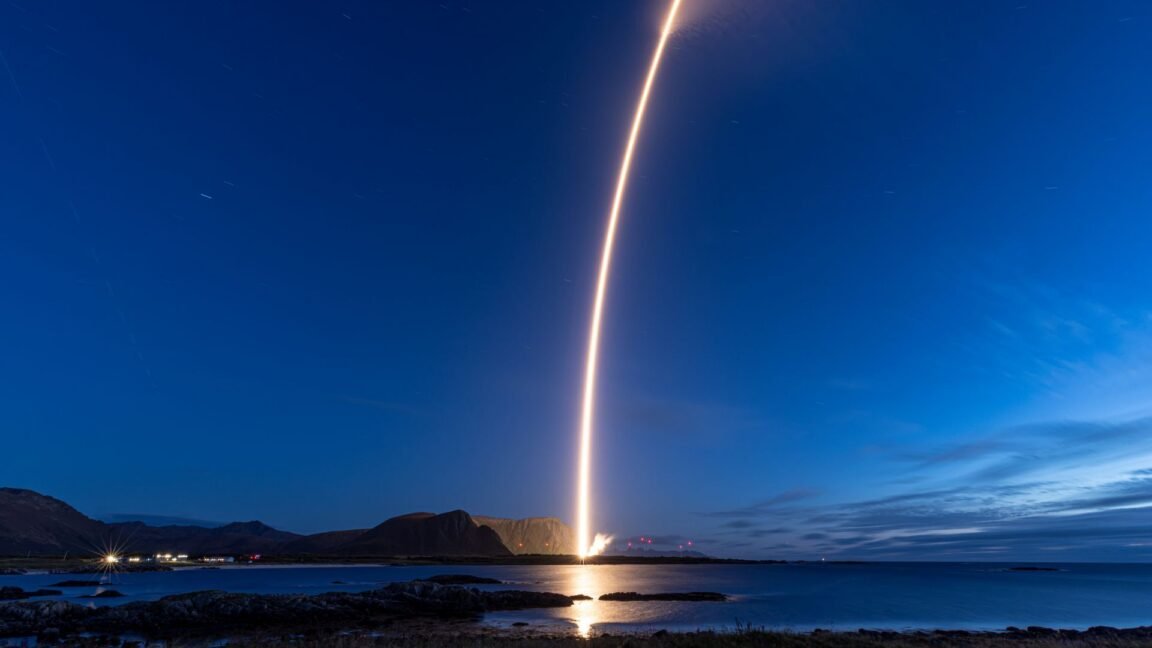
Isar Aerospace takes a huge step forward. Isar Aerospace, founded in 2018 by three students at a German university, successfully launched a privately developed rocket into low-Earth orbit on Saturday from a Norwegian spaceport inside the Arctic Circle. The two-stage rocket, Spectrum, became the first fully commercial launch vehicle in Europe to reach orbit, Ars reports. With Saturday’s success, Isar becomes the clear leader among a pack of several European launch startups vying to inject some competition into Europe’s stagnant launch market.
Private capital emerges … It took eight years for Isar to get to orbit, a timetable similar to other successful commercial rocket startups in the West. In that time, the company raised roughly $1 billion through several private financing rounds and now has a workforce of nearly 500 employees. European space officials hope a jolt of competition will light a fire under the continent’s rocket industry. European governments are accustomed to footing the bill and having a say in where rockets are built, a procurement model known as geographical return, or geo-return. The paradigm is different with companies like Isar, which established themselves on a privately funded basis, with ambitions to eventually attract commercial and government business.
Long-forgotten space plane is back? Ars Technica has written precisely one article about Ravn X, an autonomous aircraft and launch vehicle under development by Aevum. This was back in December 2020. We haven’t covered it since, I think it’s safe to say, there is a fair amount of skepticism about whether the project to build the space plane was all that realistic. And time has largely proved us right. The company’s initial target of an orbital mission in 2021 came and went. We largely forgot about the vehicle. Then something mysterious showed up at Long Beach Airport.
Don’t get too excited … TWZ reports that a handful of aviation photographers got a surprise eyeful of a very sleek and large aircraft silhouette last week at the airport and later learned that it was likely a mockup of Ravn X. Later on, in posts on X, Aevum founder Jay Skylus said the company “conducted Test 2 of Ravn X SN0 early this morning. Ravn X completed its first fully autonomous taxi. ~37 minutes of autonomy. We’re reviewing the telemetry and test data now and will share more as soon as I can.” We are not expecting any flights imminently. (submitted by Onychomys)
UK invests big time in northern spaceport. This week, the United Kingdom unveiled a new national space strategy that seeks to “drive growth, strengthen security and back everyday technologies.” As part of efforts to reindustrialize the country, the government is investing 7.8 billion pounds ($10.5 billion) through 2030. About 40 percent of the funding will go toward strengthening connectivity, including the Connectivity in Low Earth Orbit and SKYNET defense communications programs, which “play a pivotal role in keeping our Armed Forces connected wherever they are in the world.”
German rockets to launch from there … The UK government also wants to help push forward a spaceport under development in Shetland, an archipelago north of the Scottish mainland. The government will provide 30 million pounds ($40.5 million) for the SaxaVord Spaceport in Shetland, with the aim of “helping Britain and our partners to launch satellites without relying on countries further afield while creating new jobs.” No orbital rocket has ever successfully launched from the United Kingdom. The main tenant of SaxaVord is German launch company Rocket Factory Augsburg. (submitted by iCowboy)
Firefly to launch from Sweden. Firefly Aerospace announced on Wednesday a multi-launch agreement with SSC Space for two Alpha rocket launches from Sweden’s Esrange Space Center. Targeted to launch no earlier than 2028, the missions will serve Sweden’s national security customers as well as additional commercial rideshare customers.
More to come … Jason Kim, CEO of Firefly Aerospace, said more Alpha launches will follow. “These first two missions are just the start of a long-term, multi-launch partnership with SSC Space that will provide assured access to space for years to come,” he said. SSC Space secured the full payload capacity and can allocate payload space to its government and commercial customers, providing flexible accommodations and launch opportunities for the European satellite market.
Avio seeks higher flight rate. Avio is looking to boost the pace of Vega-C rocket flights to six missions per year, roughly double the current level, and potentially go another 50 percent higher, Aviation Week reports. “We are working to increase, as a first step, the cadence of Vega to six per year, and potentially a second step to nine per year,” Giulio Ranzo said Wednesday during the International Space Summit in Paris.
Solid production is not so solid … The Vega-C rocket is used heavily by institutions for launch in Europe, where demand is rising. “We will follow what they need, what they ask us, and we will try to adapt to continue providing the service,” Ranzo said. One of the challenges in ramping up is that the Vega-C used the same solid rocket motors employed on Ariane 6, which is also looking to boost output. The combination is creating supply-chain bottlenecks that industry and government are trying to address.

Stoke Space eyes larger rocket. Stoke Space announced Tuesday that it has raised another significant round of funding, $1 billion, as it makes a final push toward its debut launch next year. The Washington-based launch company also revealed plans for a larger medium-lift vehicle, Ars reports. The quantity of new funding will enable the company to accelerate work on a larger “Block 2” version of the Nova rocket, capable of lifting 15 metric tons to low-Earth orbit in a fully reusable configuration.
Block 2 will rock you … “We have already started development on a larger vehicle, and we felt like now is the time to pour gas on that fire and really start full-force development of the larger vehicle, and so that’s the reason for the timing,” Stoke co-founder and Chief Executive Andy Lapsa said. The Nova Pathfinder vehicle has a diameter of about 12.5 feet, slightly larger than SpaceX’s Falcon 9 vehicle, although it is considerably shorter. The Block 2 version of Nova is intended to have a 15-foot diameter, Lapsa said. Stoke is targeting 2029 for the debut launch of Block 2.
Ariane 64 gets with Amazon for some more. Arianespace and Amazon Leo announced Wednesday an agreement at the International Space Summit in Paris for six additional Ariane 64 launches to continue deploying the Amazon Leo constellation into low-Earth orbit. The new order brings the total number of Amazon Leo launches with Arianespace to 24, up from 18, with missions scheduled through 2031 from Europe’s Spaceport in French Guiana.
Arianespace, the on-time provider? … To the surprise of some observers, including your humble correspondent, Arianespace has proven to be a more reliable launch partner to Amazon than the other two providers who inked deals with Amazon in 2022, United Launch Alliance and Blue Origin. But Ariane 6 has gotten through its teething pains without major issues, unlike Vulcan and New Glenn. “We committed early because we believed in what Arianespace was building, and they’ve executed mission after mission,” said Chris Weber, vice president of Amazon Leo business and product. “Expanding from 18 to 24 launches reflects our confidence in Ariane 6 and our continued investment in European launch capability.”
Nyx will fly on Ariane 6. Arianespace and The Exploration Company announced this week that Nyx, the reusable space capsule developed by The Exploration Company, will launch into orbit on an Ariane 6 rocket from French Guiana. The Exploration Company chief executive, Hélène Huby, has said she is targeting late 2028 for the launch of this spacecraft, which is due to fly a cargo mission to the International Space Station.
Commercial cargo redux … The launch deal follows the award of a service contract to The Exploration Company by the European Space Agency worth 760 million euros ($880 million) to support the development of Nyx, a demonstration mission, and two operational cargo missions. “We started the development of Nyx with private funding only, and we are now at a technical maturity level where ESA and Member States’ public funding can support us massively, as anchor clients, to help us finalize the vehicle,” Huby said.

Does Europe need a massive rocket? Speaking of Huby and The Exploration Company, the company also announced a $450 million Series C funding round this week, Ars reports. As part of this, the company will continue development of the Storm rocket engine, which is projected to have a thrust of about 400,000 pound-feet. This would be used to power a reusable rocket intended to launch 40 metric tons in reusable mode and 60 tons in expendable mode.
How to stay relevant … The expendable Ariane 6 rocket, by contrast, has a maximum lift capacity of about 20 tons. “If Europe wants to stay relevant—we will not be relevant without a massive rocket at a massive cadence,” Huby said during a teleconference with reporters on Tuesday. “And to do that we need a massive engine, and right now this is something we just do not have in Europe.” An aggressive timeline for the rocket’s development, she said, is 2033.
Terran R gets on-ramped by NASA. NASA said this week it has awarded a “Launch Services II” contract to Relativity Space that allows for on-ramping the Terran R rocket into the agency’s launch services program. Accordingly, the Terran R launch service will be available to NASA for future missions, including science, research, and human spaceflight.
Don’t expect Terran R to win awards right away … NASA still wants to see a new rocket like Terran R, which has yet to make its debut, demonstrate success in flight. However, by receiving this contract, Relativity can now follow a pathway for new launch service providers to compete for future missions. The current ordering period covers missions through December 2032.
Next three launches
September 13: Falcon 9 | O3b mPOWER 11, 12, 13 | Cape Canaveral Space Force Station, Fla. | 18:49 UTC
September 15: Vega C | Sentinel-3C, Flex | Guiana Space Center, French Guiana | 01:21 UTC
September 15: Zhuque-2E | Unknown Payload | Jiuquan Satellite Launch Center, China | 06:25 UTC