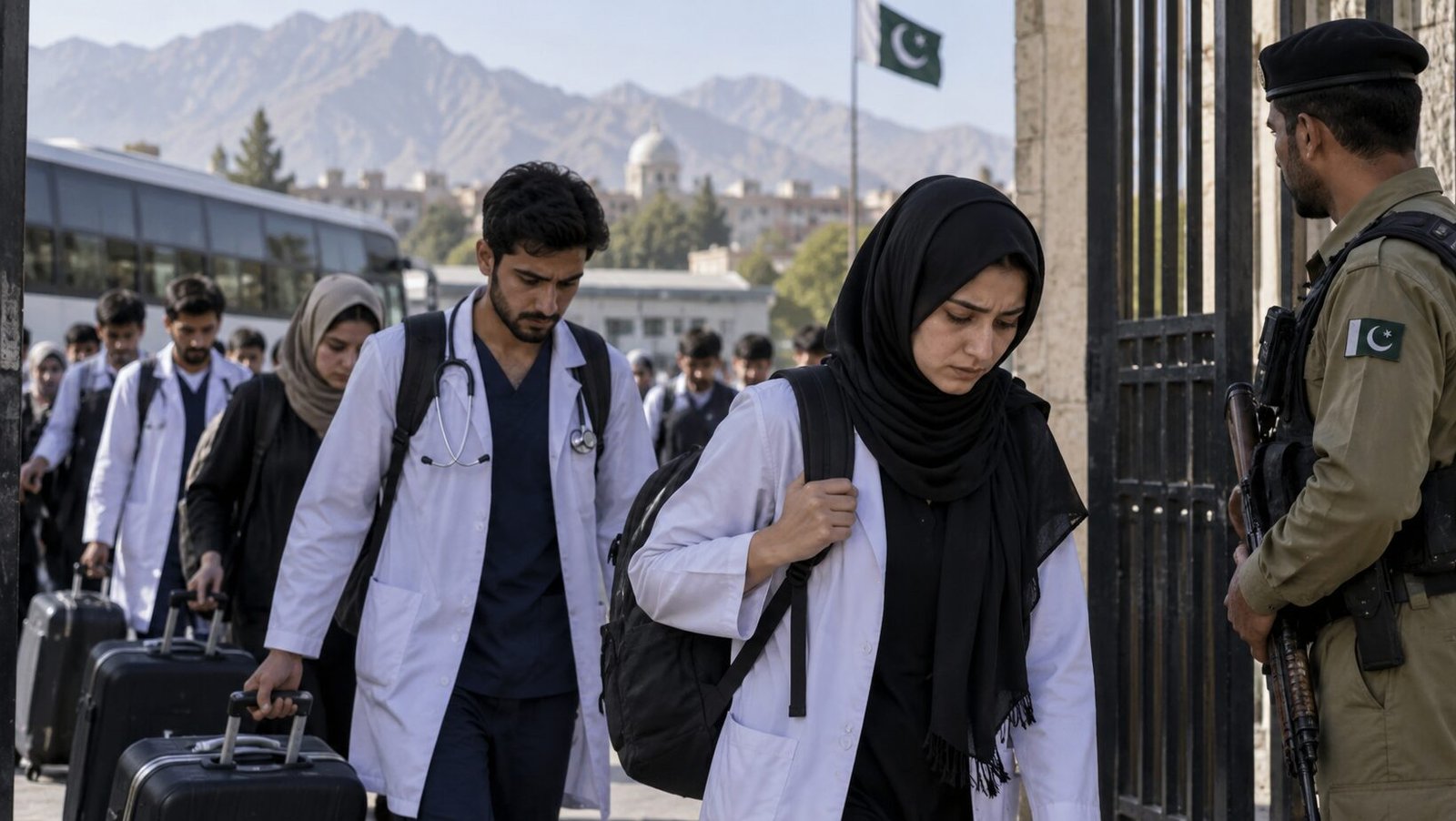
The Embassy of Afghanistan in Islamabad has expressed deep concern over the Pakistan Medical and Dental Council (PM&DC) decision concerning the forced return of Afghan medical students currently pursuing their studies in Pakistan.
In a statement released Tuesday night, the Afghan Embassy said the decision would have a significant impact on the academic progress and future of Afghan students who began their studies through lawful and established procedures.
The embassy said many students had already invested years of dedication, time, and considerable financial and personal resources and were now completing their academic programs. It urged Pakistani authorities and international bodies to protect the students’ academic rights and ensure uninterrupted studies. The embassy further emphasized that vital areas such as knowledge, education, and human relations should remain protected from political disagreements.
Pakistan’s medical regulator ordered Afghan students enrolled in medical and dental colleges across the country to return to Afghanistan and barred institutions from admitting new Afghan students.
The PM&DC has directed medical and dental institutions to require Afghan nationals previously enrolled in their programs to return to Afghanistan and complete all necessary formalities, including issuing No Objection Certificates (NOCs) to facilitate their departure. The Media Line has obtained a copy of the letter. The authority also ordered institutions not to admit, transfer, migrate, place or otherwise facilitate any Afghan nationals during the current academic session until further orders.
“The matter is of highest priority and relates to national policy directions,” it stated.
Pakistan has enacted a campaign to repatriate Afghan nationals as diplomatic relations between Pakistan and Afghanistan’s Taliban government have deteriorated.
Meanwhile, Mansoor Ahmad Khan, former Pakistan ambassador to Afghanistan, has urged the PM&DC to reconsider its decision on Afghan medical students on humanitarian grounds and in view of the longstanding ties between the peoples of the two countries. He said a more humane and practical approach would be to allow the students to complete their degrees and facilitate their return to Afghanistan upon graduation.
Asif Durrani, Pakistan’s former Special Representative for Afghanistan and ambassador to Iran and the UAE, called the decision “shocking,” particularly for young women already facing severe restrictions on education under the Taliban.
He said the issue was one of humanity, compassion and Pakistan’s moral responsibility, stressing that for many of these women, medical education may be their only remaining pathway to a dignified future.
“Sending them back could derail years of study and extinguish their hopes of becoming doctors,” he added.
Durrani urged Pakistan to reverse the decision and allow the students to complete their medical degrees before returning to Afghanistan.
Amnesty International South Asia, in a post on X, called the PM&DC’s decision“patently discriminatory and arbitrary.” It said the impact would be particularly severe on female students, many of whom have already been denied access to higher education in Afghanistan under the Taliban’s gender restrictions.
The human rights organizations pointed out that students had spent years studying medicine and could now see their education abruptly ended, with little prospect of resuming their studies elsewhere. It urged Pakistan to adopt a “humane and practical solution” allowing Afghan students, including women and girls, to complete their medical education.