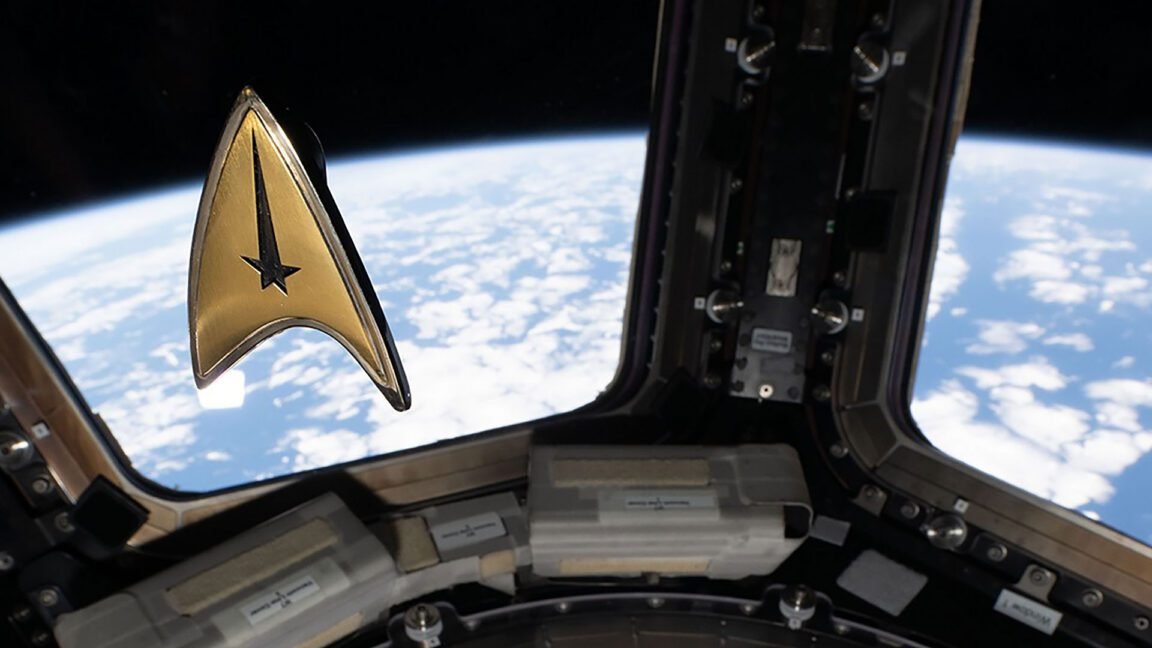
Sixty years after television audiences first tuned in to see the voyages of the Starship Enterprise, an astronaut on board the International Space Station has paid tribute to Star Trek by flying the badge of the franchise’s latest fictional captain.
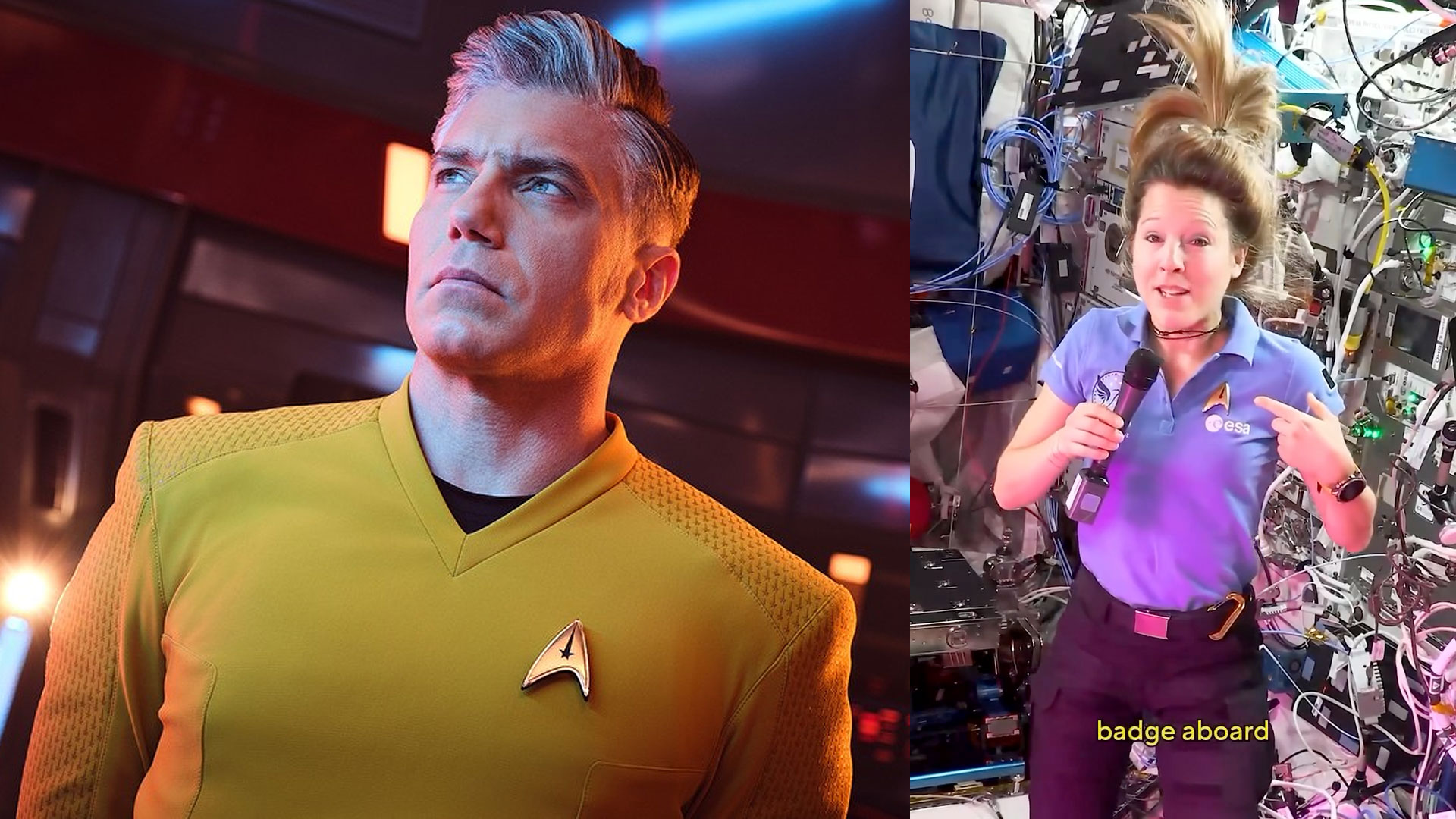
Expedition 75 flight engineer Sophie Adenot with European Space Agency (ESA) donned the Delta badge originally worn by actor Anson Mount for a video recorded from aboard the space station. Mount portrays Christoper Pike in the Paramount+ streaming series Star Trek: Strange New Worlds. Paramount and ESA both released the clip on their Instagram feeds.
“For 60 years, Star Trek has brought us stories of friendship and exploration. I’m wearing Captain Pike’s badge aboard the ISS in celebration of continuing the real world work of science and exploration,” said Adenot. “For me, exploration and science are about curiosity and cooperation daring to go a little farther together, learning from what we discover and build, and turning that knowledge into a better future for everyone.”
“Happy 60th Star Trek. Live long and prosper,” she said, displaying the traditional Vulcan salute.
“Explore. Discover. Do it together.”
In a post accompanying the video, ESA said that the pin was flown by Adenot as part of her European “Epsilon” mission as a way of representing what Star Trek has in common with the ongoing effort by humanity to explore.
“It’s a small object, but it carries something bigger—60 years of a story that taught us to dream about exploring together,” reads the agency’s post. “For more than 50 years, that’s exactly what we’ve been doing. We’ve sent people and machines beyond Earth, built spacecraft with partners from dozens of countries and kept asking the same question Star Trek never stopped asking: what’s out there, and what can we learn from it?”
“Science fiction imagines the future. We build it,” ESA officials wrote. “From the crew of the USS Enterprise to the crews on the International Space Station, the mission hasn’t really changed. Explore. Discover. Do it together.”
For almost half of the time since “The Original Series” introduced the world of Starfleet and the United Federation of Planets, representatives from 12 countries have maintained a continuous human presence in Earth orbit on the International Space Station. An additional 14 nations have sent visitors.
“What if” into “why not”
Adenot “boldly” went where no female citizen of France had gone before when she became the first French woman to perform a spacewalk earlier this year. She was not, however, the first to sport a Star Trek costume piece in space.
Italian astronaut Samantha Cristoforetti, also with ESA, paid tribute to the franchise’s first female captain, Katherine Janeway, by wearing a uniform like hers while become the first astronaut to brew an espresso on the space station in 2015. Cristoforetti quoted Janeway (played by actress Kate Mulgrew) when later describing the experience, “Coffee: the finest organic suspension ever devised.”
Throughout the past six decades and its television series and movies, Star Trek has paid tribute to real space exploration history, all while scientists and engineers have worked to bring the technology invented for the show to reality. The tablet computers, handheld medical devices, and replicators (3D printers) used on Earth and on the station were first seen in space on Star Trek.
“So here’s to 60 years of a series that turned ‘what if’ into ‘why not’ and to every explorer it sent looking up at the stars,” ESA’s officials wrote.




 after the Starship Enterprise premiered.)