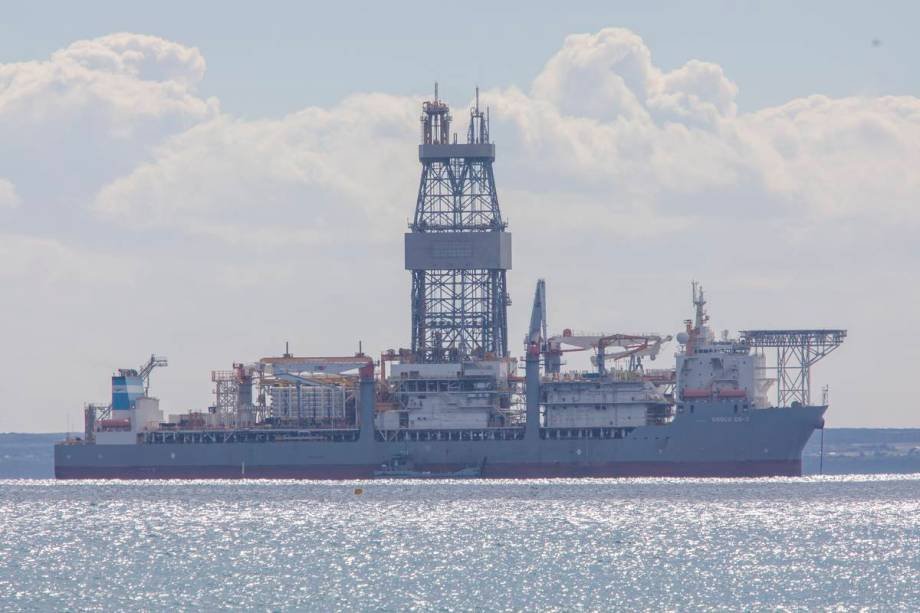
Cyprus presents one of the Eastern Mediterranean’s most striking energy contradictions. It possesses commercially promising offshore gas fields, yet its electricity system remains isolated from the European grid, dependent on imported fuels and increasingly unable to absorb all the solar power generated on the island.
For Nicosia, therefore, the central question is not simply how much gas can be extracted. It is whether Cyprus can convert offshore resources, electricity cables and strategic geography into durable diplomatic influence—without allowing energy to deepen the political divisions already shaping the Eastern Mediterranean.
Gas without an export system
The discovery of the Aphrodite field in 2011 appeared to promise Cyprus a new geopolitical role. Estimated to contain approximately 4.5 trillion cubic feet of gas, the field attracted Chevron, Shell and Israel’s NewMed Energy. Yet discovery alone did not produce power or revenue.
Gas beneath the seabed has little strategic value until financing, infrastructure, markets and political agreements bring it into the regional economy.
The approval of the Aphrodite development plan in February 2025 was therefore significant. The proposed project includes offshore production facilities and a subsea connection to Egypt.
Cyprus has chosen cooperation rather than attempting to construct an expensive independent liquefied natural gas industry. Agreements covering Aphrodite and the Eni-TotalEnergies-operated Cronos field envisage sending Cypriot gas to Egypt, where existing infrastructure can process it for the Egyptian market or re-export it as LNG.
In March 2026, Egypt and Cyprus signed another framework agreement supporting negotiations over the commercialisation of Cypriot gas. QatarEnergy and ExxonMobil subsequently joined Egypt in studying development options for other discoveries off Cyprus.
This is energy diplomacy in practice. Cyprus provides reserves, international companies supply capital and technology, Egypt offers infrastructure and market access, while Europe represents a potential destination.
Nicosia’s influence does not arise from possessing the region’s largest reserves, but from inserting itself into a wider network of mutually valuable relationships.
READ: Can Syria turn foreign power into national power?
The last electricity island
The paradox becomes sharper on land. Cyprus remains disconnected from the continental European electricity system. Its small, isolated grid depends substantially on imported fossil fuels and lacks the flexibility that cross-border electricity trading could provide.
The result is not merely expensive electricity. It also limits the island’s ability to exploit one of its most abundant domestic resources: sunlight.
Cyprus reportedly curtailed 47 per cent of its potential solar generation in 2025, largely because its isolated grid and inadequate storage capacity could not absorb production during periods of excess supply. A country seeking regional relevance through gas is simultaneously wasting domestically generated renewable electricity.
The proposed Great Sea Interconnector is intended to change this condition. The bidirectional subsea cable would initially connect Greece and Cyprus, with a later extension to Israel. In principle, it would allow Cyprus to import electricity when necessary, export surplus renewable power and integrate more solar generation without destabilising its grid.
The European Union has already committed €657 million to the project. Yet the planned Greece-Cyprus section, estimated at around €1.9 billion, has encountered financing uncertainty and possible cost increases. Cyprus’s energy minister acknowledged in May that the project could require additional funding.
The project has also been affected by disputes over maritime jurisdiction and opposition from Türkiye to survey activities in contested waters. The interconnector therefore embodies both the promise and the danger of energy diplomacy. A cable can reduce physical isolation, but its construction creates questions about cost, regulation, sovereignty and strategic alignment.
Energy strategy cannot escape the Cyprus question
No serious assessment of Cypriot energy strategy can ignore the island’s division or its difficult relationship with Türkiye.
An energy architecture built exclusively around Cyprus, Greece, Egypt and Israel may strengthen Nicosia’s partnerships, but Ankara is likely to interpret it through the politics of exclusion and disputed maritime boundaries.
Infrastructure designed to improve energy security could consequently reinforce rival geopolitical blocs unless accompanied by credible diplomatic engagement.
Israel’s inclusion introduces substantial political, ethical and strategic risk. Although an eventual Cyprus-Israel electricity link is presented as a means of strengthening grid resilience, critical energy infrastructure cannot be insulated from the consequences of the war in Gaza.
Deeper energy integration with Israel may expose Nicosia to growing regional criticism and complicate its attempt to present Cyprus as a neutral bridge between Europe and the Middle East.
Energy partnerships that ignore the political environment in which they operate may create new vulnerabilities even as they promise greater security.
For Cyprus, the strategic objective should not be to use energy partnerships to construct another rigid regional bloc. It should be to create options.
Gas exports through Egypt provide one option. Electricity integration with Europe provides another. Battery storage, grid modernisation and renewable energy reduce domestic vulnerability. Carefully designed arrangements involving neighbouring states could eventually widen the diplomatic value of this network.
The same principle that applies to other resource-constrained Middle Eastern states applies to Cyprus: energy security does not require the elimination of dependence. It requires preventing dependence on any single route, market or political relationship from becoming coercive leverage.
Jordan’s energy diplomacy: The power of being in between
From offshore reserves to diplomatic capacity
Cyprus should measure its energy strategy against three tests.
First, offshore gas must produce public value rather than remain a succession of announcements and memoranda. Commercial agreements require transparent terms, credible timelines and safeguards against excessive dependence on individual companies or export routes.
Second, the country must treat electricity interconnection, storage and grid reform as seriously as gas extraction. Exporting gas while curtailing solar electricity would reproduce the regional habit of prioritising external energy status over domestic resilience.
Third, energy diplomacy must manage political geography rather than pretend it does not exist. Projects that harden regional divisions may deliver infrastructure while making long-term cooperation more difficult.
Cyprus has gas beneath the sea, sunlight above it and a strategic position between Europe and the Middle East. None of these automatically creates power.
Its real opportunity lies in connecting them: using Egyptian infrastructure without becoming captive to one export route, joining Europe’s electricity system without turning the cable into another geopolitical fault line, and converting natural resources into a more resilient domestic economy.
The measure of Cyprus’s energy power will not be how much gas it discovers. It will be whether an isolated island can build networks valuable enough to expand its diplomatic choices—and inclusive enough not to reproduce the conflicts surrounding it.
The views expressed in this article belong to the author and do not necessarily reflect the editorial policy of Middle East Monitor.