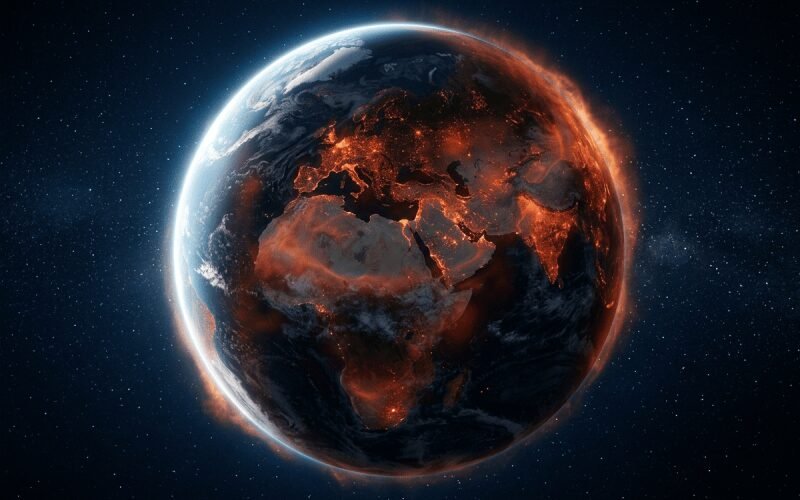
Global temperatures are likely to exceed the key 1.5 degrees Celsius (2.7 degrees Fahrenheit) warming threshold within a few years, the United Nations Environment Programme said Wednesday, warning of more extreme weather and growing pressure on ecosystems, glaciers and low-lying coastal cities.
UNEP said bringing global temperature increases back below 1.5C remained possible but was “highly uncertain” and would require rapid cuts in greenhouse gas emissions, alongside measures to remove carbon dioxide already in the atmosphere.
The warning comes as countries face the growing likelihood that the temperature target set under the 2015 Paris Agreement will be temporarily exceeded.
UNEP urges focus on limiting the duration of any overshoot
Under the Paris Agreement, governments committed to keeping the rise in global temperatures within 1.5C above pre-industrial levels in an effort to limit the impacts of extreme weather.
With a temperature “overshoot” now considered extremely likely, countries should focus on limiting how long global temperatures remain above the 1.5C threshold, UNEP said in its report.
“Every year of delay and every fraction of a degree above 1.5C increases risks and makes recovery harder, with irreversible losses possible even if temperatures later decline,” the agency said.
The most optimistic scenario would see global temperatures peak at 1.8C above pre-industrial levels if all existing national pledges are implemented. However, UNEP said warming was likely to be significantly higher.
“Under current policies, median projected global warming reaches around 2.6C by 2100,” the report said.
UNEP also said carbon dioxide removal measures, including planting new forests, would be “critical” to controlling rising temperatures.
However, the agency stressed that such measures could not replace deep cuts in current emissions.