Pakistan’s latest diplomatic push on the Iran-US conflict has revived an old question about Islamabad’s regional role: is it merely carrying messages between Washington and Tehran, or has it developed enough political access and credibility to act as an independent mediator?
Field Marshal Syed Asim Munir’s August 24 visit to Tehran points toward the latter. The trip was the latest stage in a sustained Pakistani effort involving Prime Minister Shehbaz Sharif, Deputy Prime Minister and Foreign Minister Ishaq Dar, Interior Minister Mohsin Naqvi and the country’s military leadership.
Islamabad has maintained channels with both Washington and Tehran throughout the conflict, seeking to narrow differences, contain escalation and preserve a path toward a negotiated settlement.
Reuters reported that US President Donald Trump spoke with Munir before the Tehran visit and asked Pakistan to use its influence to encourage Iran to return to negotiations.
But interpreting the visit primarily as a mission undertaken on Washington’s behalf misses the broader context. Pakistan’s Foreign Office has rejected descriptions of Munir as Trump’s envoy, presenting the trip as part of Islamabad’s continuing mediatory role.
That distinction is supported by the two-way nature of Pakistan’s engagement. Diplomatic sources in Washington have indicated that Islamabad has conveyed American proposals to Tehran while relaying Iranian proposals to Washington, together with its own assessments.
This goes beyond straightforward message-carrying and suggests an effort to narrow differences between the two sides.
A diplomatic track built over months
Pakistan’s mediatory role predates Munir’s latest interaction with Trump.
The most tangible product of that diplomatic track was the Islamabad Memorandum of Understanding, signed in June between the United States and Iran, with Pakistan acting as mediator and witness.
The agreement provided for a cessation of military operations, commercial passage through the Strait of Hormuz and a framework for negotiations toward a broader settlement. Subsequent talks in Switzerland included Iran, the United States and mediators Pakistan and Qatar.
The agreement later frayed amid disputes over sanctions, implementation and Hormuz. Yet it remains the clearest negotiated framework produced during the conflict and gives Islamabad something more substantial than informal message-carrying: an existing diplomatic architecture around which talks could potentially be rebuilt.
Pakistan’s current effort is therefore less about constructing a new negotiating process than preserving and reviving an existing one.
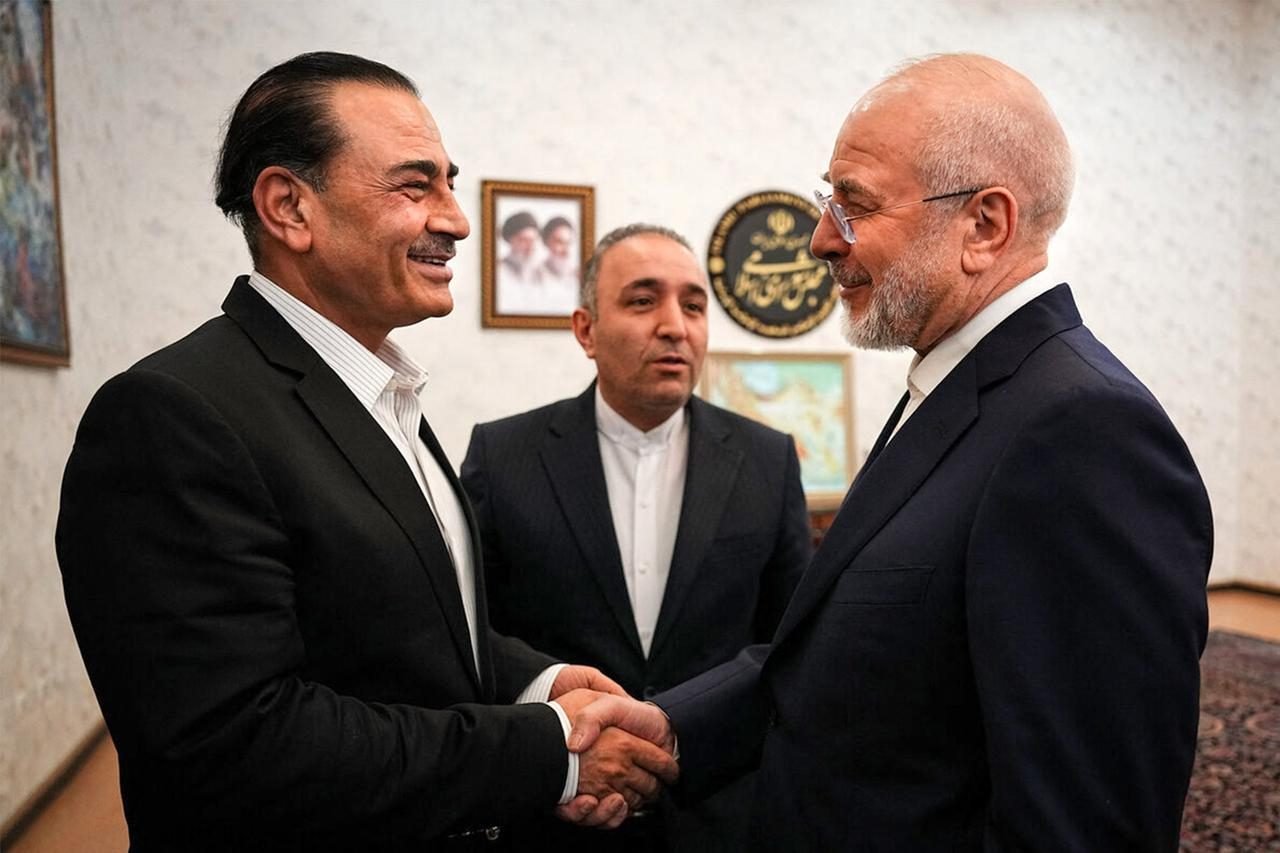
FM Asim Munir’s Tehran visit should be viewed in this context. Accompanied by Naqvi, he met senior figures across Iran’s political and security establishment. Discussions focused on de-escalation, negotiations, Hormuz and prospects for ending hostilities.
Iran’s presidential office described the visit as highly productive and said it had yielded significant diplomatic achievements whose results would become apparent later.
Iranian officials have also publicly acknowledged Pakistan’s constructive efforts toward dialogue and de-escalation. That recognition matters because effective mediation requires political acceptability on both sides.
None of these amounts to a breakthrough. No comprehensive settlement has been announced. But Tehran’s positive characterization of Pakistan’s engagement, together with its continued treatment of the Islamabad MoU as a possible basis for renewed diplomacy, strengthens Islamabad’s position as a potential bridge between the two sides.
Tehran’s position remains conditional. It wants Washington to address what it regards as violations of the earlier understanding before the framework can be fully restored. Nevertheless, the continued relevance of the MoU suggests that Pakistan is seeking to revive a diplomatic process that predates Washington’s latest request for its assistance.
Why Munir’s access matters
Munir’s role illustrates an unusual feature of the present crisis: diplomacy with Iran cannot be separated entirely from engagement with its security establishment.
His meetings included General Mohsen Rezaei, the Supreme Leader’s representative on Iran’s Supreme National Security Council. Such access gives Islamabad an additional channel for assessing whether Iran’s civilian and security establishments are prepared to support renewed diplomacy.
Pakistan also has compelling reasons of its own to prevent a prolonged conflict. Instability around Hormuz threatens energy markets and maritime commerce, conflict along Iran’s borders creates security pressures, and sustained US-Iran confrontation complicates Islamabad’s relationships across the Gulf.
Mediation therefore reflects Pakistan’s own strategic interest in preventing further escalation and preserving regional stability. Washington clearly wants Pakistan to use its influence with Tehran, but transmitting proposals between adversaries is an inherent part of mediation.
The more important test is whether Islamabad maintains access to both sides and contributes to shaping a negotiating process rather than simply representing one party’s position. Its recent diplomacy suggests that it does.
Hormuz offers a possible opening
The Strait of Hormuz may provide the clearest test of whether renewed diplomacy can produce tangible results.
Disruption through one of the world’s most important energy corridors affects Gulf states, Asian importers and global markets. Progress toward stabilizing navigation through the strait could therefore provide an initial confidence-building measure even if the wider political dispute remains unresolved.
Recent Oman-Iran talks have produced movement on this issue. Omani Foreign Minister Badr Al-Busaidi’s visit to Tehran resulted in a phased approach involving a temporary navigation corridor, mine clearance, information exchange and traffic management, while technical discussions continue over a more permanent arrangement.
The Omani and Pakistani initiatives need not be competing tracks. Oman can help develop practical arrangements around Hormuz, while Pakistan’s access to Washington and Tehran can support the broader political process needed to sustain them.
A maritime arrangement could reduce an immediate source of confrontation, while a revived Islamabad framework could address wider questions involving sanctions, military restraint and reciprocal implementation.
Together, these tracks offer a possible route from military pressure toward incremental de-escalation.
The coming test
Fundamental differences remain. Tehran has not publicly indicated readiness to make unilateral concessions, while Washington continues to use sanctions and military pressure as leverage.
Reports of possible American proposals involving sanctions relief in return for movement on Hormuz and regional security have yet to produce a publicly confirmed agreement. Progress should therefore not be confused with a breakthrough.
Pakistan cannot dictate the choices of either Washington or Tehran, nor can Munir resolve the structural disagreements sustaining the conflict. The success of mediation ultimately depends on whether both sides conclude that negotiation offers greater benefits than continued coercion.
Pakistan’s diplomatic relevance instead lies in its ability to preserve communication when direct engagement becomes difficult. Islamabad remained involved when the earlier agreement faltered and has maintained contacts with both sides as tensions intensified.
That continuity is what makes Munir’s Tehran visit significant. Rather than a one-off mission undertaken for Washington, it forms part of a broader Pakistani effort to preserve communication, revive the Islamabad framework, reduce tensions around Hormuz and create conditions for a negotiated settlement.
Pakistan has consequently helped preserve something strategically valuable: a functioning channel between two adversaries whose mutual distrust repeatedly pushes them toward escalation.
If the latest talks produce tangible movement, Pakistan’s significance will lie not in choosing between Washington and Tehran, but in showing it can speak credibly to both —and help turn the first signs of a climbdown into a sustainable diplomatic process.
Saima Afzal is a researcher specializing in South Asian security, counterterrorism, and broader geopolitical dynamics across the Middle East, Afghanistan and the Indo-Pacific. She is currently a research scholar at Justus Liebig University, Germany.