Some 340 public, private, technical, and vocational schools have been damaged in the recent Israeli military campaign, including 17 that were completely destroyed
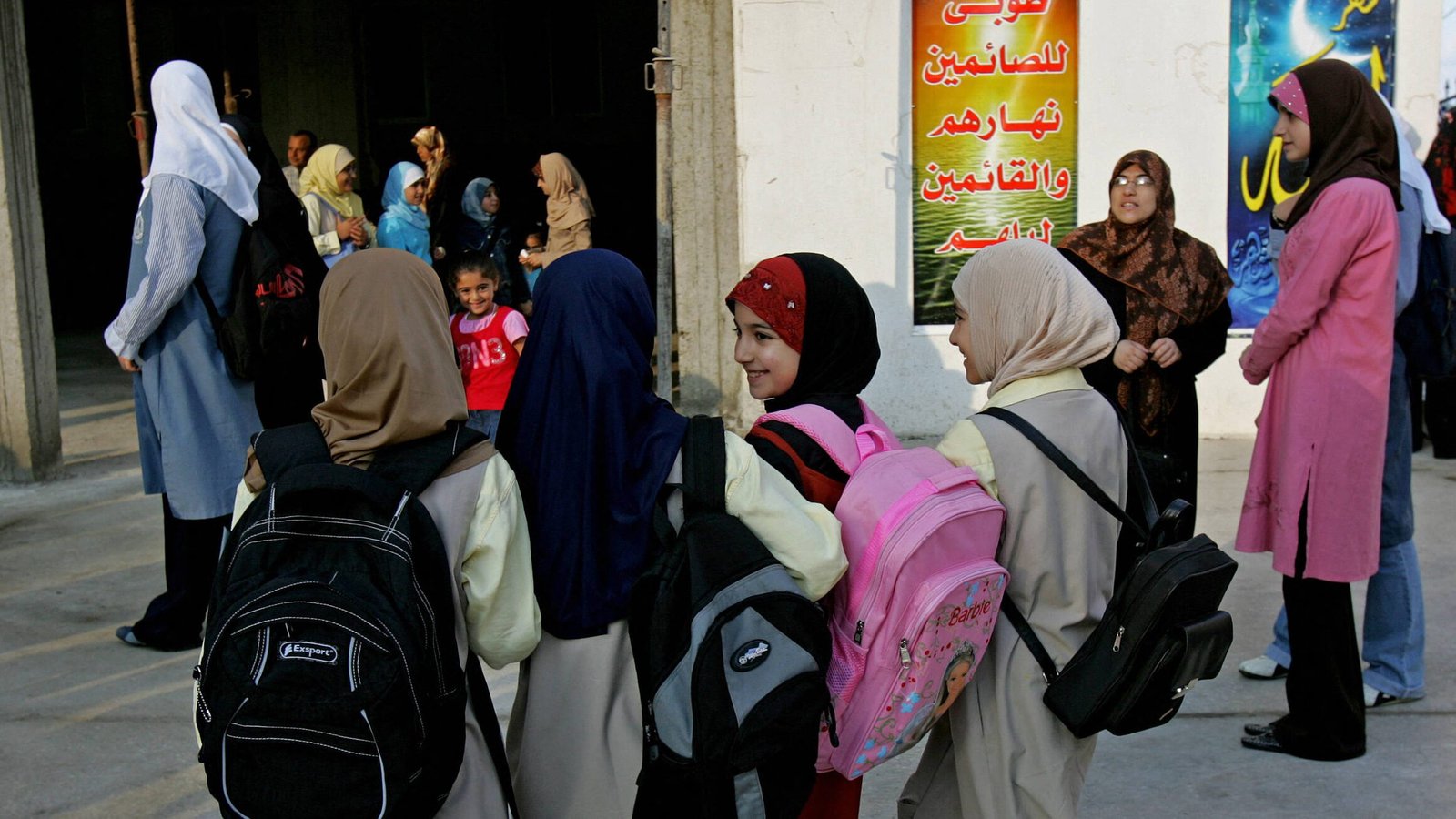
Mariam watches her children closely. Like many children across Lebanon, they have not attended school for weeks. Summer vacation ordinarily gives families time together, but displacement has left Mariam uncertain whether her children will have a classroom to return to in September.
We have nothing to do; we don’t know when they’ll be able to go back to school
“We have nothing to do; we don’t know when they’ll be able to go back to school,” she said a few meters from the tent serving as the family’s temporary home. “Or even if the school will still be there when we get back,” she whispered to The Media Line, expressing a fear she prefers not to share with her children.
Israeli military operations, which began when Hezbollah attacked Israel on March 2 during the conflict with Iran, added another period of disruption to the education of Lebanon’s children. Although a ceasefire announced in April reduced some fighting, continued strikes and displacement have prevented many families from returning to their homes and schools.
US-brokered Israel-Lebanon talks center on “pilot zones” in southern Lebanon, where Israeli troops would withdraw as the Lebanese army takes control and removes Hezbollah’s armed presence. Hezbollah has rejected disarmament, while Israel says it continues striking the group’s weapons and infrastructure because they retain the capability to attack Israeli territory.
The United Nations Children’s Fund (UNICEF) warned on July 2 that at least 100,000 children could begin the next academic year without classrooms unless damaged schools are repaired before September.
“The education system continues to face a major and urgent challenge: not only creating conditions for children to make up for the months lost due to the conflict, but also ensuring that every child has a safe place to learn when the new school year starts in September,” a UNICEF representative in Lebanon told The Media Line.
Lebanon’s Ministry of Public Health recorded 4,333 deaths between March 2 and July 27, including 253 children, according to a report issued July 28. More than 12,000 people were injured, including more than 1,000 children. The ministry did not provide a complete breakdown distinguishing civilians from combatants.
The latest war is one more crisis for children whose education has been repeatedly interrupted since Lebanon’s economic collapse began in 2019. The World Bank has described that collapse as one of the world’s most severe economic crises since the mid-19th century.
Months later, the coronavirus pandemic came, followed by the Beirut port explosion in August 2020. Cross-border fighting between Hezbollah and Israel began when Hezbollah fired missiles into Israel’s territory the day after Hamas’ Oct. 7, 2023, massacre.
A ceasefire took effect that November, but another war began March 2, 2026, after Hezbollah fired on Israel in response to US-Israeli strikes in Iran.
For the last six or seven years, the crises have continued, so if we think about a boy or girl who is 10 years old today, it means they have been affected by all of them
“For the last six or seven years, the crises have continued, so if we think about a boy or girl who is 10 years old today, it means they have been affected by all of them,” the UNICEF representative said.
Repeated interruptions have affected children’s education, mental health, well-being, and future opportunities. Lack of access to school can also increase their exposure to child labor, child marriage, exploitation, and other dangers.
Even before cross-border fighting began in October 2023, more than 700,000 children in Lebanon were missing out on education, according to UNICEF. Poverty, transportation costs, teacher strikes, the coronavirus pandemic, and Lebanon’s economic collapse had already weakened school attendance.
The latest conflict has reduced the number of available learning spaces even further. A nationwide assessment conducted by the Education Ministry in June found that 340 public, private, and vocational schools had been damaged, including 17 that were completely destroyed.
Damage was recorded in southern Lebanon, Nabatieh, the Bekaa Valley, Baalbek-Hermel, Beirut, and Mount Lebanon. Some schools require limited repairs, while others need extensive rehabilitation or complete reconstruction before they can safely reopen.
Schools have also become unavailable because they were converted into shelters. On April 9, UNICEF reported that 365 public schools and 58 vocational institutions were among 669 collective shelters operating across Lebanon.
By late May, hundreds of schools remained in use as shelters, had sustained severe damage, or were located in areas directly affected by fighting. UNICEF estimated that approximately 165,000 children were learning remotely because their schools had been converted into shelters or closed because they were in conflict zones.
The Education Ministry has sought to return some of the facilities to their original purpose as displaced families leave collective shelters or move elsewhere.
The prolonged disruption is already affecting children’s development, UNICEF warned.
“Besides the physical and psychological effects caused by the trauma, there can be serious long-term repercussions on children’s cognitive and emotional development and their future development opportunities,” the UNICEF representative said.
Conflict disrupts routines throughout a family, but for young children, separation from home and school can also damage the sense of stability on which their development depends.
“Of course they understand what’s happening,” Mariam said from a makeshift displacement camp on the Beirut waterfront. “I hope it ends soon,” she added, explaining that the family could hear bombing from the camp.
Of course they understand what’s happening. I hope it ends soon.
Some schools have revived distance-learning systems developed during the coronavirus pandemic and adapted during the 2024 war. Remote classes have provided a measure of continuity, but unreliable internet service, limited access to electronic devices, electricity shortages, and the conditions inside crowded shelters prevent many children from participating consistently.
“For children, a school is much more than a building; it’s a place to learn, feel safe, reconnect with friends, and begin to recover from difficult experiences,” the UNICEF representative said.
“Ensuring children can return to school isn’t just about restoring classrooms, but also about protecting their well-being, supporting their recovery, and safeguarding their future. It’s crucial that they can return to school to continue learning and to feel a sense of normalcy again,” the representative added.
One of the 17 schools listed as completely destroyed was Marwahin Public High School in southern Lebanon, which Israeli forces demolished April 16.
The Israeli military said Givati Brigade troops had found more than 130 items of Hezbollah military equipment in a school facility. Arabic-language military spokesperson Lt. Col. Ella Waweya published photographs showing soldiers and weapons but did not provide exterior images that clearly established they had been taken at Marwahin Public High School.
Lebanese Education Minister Rima Karameh condemned the demolition and said no military personnel or civilians were present in the building. Her statement addressed whether the school was occupied at the time, not whether weapons had previously been stored there.
Legal Agenda subsequently challenged the provenance of the Israeli military’s photographs. The Lebanese nonprofit reported that a judicial source and several lawyers identified the pictured location as the Bint Jbeil courthouse, where confiscated weapons bearing defendants’ names and case numbers were being held. The Israeli military does not appear to have publicly responded to that allegation.
Schools are ordinarily protected as civilian objects under international humanitarian law, but they can lose that protection if they are used for military purposes and thereby become military objectives. Even then, the laws of war continue to require distinction, proportionality, and feasible precautions.
The IDF has reported several cases of Hezbollah storing or deploying weapons in and near schools in southern Lebanon. In March 2026, troops found hundreds of weapons and explosives inside a school in Al-Khiyam, according to Israel’s military, while an April raid in Bint Jbeil uncovered more than 130 weapons, an observation post and a nearby tunnel network containing additional arms.
However, the available public information does not independently establish whether weapons were stored at Marwahin Public High School, where the Israeli military’s photographs were taken, or the precise military justification for demolishing the building.