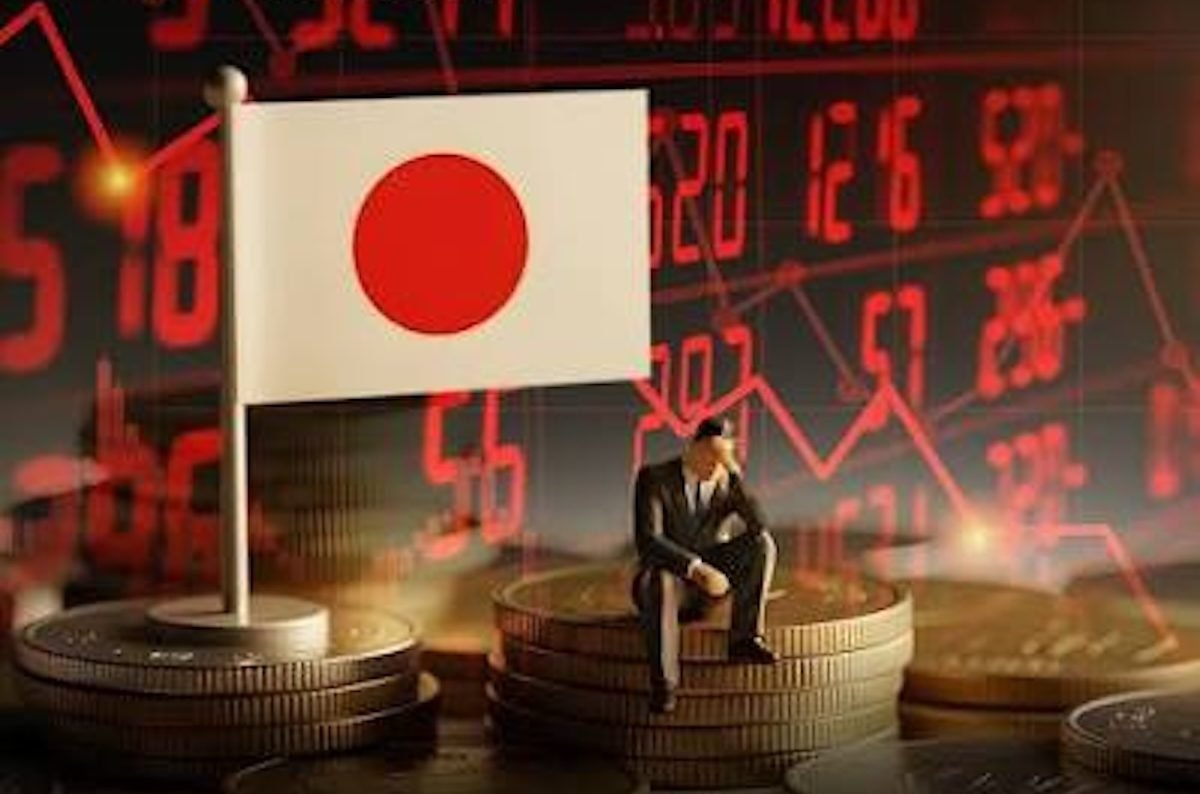
NEW YORK – As global bond yields spike amid the latest Middle East tremors, Japan is at the epicenter.
Surging US Treasury rates are getting most of the attention – even from geopolitical observers like Eurasia Group’s Ian Bremmer, who notes that the “Treasury will struggle to hold down long-term yields, as Congress has no appetite for fiscal consolidation and the Federal Reserve is moving in the opposite direction.”
Last week, Treasury Secretary Scott Bessent’s department had to pay 4.683% to sell $42 billion of 10-year notes – the highest yield since the 2007 eve of the global financial crisis.
The most recent 30-year auction drew 5.216%, the highest since 2001, and rates on outstanding 30-year Treasuries hit 19-year highs. Global investors are demanding more to finance Washington’s nearly $40 trillion debt. The pressure is rippling outward, pushing yields higher from Canada to the Eurozone to the UK to South Korea to Japan.
“Global bond markets have caught on fire,” says Brookings Institution economist Robin Brooks. “Reckless fiscal policy is catching up with governments.” At this point, he says, “it should be clear that something very unusual is going on.”
Barclays strategist Anshul Pradhan adds a telling detail: three separate US economic releases this month pointed toward lower yields – yet long-end yields rose anyway. The pressure, he says, is now strong enough to override individual data surprises. Investors are combing the debt markets for cracks, wary of a repeat of the 2023 regional-bank panic sparked by Silicon Valley Bank’s collapse.
Nowhere is the pressure building faster than in Japan – and given the Bank of Japan’s role as a kind of global ATM, a Japanese bond crisis could be the most dangerous of all.
The yen has been testing 40-year lows as Japanese government bond (JGB) yields climbed to a 29-year high of 2.8%. Tokyo’s crushing debt load is one culprit; another is the sense that the BOJ is behind the curve as stagflation risk builds. That’s pushed Prime Minister Sanae Takaichi to signal she’d accept a BOJ rate hike as soon as September 16 – a striking reversal from last October, when she called the idea of raising rates “stupid.”
Her party has come around to the view that a weak yen is importing inflation too fast. The BOJ’s own research team just cut its GDP forecast for the current fiscal year to 0.9%, from 1.3% – less than half its 2.2% inflation forecast for the same period. Inflation risk keeps skewing higher as the Iran war drags on.
That combination – inflation outrunning wages – is classic stagflation, and it’s dragging down Takaichi’s approval rating, which has slipped below 50% for the first time. Her response has been to push for cutting the consumption tax and ramping up spending. That whiff of looser fiscal policy is exactly what has spooked the “bond vigilantes” and driven JGB yields to three-decade highs.
The prospect of the BOJ hiking rates just as the government loosens fiscal policy – with the US and Japan simultaneously intervening to prop up the yen – has currency traders unsure which way to lean. It’s also reviving fears about the “yen-carry trade” unwinding.
Twenty-seven years of near-zero BOJ rates turned Japan into the world’s top creditor nation, as funds borrowed cheap yen to chase higher yields elsewhere. That trade is one of the most crowded in global markets – and one of the most prone to violent unwinding, perhaps now more than ever.
“The Middle East conflict has prompted a revision of our growth and inflation forecasts for Japan,” says Moody’s analyst Deborah Tan, adding that higher inflation and fiscal support are compounding the pressure on JGB yields.
Takaichi bears some of the blame herself. Before taking office, she rattled bond markets with talk of larger tax cuts and heavier stimulus – a plan her predecessor, Shigeru Ishiba, had already warned against. In May 2025, Ishiba said Tokyo’s finances were “worse than Greece,” pointing to a 260% debt-to-GDP ratio and the fastest-shrinking population in the developed world.
Morgan Stanley MUFG economist Koichi Sugisaki notes that JGB yields have kept climbing “even with many market participants away on summer vacation.” He says Bessent’s recent comments, following joint US-Japan yen-buying intervention, have convinced markets the BOJ will likely speed up its hiking cycle to defend the currency – which is why Bessent’s team funded the intervention by selling euros, not dollars.
The yen’s slide has Bessent’s attention for a self-interested reason: Turmoil in JGBs could spill into the $31 trillion US Treasury market. Japan is the largest foreign holder of Treasuries, with nearly $1.2 trillion – and a JGB crisis could force it to start selling dollars.
So Trump’s Treasury team didn’t rush to Tokyo’s aid out of “friendship,” as Trump claimed, but out of necessity. As US tariffs and military campaigns stoke global inflation, Washington is being reminded that Asian central banks effectively hold the mortgage on its ability to keep spending beyond its means.
Concern over both the yen and the yuan has revived talk of a Plaza Accord-style currency deal – one Chinese leader Xi Jinping would be almost certain to reject.
Beijing views the original 1985 Plaza Accord, which sent the yen soaring, as the opening chapter of Japan’s decades-long stagnation, and has no interest in repeating it. China has actually been propping the yuan up despite deflationary pressure that would normally weaken it – tightly managing the currency through daily fixings and capital controls, with no real revaluation possible until it becomes fully convertible.
Trump has floated a “Mar-a-Lago Accord,” but the framework he describes would try to resurrect a global trade order that no longer exists. Markets may be underestimating how much more room Xi has to resist outside pressure than Japanese Prime Minister Yasuhiro Nakasone had in the 1980s. And Tokyo, having lived through the fallout once, has little appetite to repeat the experiment.
Yet Takaichi’s fiscal plans risk doing exactly that, fueling comparisons to Liz Truss’s brief, disastrous tenure as UK prime minister. In late 2022, Truss tried to push an unfunded tax cut past bond traders and triggered a market meltdown that forced her from office within weeks. It’s a cautionary tale for Takaichi as her party weighs tax cuts without offsetting revenue.
Brooks at Brookings calls JGBs “deeply distressed,” noting Japan’s 10-year forward yield has risen more over the past ten days than any other major market, followed by the UK, France, and Italy. “Markets are homing in on the most vulnerable places,” he says.
As the economy loses altitude, so may Takaichi’s political capital – for pursuing constitutional revision, for vital economic reforms, and for simply staying in office. Japan’s revolving door of leadership tends to spin about once a year. Most Japanese prime ministers since the late 1990s have lasted roughly that long. Shinzo Abe was the exception, holding power for nearly eight years – and even he barely dented his economic agenda.
That’s the trap Takaichi faces: She’ll need far more than a year in office before her party fully embraces her broader agenda– but the Iran war and Trump’s unpredictability have already pushed her back toward her ideological roots, leaving little room to address Japan’s deeper economic frailties.
As Japan’s first female prime minister, she’s a genuine trailblazer. But as a committed disciple of 2012-2020 Prime Minister Shinzo Abe’s stimulus-heavy growth strategy, she’s offering more of the same at a moment that calls for something new.
The core “Abenomics” problem was never originality – it was always a list of steps Japan should have taken a decade earlier, executed at a glacial pace. Doubling down on it now may eventually test the patience of international investors who’ve pushed the Nikkei 225 to record highs this year and JGB yields upward, too.
Takaichi’s tilt toward looser fiscal policy has spawned what Mizuho Securities economist Yusuke Matsuo calls “Takaichi trades” – bets on a weaker yen, a steeper JGB yield curve, and higher stocks. But that puts her at odds with a BOJ that keeps leaning toward tighter policy; in June, the Ueda-led BOJ raised its benchmark rate to a 31-year high of 1.0%.
With Japan sliding into stagflation just as Takaichi pushes for looser spending, the central bank is caught in an increasingly untenable position.
As Brooks puts it: “Japan has run out of fiscal space and is in a debt crisis. That’s getting papered over by the BOJ, which caps yields via government debt purchases. This keeps Japan from going into a full-blown debt crisis, but it puts depreciation pressure on the yen, as the kind of risk premia markets would like to see are being artificially suppressed.” His question for investors: “Why stay in Japan if you’re not getting sufficiently compensated to do that?”