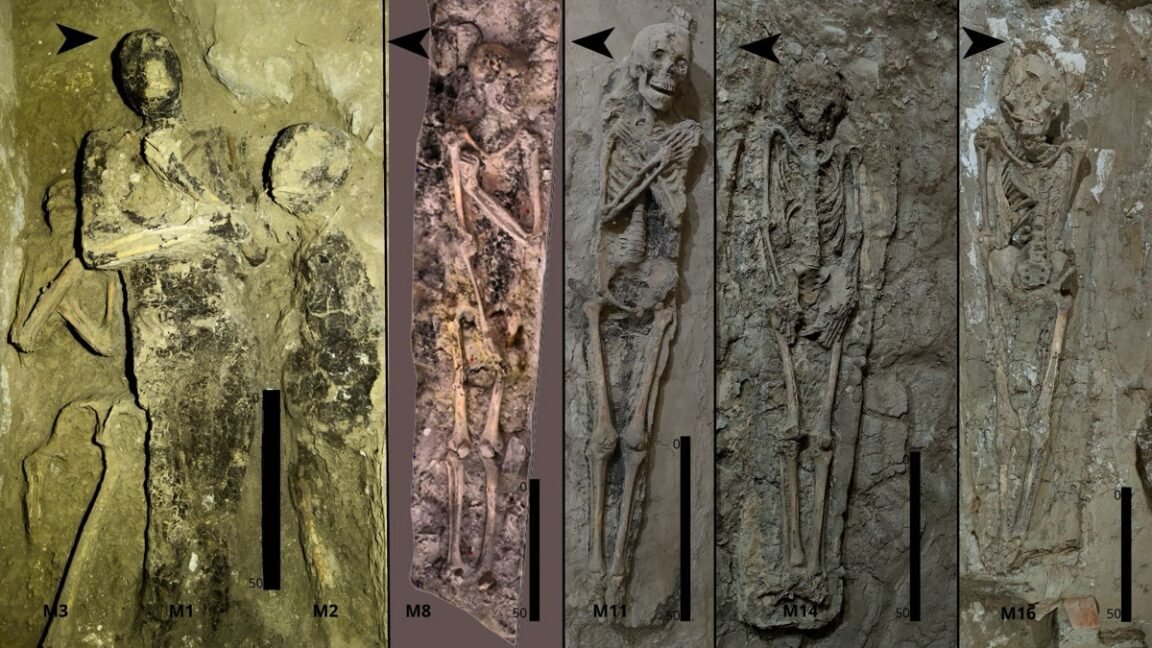
Egypt’s Theban necropolis holds over 400 tombs, a rich resource for archaeologists eager to learn more about that region’s ancient history. A new paper published in the journal Frontiers in Environmental Archaeology outlines how Egyptian burial trends likely changed over the course of centuries, shifting from individual burials in elaborate coffins to reusing earlier burial sites for later interments, resulting in greater density and the occasional superposition of bodies.
There has been prior research on the reuse of tombs in Thebes. This latest paper focused on a Theban tomb known as 209 in the western necropolis, dating back to the early 25th Dynasty (754–656 BCE) and ultimately abandoned in the Ptolemaic period (305–30 BCE). The original owner was likely a high official of Nubian origin named Nisemro. Over the centuries, the tomb was prone to repeated flash flooding due to its location within an active drainage channel of the Wadi Hatasun, so it’s a complex site, archaeologically speaking.
That made it ideal for what the authors term an “integrated archaeothanatological approach,” incorporating collected data on body position, coffin use, superpositions of remains, and stratigraphic relationships with osteological analysis in order to reconstruct the chronological sequence of the burials. They focused on a site known as Side Chamber 3, one of the main secondary areas of the tomb that was largely undisrupted.
Their excavation resulted in the discovery of 16 mummified people (1,444 bones), one mummified dog, and one chamber containing the disarticulated remains (1,775 bone fragments) of at least four other individuals. “The detailed study of the bodies indicates neither chaotic accumulation nor a loss of the original ritual over time,” said co-author Jared Carballo-Perez of the University of La Laguna in Spain. “Rather, there was a spatial logic in which each new deposition was adapted to the presence of previous bodies—a kind of funerary memory in the processes of reuse.”
For instance, the earliest burials from the 25th Dynasty were of individual burials (mummies 13, 14, 15, 16, and 17) with men and women often separated, although the authors caution against reading too much into that evidence. In the intermediate and later stages (late 25th Dynasty through the Persian phase), new bodies were placed in areas that were already occupied by mummies, resulting in increased density. Per the authors, this is consistent with observations in other Theban tombs from the first millennium BCE, roughly 80 percent of which have remains from different time periods in the same shared space, as well as evidence of material and practices from different time periods.
A “dynamic mortuary environment”
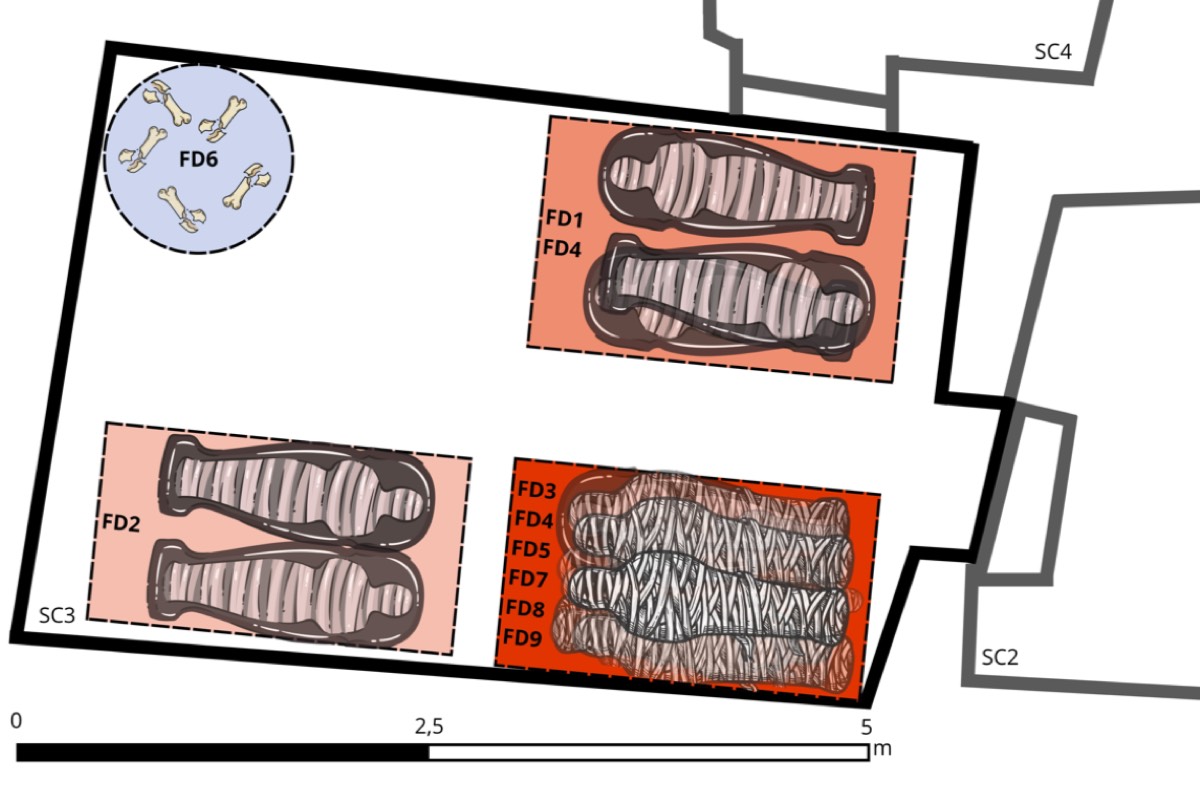
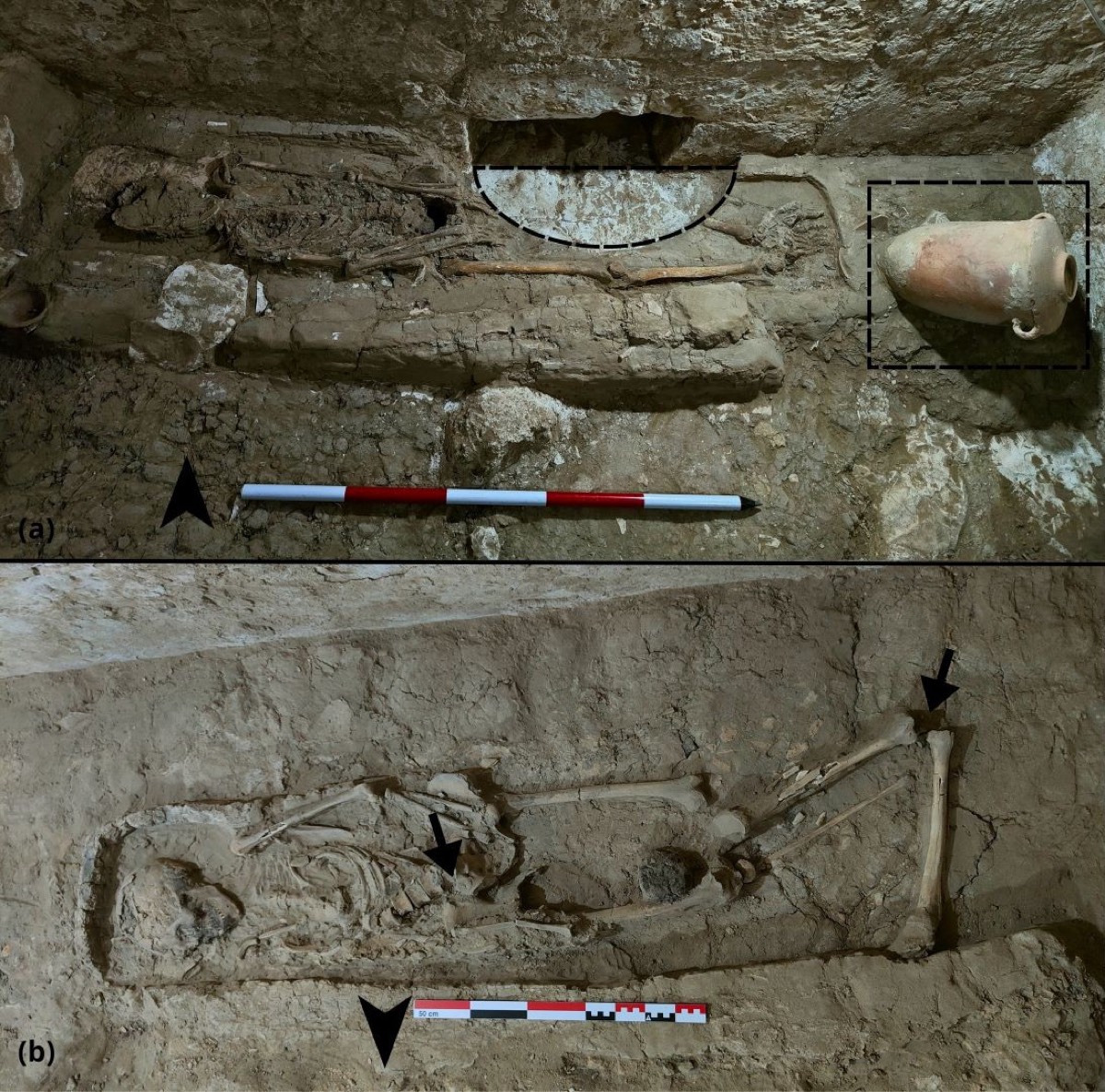
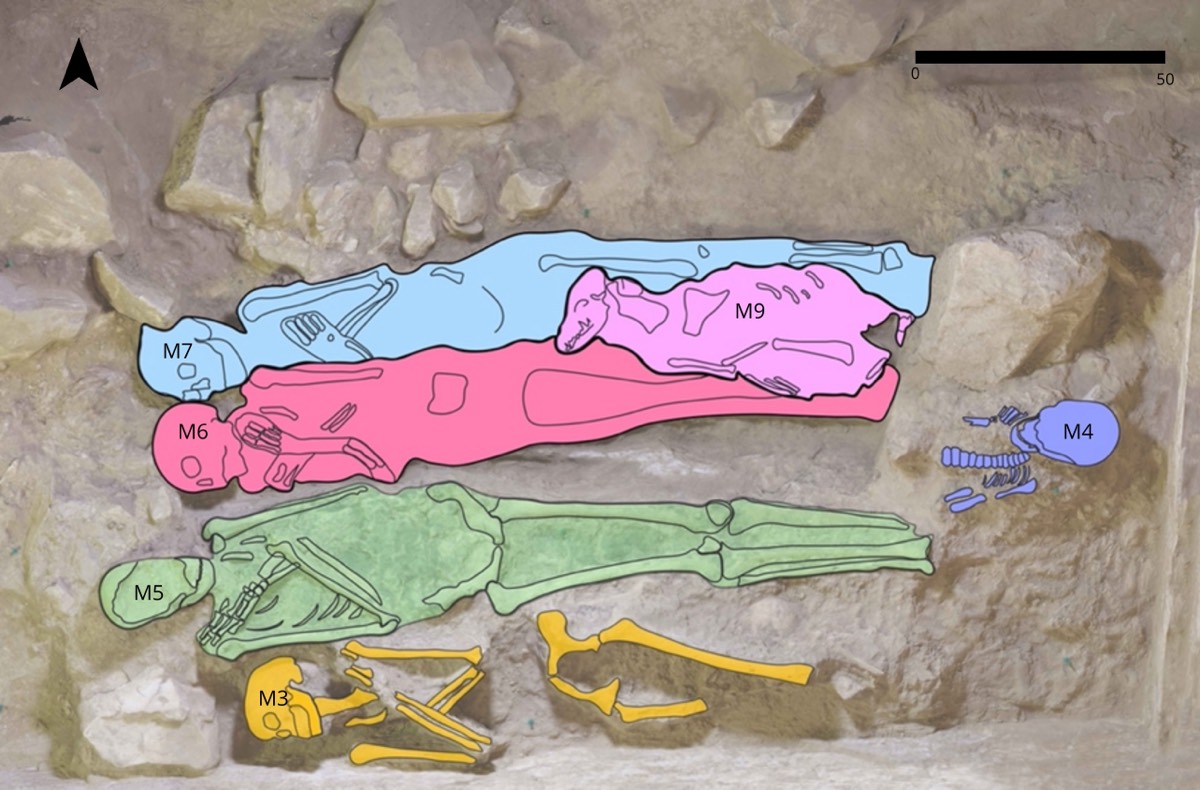
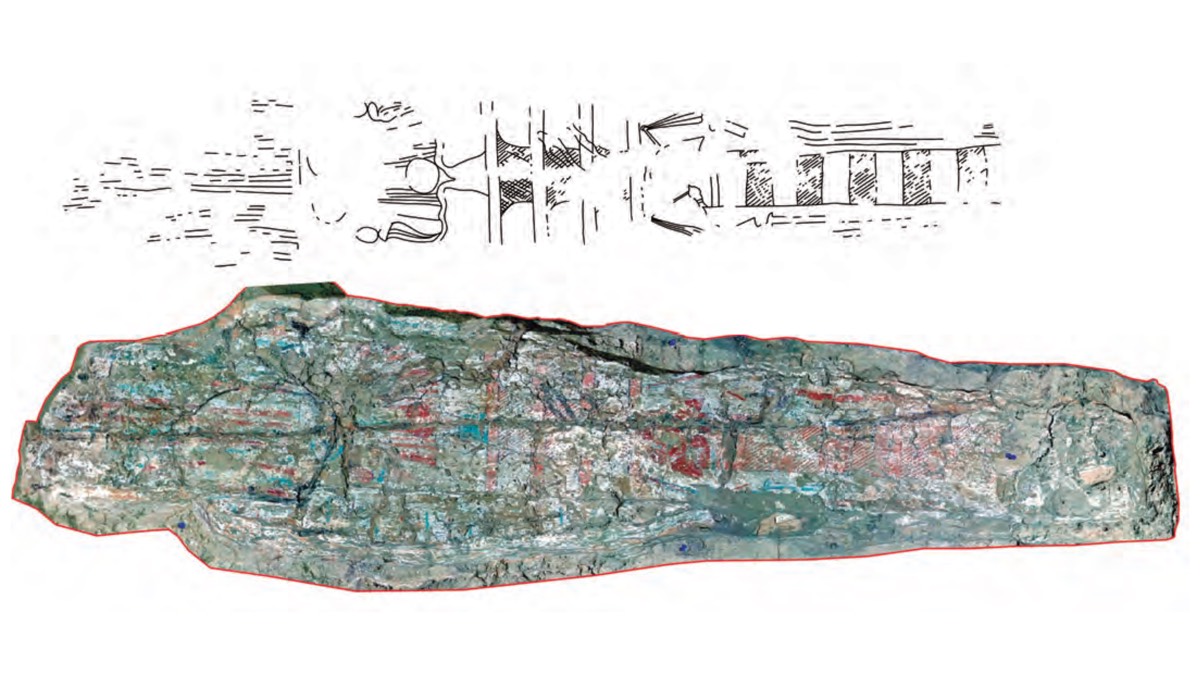
There was also a notable decline in coffin use in later stages; more reuse and vertical superposition of bodies, as opposed to bodies being laid out horizontally in the earliest stages; and evidence of coffins that had been dismantled or simply became badly degraded.
“This transformation can be understood within a wider reconfiguration of the Egyptian funerary system, in which the growing density of deposits and the reuse of earlier funerary structures reduced the capacity of coffins to act as the sole organizing frame of burial space,” the authors wrote, noting “a shift in focus towards the integrity of the body and the symbolic efficacy of the ritual, rather than the container itself.”
The authors noted changes over time in the positioning of limbs: earlier burials had the arms stretched out, while later ones had the arms folded in, for instance. The earliest phases also featured artifacts that clearly had been buried with the individuals: amphorae, incense cups, amulets, and beads, for instance. Such artifacts were increasingly more dispersed in later burial stages.
“The earliest individuals buried here appear to have been of high social standing, as they were interred in coffins, with funerary nets and amulets, and with an assemblage containing costly items, such as the contents held in Phoenician amphorae, a large number of which were found alongside them,” said co-author Miguel Ángel Molinero Polo, also from the University of La Laguna. “The bodies buried in vertical superposition did not have coffins but were carefully mummified. They also can be associated with upright jars that point to a specific ritual not found in the earlier phases of the tomb’s use.”
There was also evidence in some chambers of substantial reworking in the form of accumulated silts, sands, gravels, limestone blocks, plaster, ceramics, and other displaced materials—some due to human intervention, some possibly due to flooding. And one chamber—the one with the fragmented remains of four people—may have experienced a fire, since the remains had clearly been damaged by excessive heat (as high as 550° Celsius, or 1,022° F), particularly the crania and lower limbs.
“Overall, [this site] can be understood as a funerary space with an accumulative biography, in which reuse did not simply involve the addition of burials, but the progressive transformation of the organization, materiality, and meaning of the space itself,” the authors concluded. “Rather than acting as a passive container, the chamber can be interpreted as a dynamic mortuary environment where bodies, objects, sediments, and architectural constraints shaped the material construction of funerary continuity over time.”
Frontiers in Environmental Archaeology, 2026. DOI: 10.3389/fearc.2026.1888379 (About DOIs).