Fariba Akbari, an Afghan women’s rights activist in exile, told TML: “As conditions worsen, the international community faces a critical choice: intervene or allow the quiet destruction of millions of lives to become the new norm”
[ISLAMABAD] Five years after the Taliban seized power on August 15, 2021, Afghan women and girls remain trapped at the center of a deepening human rights crisis, stripped of many of the rights, freedoms and opportunities that once shaped their lives.
Since the collapse of Ashraf Ghani’s government, Taliban authorities have systematically pushed women and girls out of public life, dismantling their access to education, employment, movement, and civic participation.
The United Nations says Afghan women and girls are entering their fifth year of near-total exclusion from public life, while girls remain barred from education beyond the sixth grade.
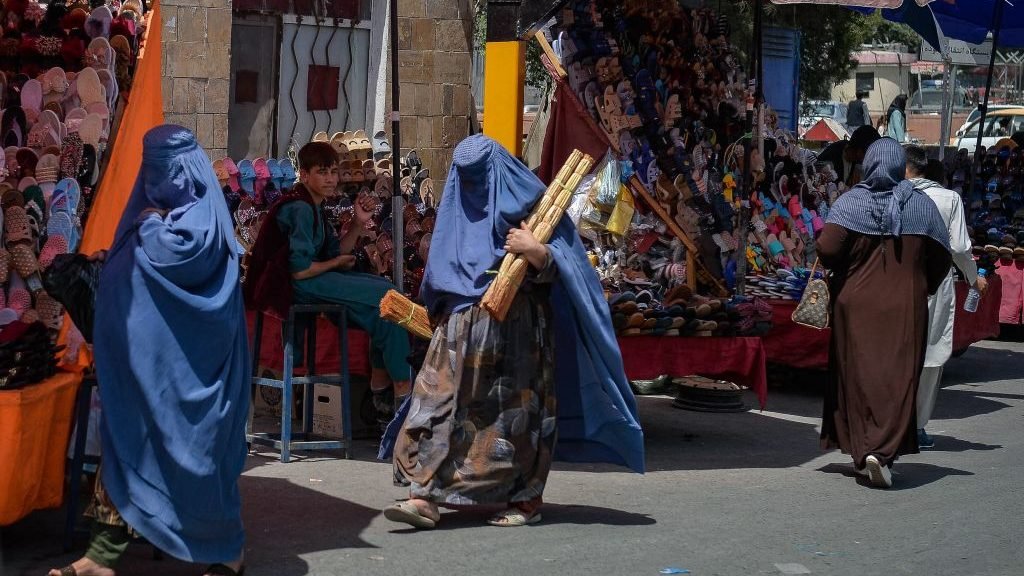
What began as a series of restrictions has evolved into an increasingly entrenched system of control. Women face sweeping limits on employment, movement, and access to public spaces, while Taliban rules impose strict dress requirements and, in many circumstances, require women to be accompanied by a male guardian.
UN human rights monitors warn against legitimizing the Taliban regime, saying its five-year rule has intensified oppression with no evidence of impending moderation.
In a statement marking the anniversary, UN experts urged governments to refrain from normalizing relations with the Taliban until there is demonstrated, measurable, and independently verified progress on human rights, particularly the rights of women and girls.
The statement was endorsed by more than two dozen UN-appointed independent experts, including Afghanistan rapporteur Richard Bennett and specialists on women’s rights, education, food, torture, freedom of expression, and enforced disappearances.
Meanwhile, a new UN Women report says Afghan women face mounting restrictions on movement, education, and public life, while many report deteriorating mental health and little control over their futures.
In a tragic incident reported in the last days of July 2026, a 16-year-old Afghan girl, identified by her family as Fariba, reportedly died by suicide after being denied the opportunity to continue her education under the Taliban’s ban on girls’ secondary schooling. According to reports, she left a note saying it was “too hard to be a girl in Afghanistan.”
Fariba’s reported death is more than an individual tragedy; it highlights the devastating human cost of denying girls their fundamental rights and opportunities. Every girl deserves the chance to learn, pursue her dreams, and shape her own future.
Working and highly educated women, along with their families, have faced severe harassment and pressure, forcing many to flee Afghanistan.
Islamabad’s forced repatriation campaign has worsened the situation for those who fled to Pakistan alone.
The Media Line spoke with Afghan women who fled their homeland alone, leaving behind families and futures as they sought safety from Taliban persecution. At their request, their identities and locations have been withheld for safety reasons.
Marzia Imamzadeh, a Hazara Shia refugee, told The Media Line that she dreamed of becoming a lawyer after earning top academic honors at Kabul University.
Recalling the loss of both parents in a suicide bombing, she described how her life was shattered. Following the Taliban takeover and restrictions on girls’ higher education, Imamzadeh recounted fleeing toward Pakistan and surviving an attack on her convoy by the Islamic State Khorasan Province that left her alone upon reaching a refugee camp.
She says that her mental health has severely deteriorated amid profound insecurity and the constant fear of forced deportation.
Speaking anonymously to The Media Line, a former Afghan women’s volleyball coach shared her painful reality as a refugee in Pakistan.
Separated from her children and unable to afford food or medical care, she described a severe mental health crisis driven by pervasive insecurity, all while receiving no help from relevant authorities to halt her potential deportation.
Zala Ahmadi, an Afghan woman living in the diaspora, told The Media Line that she was one semester short of a computer science degree at Kabul University when the Taliban takeover ended her plans to launch a software startup.
A vocal critic of Taliban policies toward women and girls, Ahmadi said she sold her family’s remaining gold jewelry to pay smugglers to cross into Pakistan after being barred from education and employment.
She now lives as an undocumented refugee in a crowded apartment, unable to work legally and fearing deportation, while watching her younger sisters lose access to education.
The Afghan women who spoke to The Media Line said that words could hardly capture the hardships they have endured in exile, while their loved ones continue to face difficult conditions back home.
The Media Line exclusively spoke with Tahmina Usmani, an Afghan journalist and former presenter with TOLOnews and Afghan International, who became TOLOnews’ first female news presenter and the first woman to return to television after the Taliban seized power in August 2021. She has relocated to Paris.
Usmani continued to deliver news with courage, clarity, and professionalism, keeping vital issues such as women’s rights and freedom of expression in the public spotlight.
In a video statement to The Media Line, she detailed the problems that arose once the Taliban assumed control and why she fled her homeland. By sharing her experience, she emphasized that Afghan women continue to inform, lead, and shape their country’s future despite extraordinary restrictions.
Marwa Ali, a social activist and former Afghan national athlete living in Paris, told The Media Line that she grew up during a period when women’s and girls’ rights and freedoms were gradually improving.
However, she said, the Taliban’s return to power in 2021 abruptly reversed those gains, stripping women of their autonomy, restricting their freedom of movement, and banning them from participating in sports. She added that women and girls who violate the restrictions reportedly face violence and are branded anti-Islamic.
Tahmina Safi, a former judge of Afghanistan’s Supreme Court and co-founder of the Afghanistan Impact Network, told The Media Line that “five years after the Taliban takeover, restrictions on women have become a deeply entrenched system of gender-based exclusion affecting half of Afghanistan’s population.”
Restrictions on women have become a deeply entrenched system of gender-based exclusion affecting half of Afghanistan’s population
In reply to The Media Line’s question, Safi underlined that the international community must keep Afghan women’s rights, dignity, and voices at the center of its Afghanistan policy, warning that humanitarian aid should not replace political pressure or normalize Taliban rule.
Turning to foreign governments, she pointed to a clear policy contradiction: they condemn the Taliban’s systematic restrictions on women while continuing political and humanitarian engagement, arguing that such engagement does not constitute recognition.
Safi emphasized that Afghanistan needs a legitimate, democratic political system in which all Afghans can freely choose their government, regardless of gender or ethnicity. True stability, she maintained, means not merely the absence of war, but dignity, education, healthcare, economic freedom, and a voice in the country’s future.
Paul Farley, a US-based former Senior Intelligence Service officer and an advisor and consultant on geopolitical risk and international relations, told The Media Line that “the trajectory of women’s rights in Afghanistan remains firmly negative, with little indication of significant improvement.”
The trajectory of women’s rights in Afghanistan remains firmly negative, with little indication of significant improvement
Farley said the Taliban has rejected calls from fellow Muslim countries to ease restrictions on women. While pragmatists in Kabul recognize the need for international legitimacy, he said ultimate authority rests with Kandahar’s hardline clerical leadership, which considers the restrictions theologically non-negotiable.
Farley warned that the long-term consequences could be severe, creating social misery for women, marginalizing an entire generation of girls, and depriving Afghanistan of professionals, particularly doctors and nurses.
Combined with restrictions on female health workers, he said, the policies could produce a severe shortage of female doctors and midwives in Afghanistan’s strictly gender-segregated health system, potentially driving up maternal mortality.
Without direct international leverage linking diplomatic recognition to human rights standards, Farley warned, the oppressive status quo could become deeply entrenched, undermining Afghanistan’s future development.
Fariba Akbari, an Afghan women’s rights activist in exile, told The Media Line that Afghan women’s day-to-day struggle for survival and their severe mental health crisis remain critically underreported.
She said women excluded from education, employment, and public life are facing severe poverty, food insecurity, forced marriage, and pervasive trauma, which she said are manifesting in alarming rates of depression, anxiety, and profound despair.
Akbari said an entire generation of Afghan women had seen its aspirations systematically erased, while international media and public discourse increasingly treat the ongoing humanitarian crisis as a normalized status quo.
She described the combination of poverty, security threats, domestic abuse, and forced deportations as a “brutal cycle” pushing Afghan women and children to the brink.
“This is no longer just a political stalemate; it is a full-scale humanitarian crisis,” she said. “As conditions worsen, the international community faces a critical choice: intervene or allow the quiet destruction of millions of lives to become the new normal.”