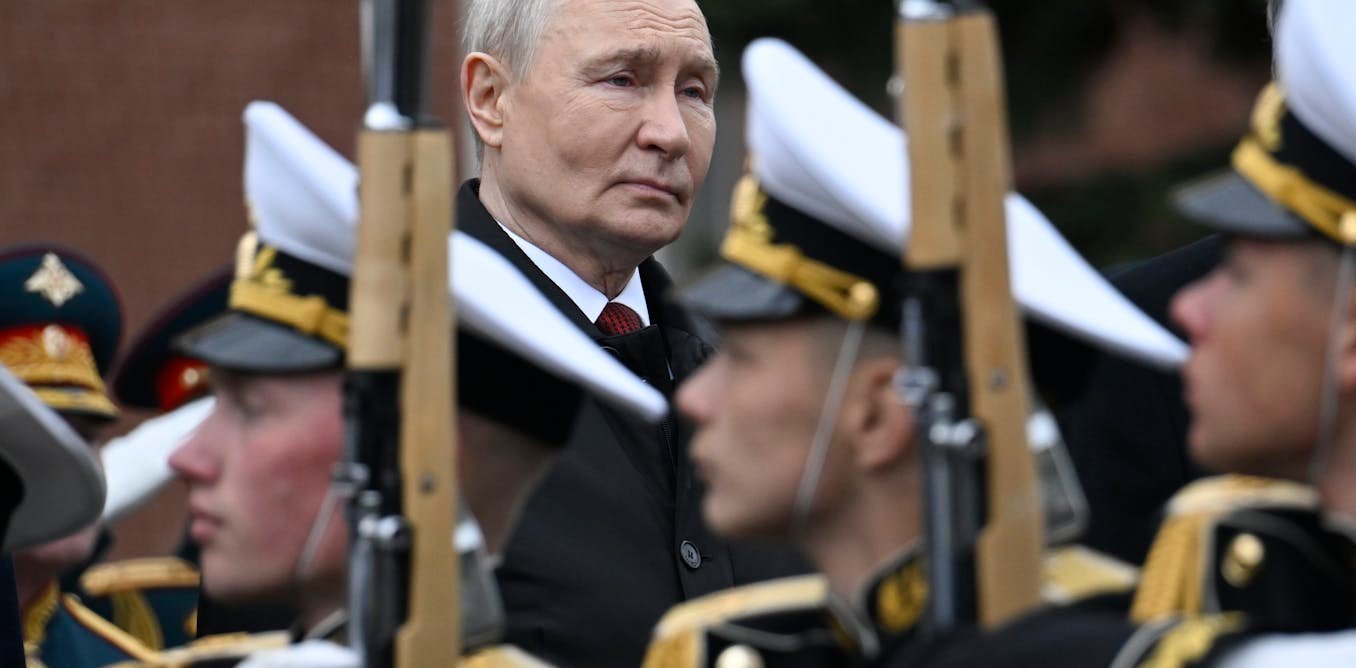
What do Donald Trump, Vladimir Putin, Benjamin Netanyahu, Volodymyr Zelensky and Mojtaba Khamenei have in common? The military power that they can all command is far easier to use than to convert into political success.
They command vastly different resources and pursue different goals. Trump and Putin lead nuclear powers (it’s generally accepted that Netanyahu does too, but Israel has never acknowledged this). Trump, Putin and Netanyahu all started wars.
Zelensky inherited a frozen conflict that escalated into full-scale invasion. Khamenei inherited both a war and Iran’s highest office at once, becoming supreme leader in March 2026 after his father was killed in the US-Israeli strikes that opened the conflict on February 28.
Trump can order devastating strikes but not answer how Iran fits into a future regional security order. Netanyahu can destroy infrastructure across Gaza, Lebanon and Iran but not guarantee security for Israel. Putin can sustain an invasion for years, yet still can’t force Ukraine into territorial compromise. Zelensky can deny Russia victory but his forces struggle to recover occupied territory. And Khamenei can make defeating Iran costly but he can’t stop the US or Israel from trying.
Such stalemates are not new. That they have become seemingly unbreakable, however, is. The old logic of asymmetric warfare was relatively simple: the weak can prevent the strong from winning by using unconventional tactics and weapons to offset superior firepower. Russia discovered this in Afghanistan, the US rediscovered it there almost half a century after Vietnam. Neither was defeated in battle, yet both withdrew once superior firepower failed to produce a sustainable outcome.
To some extent, this logic still plays out in Ukraine and Iran. Ukraine doesn’t need to invade Russia to frustrate Putin – it needs to remain sovereign and prevent Moscow from dictating its future. Iran doesn’t need to defeat the US military or destroy Israel – it needs to preserve the regime and persuade adversaries that further escalation carries unacceptable costs.
A weaker country’s victory doesn’t require conquering territory or destroying an enemy’s forces – it may simply mean survival. This creates an imbalance: an aggressor must achieve something, a defender only has to prevent it. Putin loses if he cannot impose a settlement on his terms and Zelensky succeeds by denying it to him. Trump and Netanyahu may degrade Iranian capabilities, but if the regime survives, Khamenei can claim he has not been defeated.
The stronger side loses by not winning. The weaker side wins by not losing.
Time the great leveller
In this logic of asymmetry, time has always been a weapon of its own. Powerful states want speed – shock, collapse, a quick exit that doesn’t look like a forever war. Weaker actors play for time.
Ukraine’s survival in the first weeks of the full-scale invasion transformed the war, giving Kyiv time to mobilise society and secure western support, before then exploiting its ability to innovate, which has gone some way towards levelling the battlefield.
Iran’s cheap drones, missile attacks, sea mines and threats to energy infrastructure don’t need to defeat a superior coalition outright – only to prolong uncertainty and erode its adversaries’ will to continue.
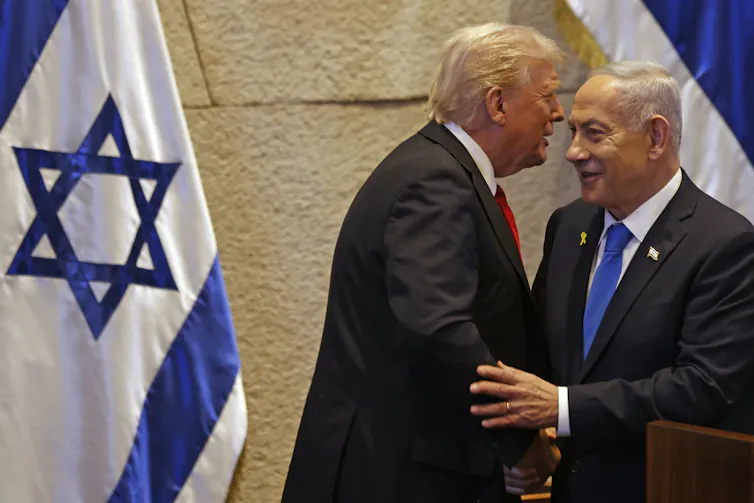
In both wars, the battlefield has become wider than the front line – to such an extent that the two wars are increasingly connected. Ukraine’s air campaign is degrading the oil pipelines and refineries funding the Kremlin’s war effort and its drone strikes in the Caspian Sea disrupt Russian drone supplies to Iran.
Iran and its proxies have turned military confrontation into a broader economic and political crisis – a “forever war”– well beyond the Middle East by threatening infrastructure and shipping routes of its neighbours in the Gulf and the Red Sea.
No strategic vision
The military forces that the weak and strong alike are able to muster can destroy infrastructure and kill commanders. But without an overarching strategy this remains just destruction.
This does not mean military superiority has ceased to matter. Stronger powers still have an enormous capacity to destroy infrastructure, degrade military capabilities, seize territory and improve their bargaining position.
In Ukraine, Putin may ultimately come away with territory he can present as a gain. But that is very different from his original ambition of bringing Ukraine back under effective Russian control.
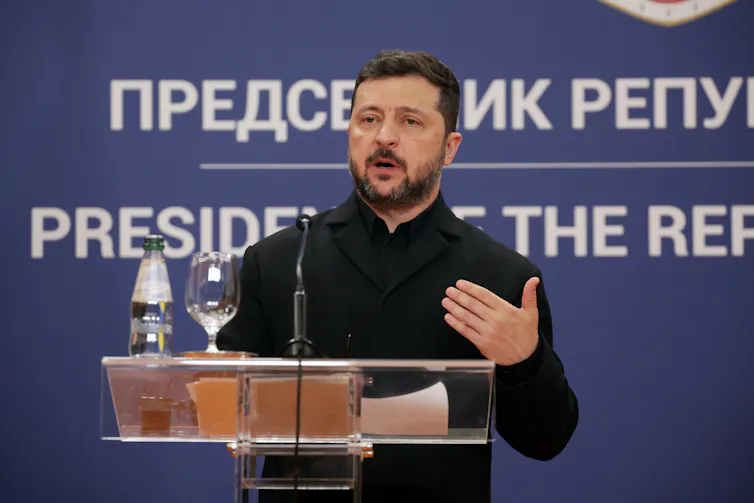
The same applies to Iran: the US and Israel can destroy significant military capabilities of the regime and set back its nuclear programmes, but military superiority alone cannot guarantee that Iran will not rebuild and revive them, much less produce a political order in Tehran to the liking of Washington and Tel Aviv.
Strong powers retain an extraordinary ability to destroy and impose costs. What has diminished is their ability to turn that advantage into durable political control or decisive political outcomes. Trump wants leverage without another forever war. Netanyahu wants security that battlefield dominance alone can’t deliver. Putin wants territorial and political control that firepower hasn’t secured.
But weaker powers struggle, too. Zelensky must turn resistance into a sustainable future. Khamenei needs to preserve deterrence despite a war that began by killing his father and predecessor. Neither of them lacks instruments of power. But they do lack a clear path from those instruments to a stable and acceptable end state.
This is where the old logic of asymmetry is beginning to break down: neither conventional military superiority nor unconventional tactics of warfare seem to be able to break stalemates anymore. Winning wars may simply no longer be possible at all.
Want to write?
Write an article and join a growing community of more than 231,300 academics and researchers from 5,589 institutions.