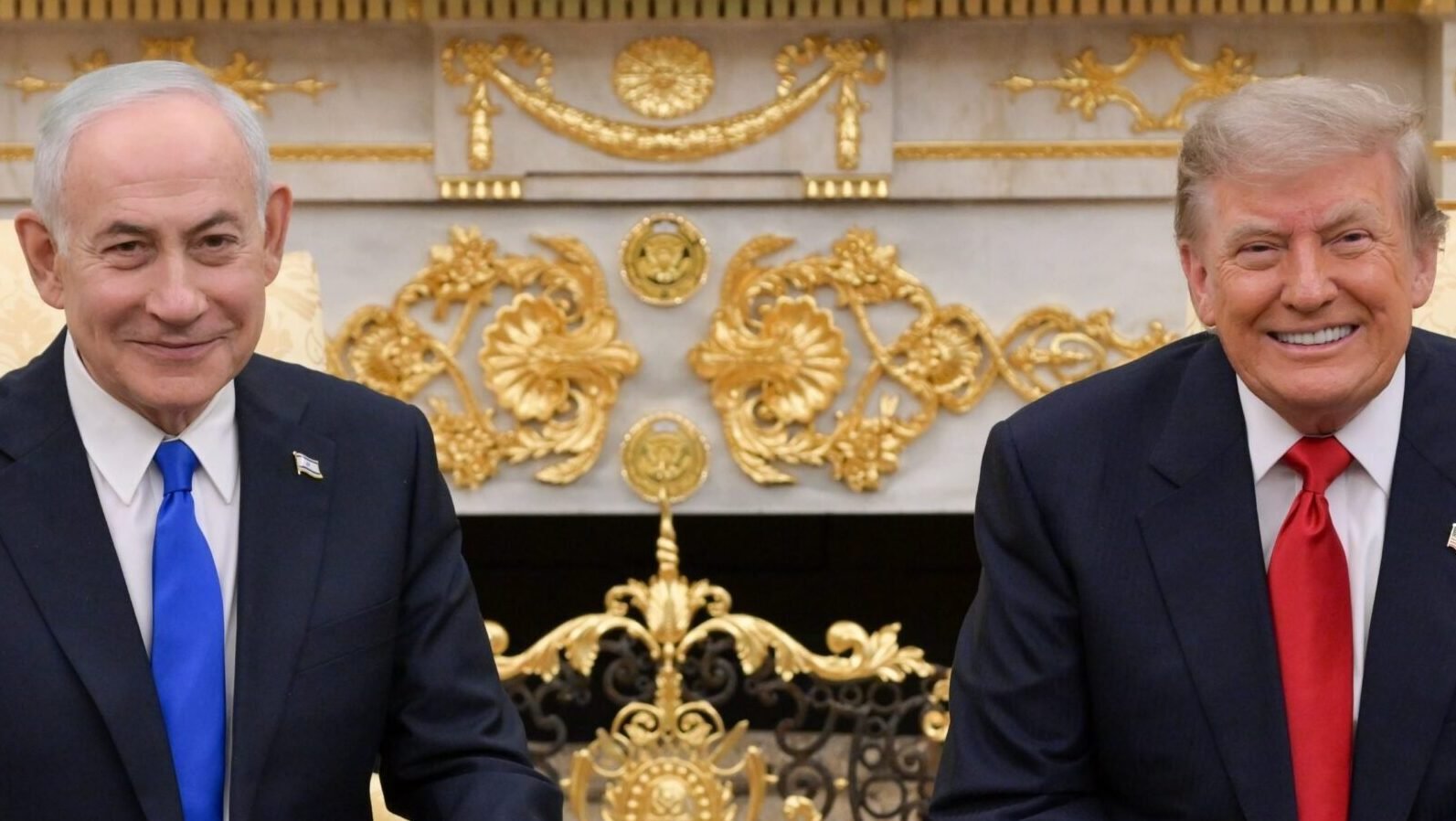
President Donald Trump and Prime Minister Benjamin Netanyahu emerged from their White House meeting united on the goal of preventing Iran from acquiring a nuclear weapon but noticeably less aligned, according to some experts, on how to achieve it. In his article Pickaxe Mountain Exposes Divide Between President Trump and Netanyahu on Iran, Expert Says, The Media Line’s Gabriel Colodro examines how a little-known underground facility known as Pickaxe Mountain became the focal point of that divide after Netanyahu arrived in Washington carrying new Israeli intelligence while President Trump publicly questioned why the information had been disclosed before their meeting.
Drawing on interviews with Israeli officials, legal experts, and specialists in US-Israel relations, Colodro traces the competing strategies shaping the allies’ approach to Iran. Professor Eytan Gilboa argues that the disagreement is less about the nuclear threat itself than about whether diplomacy or renewed military action offers the best chance of delaying Iran’s program, while Attorney Nitsana Darshan-Leitner contends that economic pressure may ultimately prove effective.
The report also explores the broader political context surrounding the talks. Netanyahu proposed gradually phasing out US military aid over the next decade, while both governments publicly emphasized their shared objective even as they left unanswered whether Washington accepted Israel’s assessment of activity at Pickaxe Mountain. Since the meeting, the United States has launched a new wave of strikes against Revolutionary Guard targets in Iran as President Trump continues weighing military and diplomatic options.
Beyond the immediate dispute, the article examines how domestic politics, sanctions, Lebanon, and the collapse of the US-Iran memorandum of understanding have shaped the calculations of both governments. It also considers whether Israel has meaningful leverage over Washington as the United States decides its next move.
Colodro’s full report explores whether Pickaxe Mountain represents a temporary disagreement between close allies—or the clearest sign yet that Washington and Jerusalem are pursuing different paths toward the same objective.