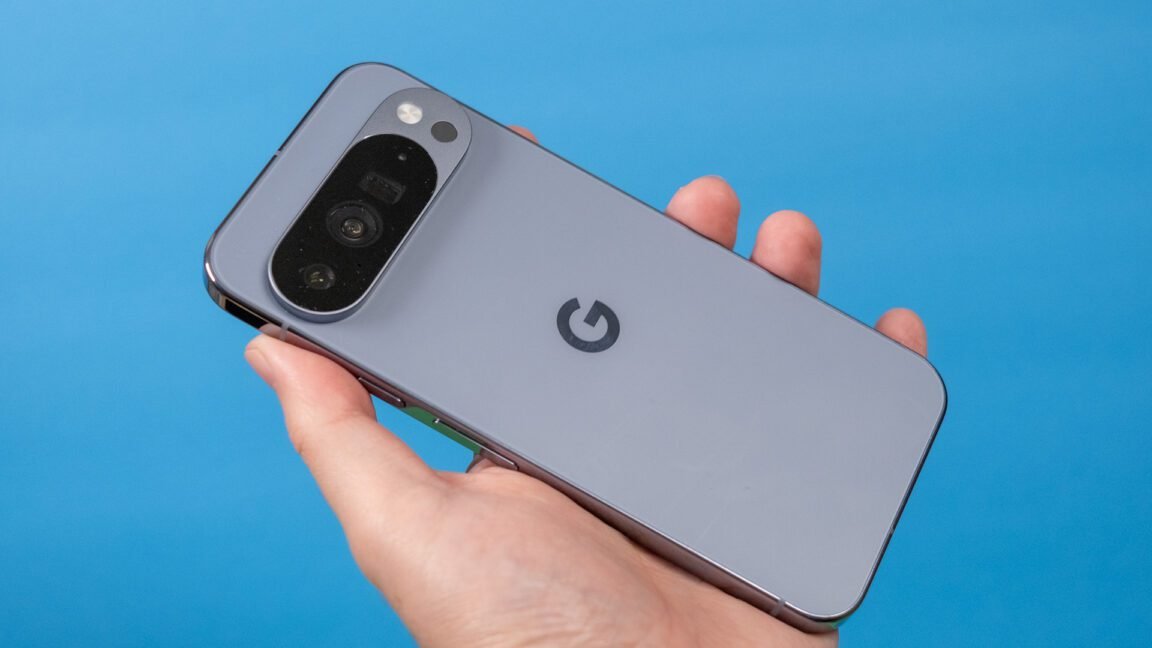
In early 2025, Atlanta resident Samuel Tunick was on his way home following a trip abroad. After landing in the US, customs agents demanded access to his Pixel phone, which was running an alternative version of Android called GrapheneOS. Rather than hand over his data, Tunick used a clever feature of the software to delete everything. Now, he’s facing federal charges.
The first hearing in this case happened last week, according to The Guardian, during which government attorneys and agents claimed that Tunick was subjected to a standard secondary interrogation at an international airport. During that encounter, agents were “looking for anything that’s prohibited.” However, Tunick’s legal team alleges he was targeted for his activism.
Tunick was involved with a group called Defend the Atlanta Forest, which opposed the construction of an enormous law enforcement training facility in the area often known as Cop City. What Tunick didn’t know, according to his lawyers, was that he’d been placed on a watch list for his actions and that Customs and Border Protection had discussed over email plans to detain him upon his arrival back in the US for “suspected terrorism activities.”
During the interrogation, CBP agents told Tunick they wanted to search his phone for evidence of child sexual abuse, and if he didn’t unlock the device, it would be confiscated. The government has long asserted broad authority to examine and seize electronic devices at the border for virtually any reason. Tunick claims he was never read his rights and requested legal counsel several times, but the requests were denied.
Privacy prohibited
Most interactions of this type with CBP would have ended with the government taking the phone, sending the owner on their way, and attempting to break into the device at a later date. Agents may also attempt to extract the data on the spot. However, Tunick’s Google Pixel was running GrapheneOS. This Android-based operating system is focused on maintaining user privacy with features like memory protection, auto reboot, and the duress code. The OS only supports Google Pixel phones from the Pixel 6 onward.
The duress code is an optional feature of GrapheneOS that allows a user to set a code that is different from the unlock code. If you’re worried about the contents of your phone falling into the wrong hands, you can enter that code on the lock screen instead of the unlock code. This immediately and irreversibly deletes all data and eSIMs stored on the device.
Tunick provided this code to an agent, who entered it on the phone, after which “the screen went blank, flashed several times and the phone appeared to restart.” All data on the phone was gone, but authorities confiscated it anyway. Tunick was allowed to leave, but the US Department of Justice opted to file criminal charges against him in late 2025, citing a little-used statute that makes it illegal to “knowingly destroy or damage property” to prevent it from being seized.
This appears to be a new legal strategy for the government. EFF experts who spoke to TechCrunch note they’ve never seen the law applied in this way before. The DOJ will need to argue that even though Tunick was told this was a routine border check, he ran afoul of the law by tricking an agent into deleting his data. If convicted, Tunick could face up to five years in prison.
Tunick’s lawyers have filed a motion with the court asking that all evidence from the interrogation, including the use of the duress code, be suppressed due to violation of his constitutional rights. The motion says the government’s actions were merely “a pretext for a fishing expedition” to gather information on activists who worked against Cop City. The $118 million training facility ultimately opened in spring 2025.