A war is entering Pakistani homes right now. Not through headlines, but through the electricity bill, the bus fare, the price of vegetables at the local market.
Wars in the Middle East rarely stay confined to the countries that start them — their consequences travel through oil pipelines, shipping lanes, financial markets, refugee routes, sectarian networks and military alliances.
For Pakistan, the escalating war between Iran and the United States isn’t a spectacle to watch from a safe distance. It’s a national emergency unfolding just beyond the western border, and across the waters the country’s economy depends on.
As of July 24, 2026, the conflict has entered an increasingly dangerous phase. American missiles have struck targets across Iran, including military and naval facilities near the Strait of Hormuz, with reports of strikes reaching further into the interior.
Iran has claimed retaliatory attacks on American positions and allied installations across the Gulf, including a strike on a base in Jordan. Meanwhile, Iran-aligned Houthi forces have hit Saudi oil tankers in the Red Sea, opening a second front and threatening the Bab el-Mandeb chokepoint.
Traffic through the Strait of Hormuz has fallen sharply, shipping-insurance costs have climbed, and international oil prices have briefly crossed $100 a barrel.
None of this is abstract for Islamabad. Pakistan shares a long border with Iran, keeps close defense and financial ties with Saudi Arabia and the UAE, depends heavily on imported petroleum, hosts major Chinese investments, and still wants a working relationship with Washington.
Millions of its citizens have livelihoods tied to Gulf economies, one way or another. Few countries in the region have to hold so many competing relationships together at once.
No more comfortable ambiguity
For decades, Pakistan’s Middle East policy has rested on strategic ambiguity — staying cordial with Iran while keeping exceptionally close ties with Saudi Arabia and the UAE, cultivating China as the principal strategic partner while periodically rebuilding relations with Washington.
That balancing act was never easy, but it held up reasonably well as long as regional rivalries stayed short of open war.
It gets much harder when missiles are crossing borders, American installations in Gulf countries are being hit and the shipping lanes Pakistan relies on are under military pressure. Restraint and neutrality, in the old vocabulary, aren’t enough anymore.
What the country needs now is a clearly stated doctrine of active neutrality — which doesn’t mean indifference, and doesn’t mean pretending every party in this war carries equal weight.
It means refusing to take part in offensive operations, while actively protecting Pakistani territory, shipping, citizens and economic interests, and using every diplomatic channel available to slow the escalation down.
The Foreign Office has repeatedly called on all sides to show restraint and has said sustained dialogue is the only real path forward. That’s the right instinct, and it should stay the foundation of policy. But it needs to be backed by something visible.
Pakistan should state plainly that its territory, airspace, ports and intelligence infrastructure will not be used to launch attacks on Iran — and just as plainly, that any attack on Pakistani territory, vessels or civilians will be treated as a violation of sovereignty.
Defend the country, yes. But don’t let it become a battlefield, a barracks, or a launching pad for somebody else’s war.
Wartime decisions have a habit of hiding behind the language of national security. That would be a mistake here. Any Pakistani military commitment beyond straightforward territorial defense ought to go through parliamentary debate and a public explanation.
The government should brief political parties on existing defense commitments, on how Pakistani facilities are being used, on the risks at the border and on what escalation would cost economically.
It should do so not to spill operational secrets, but because policy shaped by a narrow circle rarely survives real political pressure, while policy debated openly in parliament tends to hold up better, both at home and abroad.
The opposition has a job here too: scrutinize the government’s approach, certainly, but without reaching for sectarian emotion or turning this crisis into a weapon against Iran, the United States, Saudi Arabia, or any Pakistani community. Foreign policy can’t stay stable if every external crisis just becomes new ammunition in domestic politics.
Inabsorbable economic shock
The most immediate danger is economic. Petroleum imports made up 22.2% of Pakistan’s total import bill during July-March of fiscal year 2025-26, costing roughly $11.2 billion.
Even before this latest escalation, the Pakistan Economic Survey had already flagged how Middle East conflict was driving energy-market volatility, pushing up shipping and insurance costs, and disrupting regional supply chains.
A prolonged closure of the Strait of Hormuz, or even serious disruption short of full closure, would push fuel-import costs higher, strain foreign-exchange reserves, and weaken the rupee further. Costlier diesel raises transport and farming costs.
Higher petrol prices land on commuters and small businesses. More expensive electricity generation eventually shows up on every household’s bill. This is how a war fought thousands of kilometers from Islamabad ends up in an ordinary Pakistani home.
It won’t stop at energy, either. Ships avoiding the dangerous routes take longer paths, which raises freight charges and delays imports of machinery, chemicals, edible oil and industrial raw materials. Exporters face higher logistics costs right when Pakistan needs stronger export growth, not weaker.
The government needs to move past reassuring statements and actually publish an emergency economic plan: what strategic fuel reserves exist, what alternative procurement and shipping arrangements are in place, how essential supply chains will hold up.
Blanket fuel subsidies would be financially unsustainable, and would mostly help richer consumers who need it least. Targeted relief for public transport, agriculture, low-income households and export industries is easier to defend, and cheaper to sustain.
Pakistan should also move faster on conservation — cutting government fuel use, improving urban public transport, allowing flexible work arrangements where practical, and pushing incentives for solar and energy-efficient technology. None of this is an environmental extra right now. It’s economic security.
The Gulf connection
Pakistan’s exposure to the Gulf goes well beyond oil. During July-March FY2026, Saudi Arabia accounted for 23.4 percent of workers’ remittances received by Pakistan, the UAE for 20.7%, and other GCC countries for another 9.5% — together, more than half of all recorded remittance inflows.
A wider war could disrupt employment, aviation and construction activity across these economies, and Pakistani workers could face job losses, delayed salaries, or emergency evacuation. Even a temporary dip in remittances would hit foreign-exchange reserves and household spending back home.
Islamabad should set up a unified crisis mechanism spanning the foreign, finance, aviation, maritime affairs, overseas Pakistanis, petroleum and interior ministries. Embassies across the Gulf need updated citizen-registration systems, evacuation plans and emergency communication lines ready before they’re needed, not after.
Commercial airlines need clear contingency guidance too. Pakistan can’t afford a repeat of past crises, when citizens were often left piecing together information through informal networks because nobody official was telling them anything. Protecting overseas Pakistanis isn’t just a consular obligation. It’s an economic one.
Pakistan has deep ties to the Gulf monarchies, but Iran occupies a different position altogether — it’s the immediate neighbor. Instability inside Iran would inevitably spill into Balochistan, into border trade, into security operations, into the lives of communities on both sides of the frontier.
A weakened Iranian state opens space for militant groups, criminal networks, weapons smugglers and traffickers. Border closures would hurt livelihoods in districts that are already struggling, and a serious humanitarian crisis could push refugees toward Pakistan.
Islamabad needs to tighten border security without treating the entire local population as a threat. Heavy-handed measures that choke off legitimate trade and movement tend to deepen resentment and strengthen exactly the illegal networks the state is trying to shut down.
A better approach: expand regulated border markets, improve customs facilities, bring local communities into the security planning itself. Balochistan shouldn’t be managed only as a military buffer zone — treat it instead as Pakistan’s principal western economic and diplomatic gateway.
There’s a real internal risk, too. Iran-US hostilities are easy for extremists to reframe as a sectarian fight. Pakistan has already paid dearly for imported ideological conflicts, and political leaders, religious scholars and media organizations need to consciously avoid language that casts this as a struggle between Muslim sects.
At its core, this war is about power, security, nuclear policy, regional influence and control of strategic waterways. Turning it into a sectarian dispute would be both wrong and dangerous.
The opportunity — and limits — of mediation
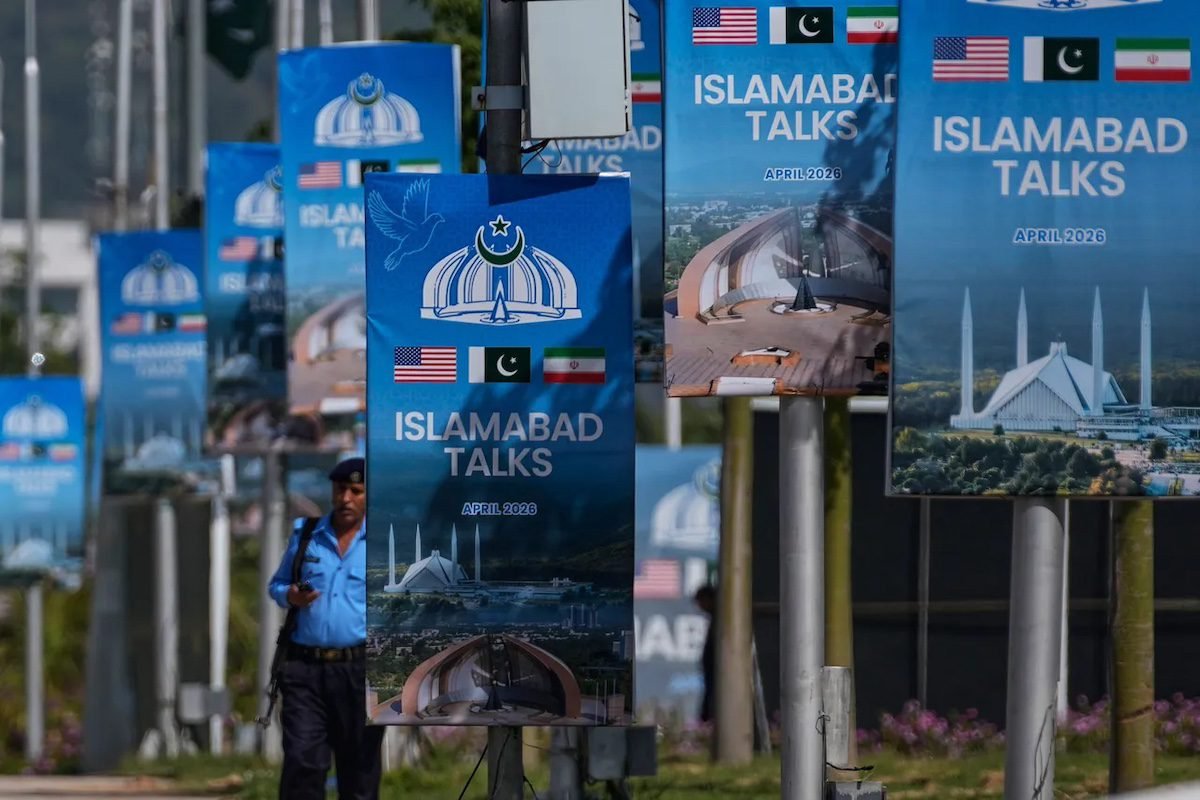
Pakistan has already tried to bring Washington and Tehran to the table. Pakistan and Qatar helped facilitate an earlier memorandum meant to create space for negotiation, though it eventually fell apart amid accusations of violations on both sides.
More recently, Islamabad has explored reviving talks alongside Chinese diplomatic engagement — Beijing has publicly backed Pakistani mediation, though serious obstacles remain, not least because attacks on Saudi Arabia and other Gulf states have complicated Islamabad’s own position.
Pakistan should keep trying. But it needs to know the difference between mediation and diplomatic theatre. A mediator needs credibility with everyone involved, and Islamabad can’t claim public neutrality while appearing privately aligned with one side’s military goals.
It needs to be transparent about what principles are actually guiding its involvement: respect for sovereignty, protection of civilian life, freedom of commercial navigation, non-proliferation and an end to attacks on neighboring states.
Working with China, Qatar, Oman and Turkey to open parallel diplomatic channels is a reasonable path.
The goal doesn’t have to be an ambitious final settlement covering every grievance — a limited ceasefire tied to practical steps would do: protect commercial shipping, suspend attacks on regional states, guarantee that neighboring territory won’t be used for offensive operations, and get negotiations moving again. A phased agreement is less dramatic than a grand peace conference.
It’s also more realistic. Pakistan should use its standing at the UN and the OIC to press for respect for international humanitarian law along the way — civilian deaths can’t be waved off as acceptable collateral, whether caused by American missiles, Iranian drones, or allied armed groups. Neutrality can’t be allowed to become moral silence.
Pakistan’s real choice
Commentators may want to frame this as a choice between Iran and Saudi Arabia, or between China and the United States. That’s the wrong framing.
Pakistan’s primary obligation is to its own people, and their interests need a stable Iran, secure Gulf states, open shipping routes, affordable energy, protected overseas workers, continued Chinese investment, and a working relationship with Washington. Joining a regional war serves none of that.
What Pakistan needs is active neutrality, serious mediation, and real economic preparedness — defending friendly Gulf states diplomatically, staying at peace with Iran, coordinating with China, and remaining engaged with Washington, all without handing its strategic autonomy to any one of them.
There’s an uncomfortable truth underneath all of this: Pakistan’s vulnerability to Middle Eastern wars is made worse by its own economic weaknesses. A country this dependent on imported fuel, foreign deposits, external loans and overseas remittances will always have limited room to maneuver diplomatically.
The long-term fix isn’t clever balancing alone. It’s real domestic resilience — diversified energy, stronger exports, better taxation, better governance, less reliance on emergency financial rescue.
The immediate job is simpler to state, if not to do: keep this conflict from entering Pakistan economically, militarily or socially. Right now, the wisest foreign policy isn’t picking a camp in someone else’s war. It’s choosing peace, sovereignty, and the welfare of Pakistan’s people. Not out of weakness – out of strategic discipline, born of necessity.
Mansoor Qaisar is a communications specialist and freelance writer based in Islamabad, writing on public policy and social issues shaping Pakistan and the region. He can be reached at mqesar@gmail.com