Donald Trump recently took to his Truth Social platform to celebrate a Supreme Court judgment. In response to the court’s decision in Trump v Slaughter on June 29, he posted: “90 years of precedent has been COMPLETELY AND UNEQUIVOCALLY OVERRULED, greatly increasing Presidential Power at a time when it is most needed!”
The US president is famously hyperbolic, but this time he did not exaggerate. His reading of US constitutional law was entirely correct. The court overruled its own precedent set in 1935 and held that the president had the power to fire federal trade commissioner Rebecca Slaughter “at will”.
Slaughter was one of two Democratic members of the commission sacked by Trump. The president invoked his powers under Article II of the constitution and said that their continued service was “inconsistent” with the “administration’s priorities”.
She sued Trump and other administration officials on the grounds that Congress, by statute, had said that a commissioner of the independent agency could only be fired “for cause”, meaning there had to be a proven reason to terminate her.
In 1935, in Humphrey’s Executor v United States, the court held 9-0 that then-president Franklin D. Roosevelt did not have the power to fire Federal Trade Commission (FTC) commissioner William Humphrey. Roosevelt had asked Humphrey to resign because he believed that his administration’s agenda for the FTC would be “most effectively carried out with personnel of my own selection”.
But when Congress established the FTC, it insulated the agency’s political independence by design. Commissioners could only be fired for “inefficiency, neglect of duty, or malfeasance in office”.
Overruling the precedent set by Humphrey’s Executor gives the president individual authority over great swaths of the administrative state. Since the FTC was established, Congress has created dozens of “independent agencies” operating under the same “for cause” rule to protect their independence.
The decision is a triumph for the US Supreme Court’s conservative supermajority of six justices. Their aim is to restructure the US government according to the “unitary executive” theory of the constitution. This theory holds that when the framers of the constitution “vested” the power of the executive in a president, they intended that the power and responsibility for executing the laws of the United States would ultimately be held by one man.
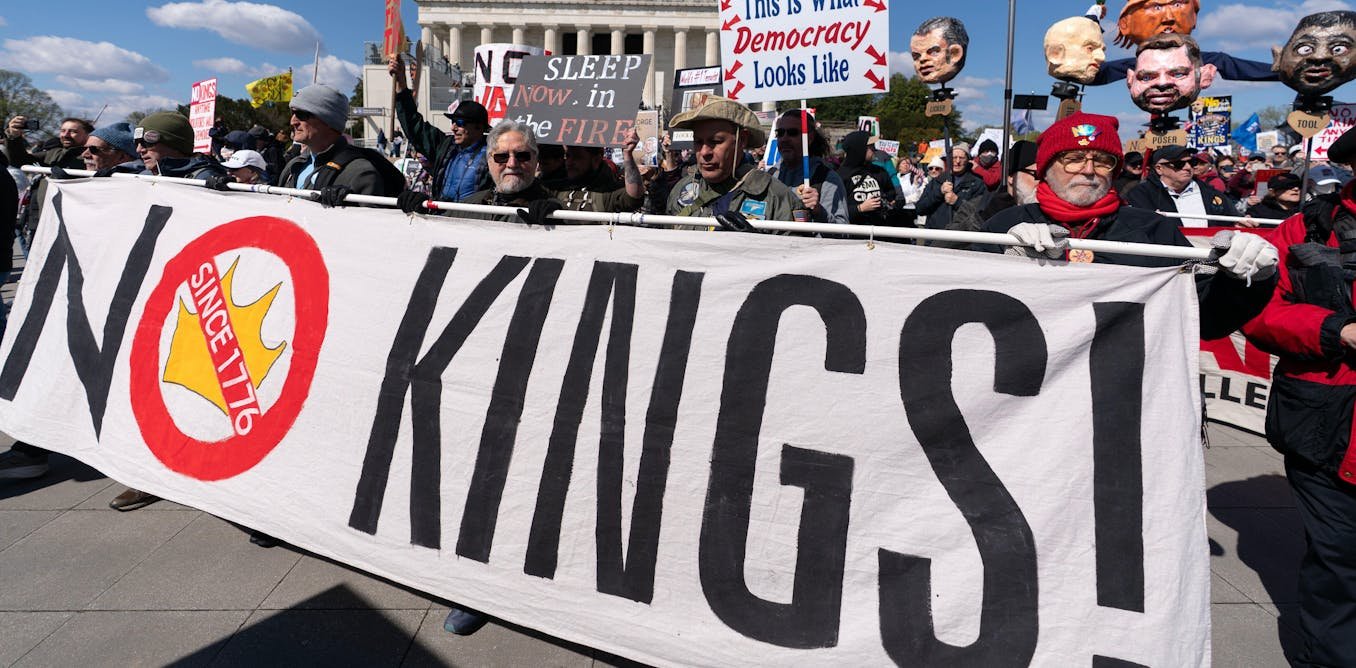
Under this theory, the president must be able to control the entire executive branch, including its independent agencies. Ironically, given the No Kings protests against Trump, the version of history promoted by this Supreme Court under the leadership of the chief justice John Roberts, maintains that the framers did this because only a single, all-powerful president could resist a return to a monarchy.
Trump posted: “The Republican Party was treated very fairly by the United States Supreme Court. Thank you for your attention to this matter!” Overruling Humphrey’s Executor was included in Project 2025, the blueprint drawn up by ultra-conservative thinktank the Heritage Foundation for Trump’s second term.
The conservative legal movement could be confident that this aim would be well received by the court. Roberts had championed the unitary executive agenda since his days in Ronald Reagan’s justice department in the 1980s.
Unprecedented power
Justice Sonia Sotomayor, joined by justices Kagan and Jackson, dissented from the Slaughter decision. She wrote in her dissenting opinion the court “gives the President a power unknown even to the English Crown against which the Founders revolted”. In the dissenters’ view, for at least the past 140 years Congress and the president, together, had set up independent agencies that did not rely “on who is disfavored or owed a favor by those in office”.
The US Supreme Court had approved “for cause” requirements in statutes as constitutional in 1935. But only now did the court decide that the president, congress and the court had all been “acting in open defiance of the Constitution all this time”.

Under the guise of upholding the principle of “separation of powers”, the court reinterpreted the constitution and shifted power away from Congress to the president.
Already in Trump’s second term, the court has given the president unprecedented power at the expense of Congress. Following on from its decisions on abortion and voting rights, the court has continued to overrule its own precedent and reinterpret the US constitution in line with the public policy objectives of the conservative legal movement.
In two years, Trump will be out of office and a Democrat might even replace him. But the court’s decisions will remain, and the only check on presidential power will be the president’s own morality and self-restraint.